Running into our 80’s

I am a runner.

Sometimes my narrator tries to convince me that I am someone who used to run, or someone who just runs now and then.

Sometimes when I tell other people I run, they try to convince me that running will ruin my knees.

Sometimes I wonder if I will injure myself again.

Sometimes I think about giving up, and slowing down.

Sometimes fear creeps in.

But,

Maybe it is each and every choice to run that makes me a runner.

Maybe my voice can override those other voices.

Maybe it is lack of activity that also ruins knees.

Maybe I could listen to the orthopedic doctor who said I would be running into my 80’s with the right plan.

Maybe my miles will decrease, but my activity will remain.

Maybe learning to dance with fear is better in the long run.

Where have you been convinced that you should give up, slow down, and stop “running”?

Where has the fear or the voices told you that it is too late?

Perhaps we could all be running into our 80’s.

Perhaps you could be [insert your activity, goal, or dream here] into your 80’s.

I Will Be There Someday

long-stairs-225x300

(Image Courtesy of Angryjogger.com)

Coaching someone is an interesting adventure. You are trying to help someone develop themselves, establish and accomplish their goals, and encourage them when the journey becomes difficult. A typical coaching session includes checking in and checking up on any progress since the last session.

Progress can be slow.

Progress can be hard.

Progress is about making a repeated effort, over and over again.

Having someone else check in with you can be helpful.

Having someone else check in with you can be frustrating.

Sometimes there is great progress.  Sometimes progress is slow. Sometimes obstacles get in the way. When checking in, you can sense when progress has been slow by the tension during the meeting. There is a quiet hesitation as you begin to ask questions.

When frustration builds, answers sort of blurt out.

“I will be there someday…”

Those words told a story. A story of frustration at how steep the journey had become. A story where each subsequent step was harder than the last. A story that felt endless when trying to envision the top of those stairs when standing at the bottom.

Those words told another story. A story with a little hope. A story that needed to rest between steps. A story that needed to remember to occasionally look back, and see that each step was one step closer to the top. A story that despite the hardship, still believed that “I will be there someday.”

Where has your journey become steep? Where has the progress slowed or stopped?

Maybe today is a good day to remind yourself to take that next step, and remember that YOU will be there someday.


The Decade of Training

Wander Tag(Image Courtesy of Etsy.com)

Through a combination of coaching conversations, and reflections on my own life I have noticed a pattern. Many of us wish we were further along in our lives, careers, or relationships. We speak as if there is some place we should be, but we are behind in the race. We speak with regret and sadness as if we are currently missing out and life would be somehow different.

“I have been in this job for 6 years now and am in a rut and it feels wasted.”

“I didn’t really know what I wanted to do, and moved from job to job and didn’t make progress.”

“School was not a focus for me, and I wasted those years.  Now I have to go back again.”

“Just imagine where I would have been if I didn’t squander those years.”

These conversations made me think of that quote from J.R.R. Tolkien. Maybe it is okay to wander for a little while, because those years are not always lost.

Instead of seeing those years (however long it has been) as a waste, maybe a perspective change would help. Perhaps we could view that time as the Decade of Training.

The Decade of Training helped form who we are today.

The Decade of Training helped us create goals and start to pursue them.

The Decade of Training helped us try different things.

The Decade of Training helped us know that failure is part of the journey.

The Decade of Training helped us learn to get back up and keep moving.

Those years in the Decade of Training are not necessarily lost, unless you give up and assume that it is too late to pursue the goals for your life, career (or second career, or third career), or relationships.

Most of us today will live into our 90s. To put that in perspective, when we reach 60, we will still have 1/3 of our lives ahead of us.

The real question is now that you have been trained, what will you do with it?

Glasses or Binoculars

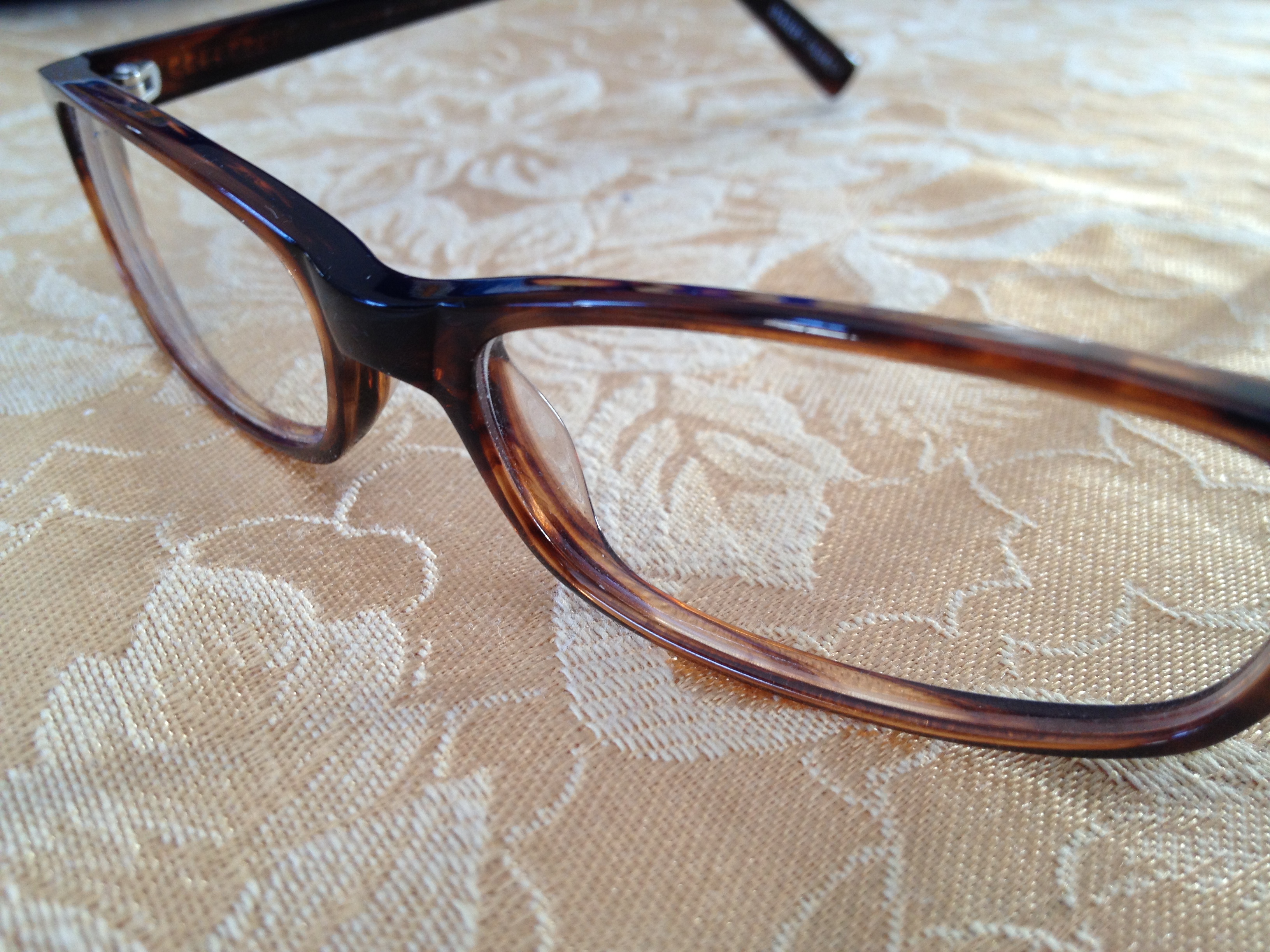
GlassesBoth of these tools have lenses, and are designed to help us see the world more clearly in their respective application. They are not competing with each other, but we may favor one over the other in our lives.

When looking at a situation, do you reach for your glasses or your binoculars?

Glasses help you see clearly.

Binoculars exaggerate and make everything appear closer.Binoculars

Glasses address things right before your eyes.

Binoculars help you see things that are far away, but may need your attention.

Glasses may need new lenses as life changes and our vision fades.

Binoculars may take some practice to learn to focus and interpret events.

Both glasses and binoculars have their respective role, application and usefulness. They become a burden when we get so used to using one, that we forget to change when the situation warrants.

A life lived solely through glasses makes the world seem smaller, as a quiet seclusion develops over time. Everything around you is in focus, but there is everything “out there” that is fearful and unknown. The life close to you is clear, but there may be a larger world around you that too far off in the distance to be seen.

A life lived solely through binoculars makes everything feel more close, more personal, more perilous. Interactions are overly scrutinized. Risks appear larger than life. Even the past events stay close because of the ability to keep them in sight, long after they have passed. This distorted view may cause you to miss the life that happens close, since your focus is much further away.

Where have you used glasses when binoculars were needed? When have your binoculars exaggerated aspects of your life when glasses would have brought the much-needed focus?

Picking the right application for both glasses and binoculars can be the key.

(Images courtesy of my iPhone and Lifesun)

The Cost of Free

FreeRecently, someone was describing a difficult relationship. This is no ordinary difficult relationship, but one with someone who is deeply connected with this person.

They have a long history.

It has been difficult.

They still have to interact on a regular basis.

To make matters worse, the other person offers things for FREE. Since these things are typically valuable, there is an incentive to accept these FREE items or events.

As this person described the situations, conversations, or interactions leading up to these FREE offerings, something became abundantly clear.

These offers were anything but FREE.

The COST OF FREE was significant to this person, their family, and those close to them.

The COST OF FREE to this person was in the emotional stress and obligations that these FREE offerings came with after the fact. They became indebted to this other person.

The COST OF FREE to their family was the toll the stress had on their ability to connect with them during these difficult times, and the time away that the other person would eventually require as payment.

The COST OF FREE to those close was also in the form of stress, but also the inability to have the time to connect because they owed someone else their time, energy, and creativity.

I encouraged this person to calculate the COST OF FREE from now on and compare it to the value of what was being offered. Before this, they just saw the value of what was being offered and felt the obligation to say YES.

Now they can calculate the COST OF FREE and if that cost outweighs the offer, they can say NO.

Have you considered the COST OF FREE? Maybe it is time count the cost.

You may find a way to FREE yourself.

Keep Your Story Fresh

“What do you do with all that random information?”

A close friend asked me the other day. I must have been spouting off about some random facts that I had learned, but the details today escape me.

Apparently, my habit of trying to learn everything about anything I can get my hands on can be a little annoying if you are on the receiving end of my latest rant.

Within a week, during a routine drive time conversation with another close friend they experienced a question from a colleague after presenting to a large group.

“How do you know all that random information that you somehow weave into your presentation?”

“I need to keep my story fresh” they replied.

Those words resonated.

I need to keep my story fresh.

If we are going to stay relevant, current and in demand the old stories won’t do.

We have to learn, grow, develop, and stay teachable.

The seemingly random facts.

The new interactions.

The new class.

The new book.

The new experience.

They all join together to keep your story fresh.

To my first friend, I finally have the answer about my random rants and continual need to devour any information that comes my way.

“I am keeping my story fresh.”

To my second friend, thanks for the words we all needed to hear.