This is still broken

I couldn’t help but count. I was waiting for my friend at a popular coffee shop.

Nine out of every ten cars. Including my friend.

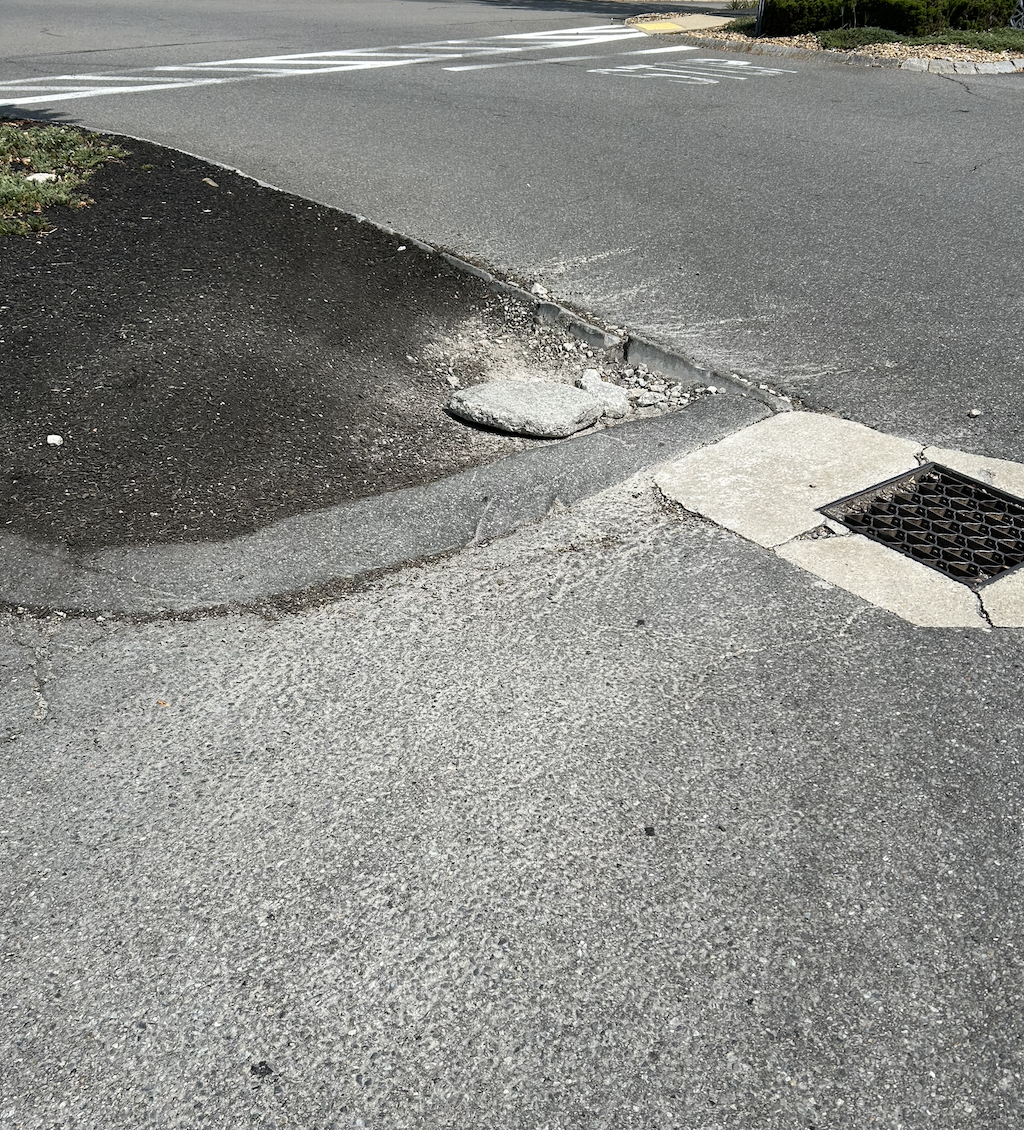
They all drove over the curb. It seemed odd at first, but it was almost every car.

There was both surprise and panic on each driver’s face. “What just happened?”

Various degrees of possible damage to cars. Especially the low ones and to rims.

The sudden jolt of the SUVs going “off road.” Not so smooth when jumping the curb.

I couldn’t help but think of that TED talk.

Almost 20 years ago, Seth Godin gave a talk called “This is Broken.” It is easy to see things broken all around us after watching.

Seth gave examples of things broken for various reasons, including “not my job.”

This popular coffee shop has a problem. The parking lot is tight.

Customers are damaging their vehicles. The curbing and layout were part of a plan.

The plan was approved and met some standard. The reality is different than what was planned.

The plan is no longer working. Someone decided to put a large cement paver in that space to help ease the pain of each curb jump. To mitigate the issue.

This is Still Broken. The original design is not working.

Yet, it will be someone’s job to repair the curbing, and perhaps periodically replace the cement paver.

Yet, it will be someone’s job to fix rims, and pull dents.

Yet, it will be someone’s job to reply to possible claims.

But, whose job is it to fix this?

Whose job is it to develop better designs and regulations?

Whose job is to find what is broken and offer solutions?

Look around you (especially after you watch Seth’s talk). You may be surprised what is broken around you.

(Warning: you cannot unsee this video and you will notice everything that is broken!)

You will see what others can’t.

You will notice what is broken.

And, it just might be your job to fix it!

Memories, Milestones, and Emotions, Oh My

Memories, especially tied to significant events or Milestones in our lives are strong.

Our Emotions, and even our bodies are aware of this invisible timeline.

The corresponding Emotions can arise as these Memories or Milestones approach.

Joy, Sadness, Pride, Outrage, Excitement, Embarrassment, Humility, Despair, Love, Loss.

These Emotions are reminders that something significant happened. Happened to us, for us, with us, because of us, or around us.

Little monuments of events that build us.

These Memories, Milestones, and Emotions can be wonderful.

Love, friend, child, pet, job, relationship, adventure, home, career…

These same Memories, Milestones, and Emotions can be challenging.

Love, friend, child, pet, job, relationship, adventure, home, career…

Some of the Emotions feel like gains.

Some of the Emotions feel like losses.

Either way, these Emotions are requesting something.

To be acknowledged, to be heard, to be remembered?

In the past, Resistance and Distraction was my strategy for the losses.

With the gains, it was mostly Reduction and Discounting.

(I am realizing how sad it is that we tend to amplify the negative, while reducing the positive.)

I am beginning to see these Memories, Milestones, and Emotions as less of a nuisance and more of a Guide.

I am still periodically surprised when they arrive, and I don’t always see them coming.

Once these Guides arrive, I am learning to welcome them and ask how they are here to help.

Walking through these Memories, Milestones, and Emotions appears to be a path forward.

A path towards continued growth.

Oh, My!

Gates, Locks, and Keys

Image courtesy of Robin Lake

The following is an excerpt from Page 45 of the Muse’s Guide: Your guide to Humans. This little known manual was recently discovered. A copy is provided to each of our Muse’s during their orientation as they wait to be assigned to a Human. This series will reveal some of the insight contained within the dog eared and highlighted pages of the Muse’s Guide.

Humans make a lot of decisions and choices in life. Some decisions are well reasoned, careful, and deliberate. Some decisions are emotional, reactive, and spur of the moment. They have a lot going on and they don’t always understand the result or consequences of these decisions.

How these Humans view these decisions and events in their lives can seriously impact your work. As you work to inspire them each day, the weight of the prior decisions might limit their ability to hear you. Some Humans view these events or decisions as Gates.

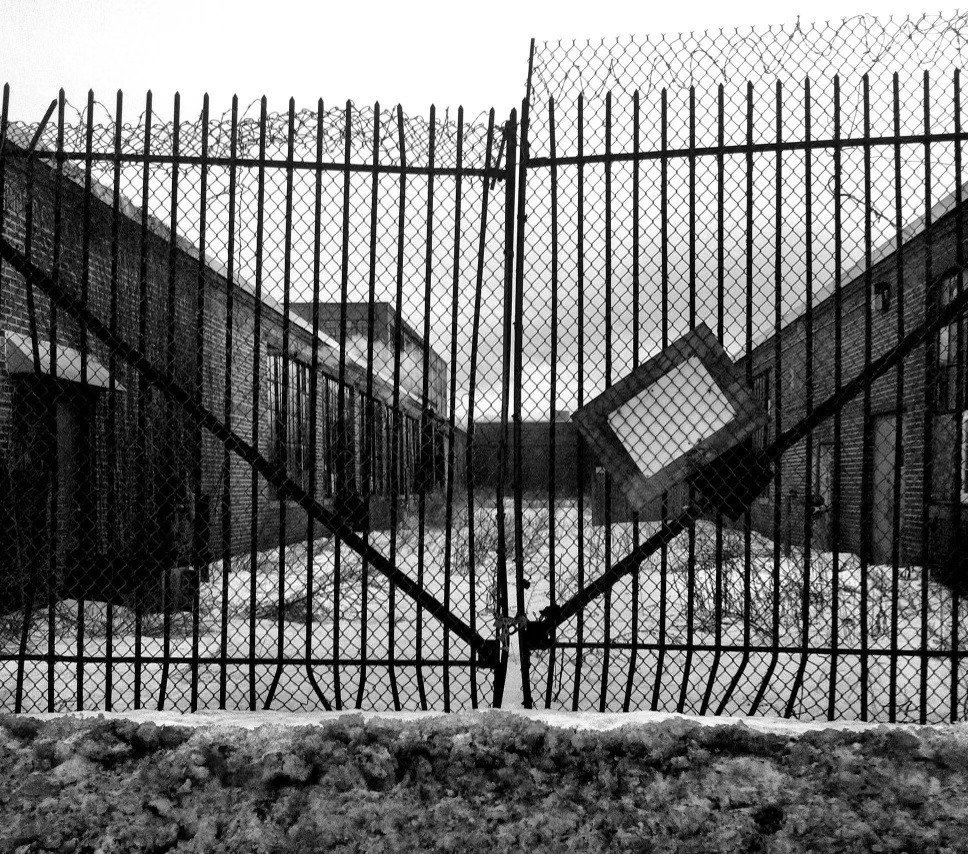
Gates that are locked.

Image Courtesy of Robin Lake

These Gates represent where the events in life and the resulting decisions have closed off options or opportunities. Many Humans stop dreaming of something more because they walk up to these Gates, feel the cold steel, touch the lock, peer beyond at a life that is no longer for them. Their dreams fade as they stand before these Gates. Creativity and their capacity to dream big fades.

As their Muse, watching this unfold can be heartbreaking. Your magical Human crushed by the weight of events, life, circumstances and their decisions.

There is some truth to what your Human is feeling. The past is like a Lock. Their decision, that event, that thing that happened is in the past and is locked and cannot be changed (even a Muse cannot alter the past, despite being a top Human request).

Humans cannot see everything you see. They are trying to make sense of everything so when they see a Lock, they assume that it must be locking them out of something. They internalize decisions and events and their Narrator reminds them of any “failure” to disqualify them from future creation and they stand outside of the Gates.

But not all Locks are on Gates.

Image courtesy of Amanda Weber

Some Locks simply commemorate events.

Humans do this all the time (but still misunderstand Locks).

They put Locks on fences and bridges all the time to remind them of when they met someone special, their birthday, anniversaries or the passing of a loved one.

Those Locks are memories. Those Locks are simply things that happened on their timeline.

Some Locks are filled with Joy.

Some Locks are painful.

Some Locks are beautiful.

Some Locks are hard to view.

Some Locks are in the wrong place.

Some Locks may be on Gates, but didn’t Lock the Gate.

Image courtesy of Geoff Martin

Do you remember the Keys we issued you at Orientation? Every Muse has a set of Keys that fit the Locks of your Human. As we said before, these Locks (decisions, events, memories) cannot be changed, but they can be moved.

Some Locks are just in the wrong place.

As you help your Human organize these Locks along the fence they will begin to see their timeline appear.

These Locks were never meant to be on the Gates.

Locks were meant to remind them of their Journey.

Locks are memories, not limits.

Locks are what helped make them who they are, and who they are becoming.

Locks are the Key to moving forward (see what we did here?).

Sometimes your Human will just need a little help moving those Locks into perspective.

Thanks for your meaningful work as a Muse, these Humans need you more than ever.

Use Your Keys! Muse away!

Send The Words

A small brown envelope.

A blue sticker “Par Avion Air.” (Airmail)

Diamond Harbor, New Zealand.

The cutest cat and flower card.

The Words replying to an earlier parcel.

The Words remembering our time a colleagues.

The Words about timing and being seen.

The Words about “shoulds, shame, disappointments, and shattered expectations.”

The Words about the shared impact we have on each other.

The Words about being part of a community through shared experiences.

The Words that were perfectly timed.

The Words that I needed.

The Words that they needed.

The Words.

Grab a card (especially one with cats and flowers).

Get a stamp.

Use a pen.

Send the Words.

Page 37 The Muse’s Guide: Comparison

The following is an excerpt from Page 37 of the Muse’s Guide: Your guide to Humans. This little known manual was recently discovered. A copy is provided to each of our Muse’s during their orientation as they wait to be assigned to a Human. This series will reveal some of the insight contained within the dog eared and highlighted pages of the Muse’s Guide.

…you will remember that despite being tough or even confident on the outside, a human’s real battles is within. That Narrator (inner voice) is determined to keep them from creating. Each Human has a creative spark within them. They are designed to bring that creativity into the world. That creativity is continually attacked, but not always directly. The subtlety of each attack depends on your human, but one of the worst attacks is comparison.

A few years ago, there was this one Human. You can look it up, but Stephanie was assigned to this mustached one that became some sort of leader. Teddy something, but that is not important. The key was what he learned from Stephanie about comparison.

“Comparison is the thief of Joy.”

Instead of moving forward in their own journey, humans continually look around and measure themselves against others. This comparison helps steal joy away, especially when they are first getting started.

The Narrator gets really loud. The Narrator seeks out ways to compare your Human to others and conclude that your human should stop, give up, because they are not at valuable as someone else.

A recent example involved James who was assigned to that artist, writer, and potter Annie. Annie has been on our radar for a while now. She is so talented. Her creativity has manifested through various mediums, yet the same things keep getting in the way. Comparison seems to really work on her to stop her from sharing her gifts with others.

We recently found a transcript of the Annie’s Narrator as she was thinking about sharing or even selling some of her recent pottery.

“You are making some progress, but you are not ready to share your work. Look around at Jim’s recent creation, you are not at his level. Maybe you never will be at that level.”

The Narrator starts with some acknowledgment of Annie’s progress, then takes away her confidence and discounts her work.

It gets worse.

“You are pretty good, but look at all these other artists. It is not only Jim, and Alex, and Pam in your class, but these others are so much better than you. Maybe they worked harder, but they appear to have more natural talent than you. You are not ready. You are not good enough.”

The Narrator finds an endless comparison list. As soon as Annie feels confident that her progress matches that first standard, the standard changes again. And again, and again with a never-ending list of comparisons.

Remember, everything fails by an irrelevant standard.

Don’t be fooled into thinking that comparison is a new tactic. It has been happening from the beginning. The new ways your human compares themselves to others are just faster versions and make your job a little more challenging.

Muse Suggestions against Comparison – remember each human is unique so this guide will provide some ideas to help and you may need to try variations to best meet your human’s needs.

Human’s and Self-Worth – Remember that poster in the Muse break room “Human beings, not Human doings” that helps us understand the real issue. Humans forget that they have worth just by being, not by what they do. This connection between what they do or accomplish and how they feel about themselves is strong.

Strong but Wrong.

Remind them of their value.

Remind them of their worth.

Remind them that creating or accomplishing feels good, but those feelings are in addition to feeling good about their own value or worth.

Comparison Triggers – Each Human finds a mix of comparison markers to measure themselves against. Some will be in their actual circles (friends, colleagues, family members) but many of these comparisons are strangers from across the globe. Humans see others from the outside, feel their own inner battle, and forget that other humans also have inner battles.

Remind them to take a break from viewing others.

Remind them that they are not alone when they struggle.

Remind them to be aware of what triggers negative feelings when viewing others.

Remind them that all Humans are racing together, and not against each other.

Being a Muse is not an easy job.

Being a Muse is not about a formula or following steps to solve a problem. Humans are not a problem. Humans are magnificent, strange, creative, complex, weird, temperamental, and insecure.

Your job is to guide, support, inspire, and encourage your Human.

20,089

20,089

Yesterday I couldn’t help but reflect on that number.

20,089 days.

20,089 days of existing on this planet.

20,089 days of such variety.

There were good days, and bad.

There were easy days, and hard.

There were successful days, and failure.

There were joy-filled days, and sorrow.

There were adventure days, and mundane.

There were healthy days, and sick.

There were intentional days, and carefree.

There were helpful days, and helpless.

There were wild days, and tame.

There were days.

And, there are more days to come.

How many more days?

10,957?

Many of the 20,089 days have been dominated by The Narrator seeking to limit my perception of what is possible.

This voice has been trying to convince me that I am not good enough or less than.

But there is a whisper of a new voice.

Faint gentle sounds.

Encouraging. Inspiring. Calling.

I think I know its name.

It has always been here.

It has tried to break through, but has been overshadowed.

I am trying to hear that voice in the midst of all the other noise.

All the other distractions.

All the past days.

I think I know its name.

Five years ago. A good friend sent me a story for my birthday.

ROOKIE MISTAKE

“I suppose you’ll want me to come back,” she said.

“I’ll clear my calendar,” I said. “Whenever you want to stop by.”

You never say “whenever you want to stop by” to your muse.

In your intoxicated bliss, make sure she adds her next visit to her calendar – in pen.

***

Iain Young didn’t get a good look at his muse. He’s pretty sure he wouldn’t recognize her.

My friend was pointing the way.

The Muse.

My Muse.

Your Muse.

For the next 10,957 (or however many days we have) let’s seek out that other voice.

The inspiring one.

The encouraging one.

The one that reminds you that all work and life is creative.

The one that calls you to more.

The one that reminds you that you can!

The one that says “what is possible?”

I think our Muse wants more appointments with us – in pen!