Relational atrophy

It’s been a while.

When the world shut down, so did my relationships.

I fell out of practice.

Survival, stress, and a focus on tasks and solving problems took the main stage.

I got rusty.

New habits formed: isolating habits that didn’t include the same connection as before.

It was a long, but subtle shift.

From less, to more, to loss.

Less phone calls, less fun, less light-hearted conversations.

Less time WITH others.

Less time FOR others.

Less.

When there is less, something will fill that void.

More negativity, more urgency, more stress, more vigilance, more protection mode, more burn-out.

The results were loss.

Loss of connection.

Loss of friends.

Loss of time.

Loss.

The best way to describe where I am today is a state of Relational Atrophy.

Weaker, out of practice, easily tired, and doing simple things are much harder.

Understanding and acknowledging this Relational Atrophy helps.

Finding a way forward is next.

Similar to exercise, this process won’t happen overnight.

It might take some time for these muscles to remember.

Small steps.

Apologies.

Invites to get coffee.

Invites to connect.

Invites to get gelato.

Phone calls.

Texts.

Scheduling time for others.

Scheduling time WITH others.

Time.

Those relational muscles will return.

New habits will form.

Take a moment to think about how these past few years impacted you and your relationships.

How has Relationship Atrophy impacted you?

Where have you fallen out of practice with others?

How can you take one step today to flex those relationship muscles?

The good news is we might not be alone, and we can try moving forward together.

One more idea – schedule time under the tree. Let me know, I will make the coffee.

Conversations and How to Have Them

Together we discussed friendship, which was one of my favorite experiences. But recently I have noticed that friendship (or relationships in general) are built and fueled by conversations.

Over the past few months I have been observing conversations.

But conversations are weird.

Some are like duels.

Some are like speeches.

Some are veiled.

Some are superficial.

Only a few are deep and memorable.

I recently shared some of these conversation observations with a class. Not just any class, but the last class of the year. This particular class has become a yearly tradition and it isn’t lost on me that the final chapter of the year (right before the Holiday Season) is a class on Emotional Intelligence.

Before I shared, I asked.

“What does it take to have a good conversation?”

The answers came.

“Listening. Letting other people speak. Making eye contact. Not being distracted. Not looking at your phone. Asking questions.”

Great answers. Great advice.

It was the last one that really resonated with me. It is what I have been observing.

Asking questions.

You need all of the first things, but it is the last part that may make the real difference.

Asking questions.

Demonstrates that you are interested in others and not just about yourself. (I have a friend who has made extreme strides in this area, and jokes about how they used to be as a reminder. During a conversation they will jump in with “Enough about me, now I want to hear what you think about me.”

Asking questions.

Questions help you to learn about others.

My assignment to this class was to spend the Holiday Season practicing having conversations. This practice starts with asking questions. It may be helpful to try out a few of these questions over your Holiday Season as well.

  1. How are you? (And listen to the reply. Wait for a reply beyond “I’m good” or “Fine” and maybe ask a second time. Really, how are you?
  2. What is going well?
  3. What are you most excited for in 2017?
  4. What are three things that you would most like to accomplish in the next year?
  5. What is the last book you read?
  6. How are you balancing your multiple roles?
  7. Can you tell me a little more about what you do? What most excites you about what you do?

And the list goes on.

Be careful about asking a question, then jumping in with your own answers to each of these questions. Remember my friend’s quote, this is about them, not you.

Asking questions.

Go try it out and let us know how it goes.

P.S. Sometimes conversations drift towards things that are not as important (Politics, Sports, the Weather) and I have a fun trigger phrase with a few friends when we drift off. Whenever one of us dwells too much on the latest game stats or news story, one of us remembers to say, “Are you Sad?” (Because we must be avoiding real conversation out of sadness…) We all chuckle and get back to focusing on things that matter most.

Go Ask Them

Go Ask Them (1)

Friendship has been on my mind lately.

How do friendships work? What makes the best friends? Am I a good friend? What do we need most from friends?

In the past I offered advice for bad friends, but what about the good ones? How do you cultivate solid friends in life?

The other day while discussing friendship with my Bride, I got some solid advice.

“So, friendships and what makes the best ones have been swirling around in my head.”

“Are you going to write about friendship?”

“I think so, but I am not sure where to get the best information to write about friends.”

“Why don’t you Go Ask Them?”

Great advice.

And Go Ask Them is what I did.

The next few posts will summarize the results.

But.

Just as my finger was about to hit the POST button this morning, it dawned on me how that advice was universally brilliant.

Wondering how to better connect with your employees?

Go Ask Them.

Wondering what new offerings would best serve your customers?

Go Ask Them.

Wondering how to be a better spouse or partner?

Go Ask Them.

Wondering how to be a better parent to your kids?

Go Ask Them.

Wondering what role would best help your aging parents?

Go Ask Them.

Sometimes we just assume we know best. We have an idea and run with it. We are trying to help.

We don’t always meet the mark.

Next time, follow the advice.

Go Ask Them.

Moving Forward


Moving-Forward

(Image Courtesy of capreform.eu)

The other day I had the privilege of going for a run with my youngest brother and my youngest daughter. We don’t see him very often because we live so far away, and running gave us time to connect just the three of us.

We ran. We laughed. We joked. We connected.

The conversation moved to something that we had just passed by.

It was then my daughter provided a bit of wisdom.

“It is hard to look backwards when you are moving forward.”

A simple statement.

A profound idea.

Sometimes the past isn’t satisfied with not being the star of the show.

Our lives are in the second or third act, but that first act keeps walking back on stage, interrupting and inserting itself into the present.

She was right. 

It is hard to look backwards when you are moving forward.

Just think about what 2015 might be if we keep that in mind.


Rusty Connections

RustyOldHinges

(Image Courtesy of http://www.angiesroost.com)

A friend recently reached out to make sure we were okay. Nothing specific happened, just a little time passed since we last connected.

“Are we okay?”

“Yes. Why, do you think something is wrong?”

“No, just sometimes when time passes our connections get a little rusty.”

Rusty Connections. As time passes things don’t move with the same fluidity. There can be resistance or breakdown. Sometimes, things just stop working.

Our relationships and our connections with others can get rusty. They may have become stiff and lack the flexibility they once had. The passage of time may have caused them to stop working the same way they did years ago.

There is good news. With effort, many of these Rusty Connections can move again. That effort may take the form of a phone call, a text or email, or even a letter (see below). But remember, a rusty hinge doesn’t return to its original state. Time has passed, and it will move again but in a slightly different way. Perhaps with a little more effort.

(I have a good friend who is single-handedly attempting to bring back the written correspondence approach, and I applaud and am participating in this effort. Why not give it a try?)

The “Everything is Okay” Phone Call

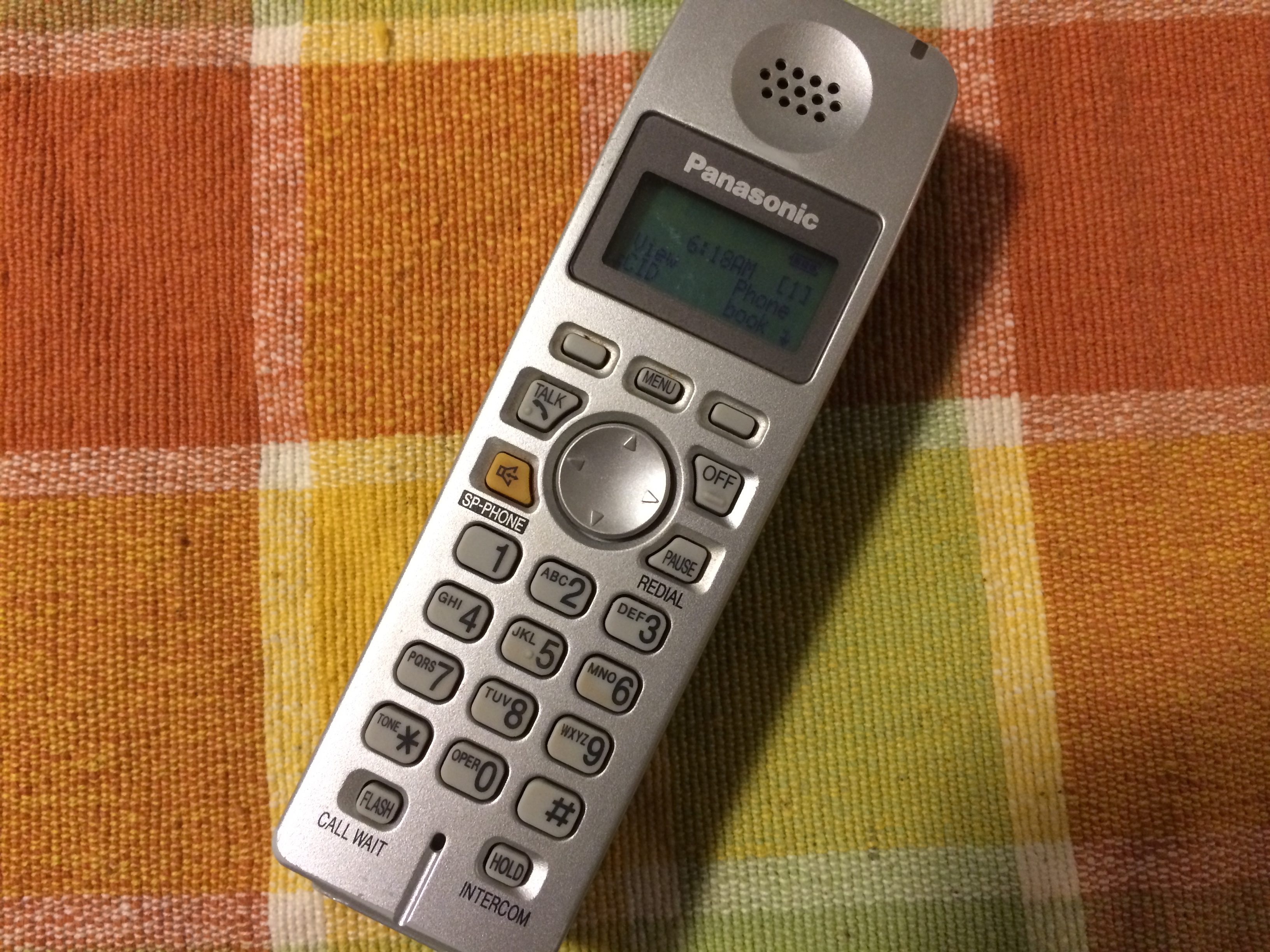
The Phone

Most of the phone calls that come my way are from people who need something. This seems like an obvious occupational hazard for a consultant who is trying to help others. However, I began to think that this pattern is deeper than just my work world. Over the past few weeks I started to keep track.

Text from kiddo – request for money.

Text from family – request to service their cars.

Phone call from friend – needed advice on issue.

Phone call from colleague – request to cover a meeting.

In the midst of this tracking experiment, there was one call that stood out:

The “Everything is Okay” phone call.

I didn’t actually take the call, it went to voicemail. Imagine my surprise when I listened to that message.

“Hey Carl, just wanted you to know that everything is okay I was just calling to connect with you and say Hi.”

It was just the call I needed. At times, the constant giving of yourself to others, their needs, and their problems can become a solitary place.

Relationships begin to feel like one-way streets.

I am taking this person’s example and trying an experiment of my own. Deliberate and intentional communication with others to connect with them, not to request from them.

Give it a try this week. Who knows, it may just change the world.