The Hard Work of Dreams

IMG_3189

(Image courtesy of the One of My Dreams, and the road trip)

Sometimes our dreams don’t work out.

But dreams (goals, aspirations, how we want things to be) can fool us into thinking that the road will be easy.

We have this idea, so it should just happen right?

I want this or that, therefore it should become a reality.

Yes it may be a little work, but hey “I have been working on this dream for over two weeks.”

During a recent discussion with a close friend, we talked about how dreams are the result of hard work. The result (that dream state) is typically achieved after years of sacrifice and working a plan that made that dream a reality.

We laughed at how much we dream without counting the cost. Big dreams without counting the hard work it will take to make them happen.

The “overnight success” band dream. Fifteen years of crossing the country to work every small bar, festival, or venue.

The “retirement traveler” dream. Thirty-three years of saving, investing, and saying no to the daily temptations of purchases.

The “dream job” dream. Ten years of attending school part-time while working, raising kids, and unpaid internships to gain experience.

The “business start-up” dream. Thirteen years of finding a market, staying up late working on proposals, being rejected, making mistakes, borrowing money, trying to keep records, making a product or service, building relationships, inspiring trust, learning to ship, and trying to convince others that you bring value.

The “perfect parent” dream. A lifetime of relationships, negotiations, cleaning up, providing for, apologizing, correction and guidance, time, energy, and intention.

The “great relationship” dream. Seasons of distance, making time, grief, disappointment, non-response, frustration, misunderstanding, forgiveness, and rejection.

Dream away.

But know that dreams require something in return.

The hard work of dreams is what takes a concept or idea and makes it real.

It will cost you, but the reward is worth the hard work.


P.S. A few days ago marked four years for this writing dream. Just a few more decades to go…
Wired for Problems

How you see the world

Understanding our own behavioral styles is essential to our long-term success. Knowing that you have a tendency to follow the rules, or that you can connect with others helps you leverage those strengths in your style (maybe you have a passion for finance or you are great at sales).

Knowing how you are wired also helps you know when your style needs to be modified (maybe you are too strict at enforcing rules or you connect so often with others that you are not getting your own work done).

The other day I was having a somewhat difficult interaction and an overreaction. When I react this way, I revisit my own style (often with other people) to help determine the cause and see if this insight provides some solution or an easier way to modify my style in the future.

As I described the situation to someone close, they provided some much-needed insight.

I am wired for problems.

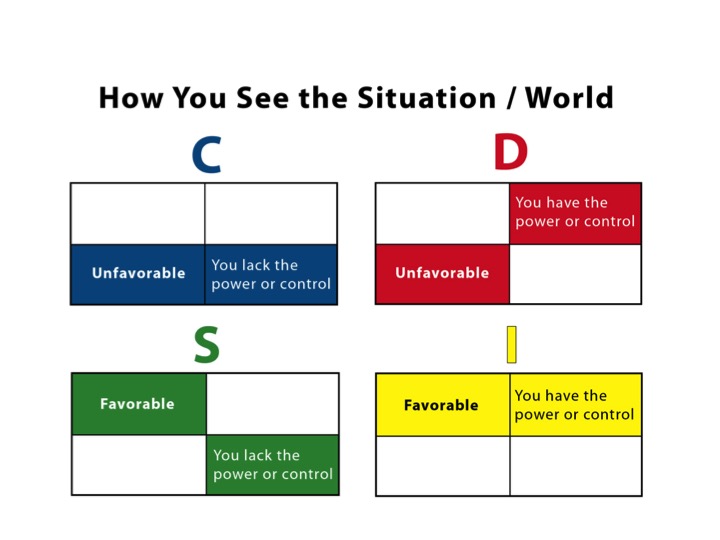
How you see the world (1)


My natural tendency is to see things in an unfavorable light. Combine that with the perception that I am in control or have power over a situation, and things get interesting.

What I see as a problem, others may not even notice.

When I want to fix things, others may not be ready or aware that the problem even exists.

Sometimes this style works well.

If organizations, teams, or individuals need to change or improve.

Sometimes this style doesn’t work out as well.

If we are just having a casual conversation, or interaction.

This greater self-awareness helps me understand that although I would like to fix a lot of things, not everything is broken or a problem that needs fixing.

What is the old saying? “If you are a hammer, after a while everything begins to look like a nail.”

How are you wired?

If you know your own style, take a few moments to revisit your results.

Ask yourself the following questions:

1. What are the best 3 things about my style that really work for me in my role, job, career, or life.

2. What are the 3 things about my style that seem to get in the way the most, or if modified would lead to greater success.

Put that list somewhere where you can see it each day, and leverage what works, and begin to modify what doesn’t work.

If you don’t know your style, drop me a line or connect with someone who can help you identify your style.

More Flexible, Less Fear

The other day someone asked me to describe my two biggest goals in life. Once I got over the “Hey, I thought this was going to be a casual conversation!” I spent some time thinking about my response.

The reply didn’t come right away, as my mind raced between what I wanted to do and/or achieve and what I wanted to leave behind or be remembered for…then it hit me.

Two simple goals:

1. Be more flexible.

2. Have less fear.

More Flexible. I have noticed something as we progress through life. We tend to become stiff and rigid. This can be physically, mentally, or emotionally. We don’t stretch as often. We stop trying new things. We want things a certain way. We believe certain things. We know we are right and are not afraid to express that view. We have history with others. We hold grudges.

This goal provides a simple reminder. Am I getting stuck? Am I getting stiff? Am I responding and being closed off to new ideas, new activities, or new adventures? Recently I have been trying Yoga as a way to become more flexible physically, and starting to read a variety of books, or articles that may challenge my strongly held opinions. I initially felt resistance to both, but in time, both are becoming more natural.

Less FearLife is pretty ironic. When I was younger with less resources, less experience, and less opportunity, there was little fear. As resources, experience, and opportunity have grown, so has a corresponding fear.

This goal is the other important reminder. What am I afraid of? What is the worst that could happen? What is the cost of not trying these new things? Having this conversation with myself or others helps move me from inaction to action.

I am glad they asked me about my two biggest goals.

Two simple goals.

More Flexible.

Less Fear.

These two goals have become a kind of mantra for me.

Simple enough to remember, yet effective enough to keep me moving.

Now the question is passed to you.

What are your two biggest goals in life?

We all look forward to your answer.

After

After.

After is harder than I imagined.

Before is filled with fear, anxiety, and tension.

Before is about setting a goal that would stretch and challenge.

Before is the decision to try.

During is about action.

During requires getting up each day to train, learn, or push.

During has failures, setbacks, and obstacles.

During connects you to others on that goal or project.

During feels alive.

When the big day arrives, all the training shines through.

Goals are accomplished.

After comes next.

After has a brief time for celebration.

After brings about an end.

After is when the team moves on to other things.

After there is a feeling of loss, as lives return to normal.

After there is a feeling of being lost, as you think about the next big goal.

After is a time to rest and gain perspective.

Before returns.

During will bring a new structure, a new routine, a new plan.

After will come again.

Here or There?

“Are you here or there?”

The question seemed simple enough. The originator was concerned with geography and location.

“We are glad you are here.”

A simple statement. An appropriate welcome to a meeting.

“When will we be there?”

One of the most common questions in (my) life.

Somewhat fixated on the original question, my mind kept bringing it forward.

“Are you here or there?”

Are we present in the moment or always looking for some other distant event?

“Are you here or there?”

Are we distracted when I should be focused on those people or events right in front of us?

“Are you here or there?”

Are we enjoying the ride or impatiently hoping the destination will come?

“Are you here or there?”

By focusing on this question, maybe we can become less distracted.

By focusing on this question, maybe we can be more present in the moment.

By focusing on this question, maybe we can remind ourselves of the journey.

“Are you here or there?”

The answer may just change the (your) world.

Hard is Okay

“This is hard. I am not sure if I want to keep doing this.”

“This is hard, much more than I originally thought.”

“I was hoping it would get easier, but this is still hard.”

“Wow, making this change is hard.”

“Training for this [insert life event here] is hard.”

“Trying again is hard. What if I don’t [succeed, get into that school, get that job, get better, maintain that relationship, find the right career, learn to overcome this thing/fear/obstacle, bring value, find my path, finish well, make a difference]”insert any or all of these…

Multiple conversations. Similar statements.

Some statements are from customers or “coachees.” (Those being coached, is that even a word?)

Some statements are from my running partners.

Some statements are from friends.

Some statements are from my daughters who are either trying something for the first time, or pushing through with their life pursuits.

Some statements are my own.

What is an appropriate reply to all these words?

Stop trying? No.

Give up? No.

Easy is a better path? No.

Hard is okay.

It doesn’t mean that Hard is fun.

It doesn’t mean that we always enjoy Hard.

It doesn’t mean that Hard will be easy.

But maybe we can accept Hard for what it is.

Hard is okay.