I Stink at Positivity

When you listen to people, you can hear the funniest things. We were connecting with a friend the other night and were talking about being positive.

“I stink at positivity!” They blurted out.

We all laughed.

For the remainder of our time together I kept coming back to that statement. I haven’t been able to shake it.

Our words reveal so much about us.

We can be so hard on ourselves.

Our words can create self-imposed limits.

We stop pushing against and become defined by those limits.

Spend the next few days listening to your own words, and those around you. Listen especially for the “I am” statements. Once you understand the landscape, maybe a similar approach can be used to reverse the trend.

Instead of limits, we could speak of possibilities.

“My positivity can be better, and I am making progress.”

This conversation reminded me of another recent interaction I had with someone who runs. I kept hearing the same statement over and over.

“I am not a runner.”

When I pressed further, I realized that this person ran about five races last summer. They trained hard, but past self-limits had convinced them that they were not a runner. They had convinced themselves that “a runner” was a specific kind of person who was better, faster, and thinner than they were.

We talked about how contrary this self limit was in the face of the evidence.

Running Shoes: Check.

Running regularly: Check. (But the internal voice kept telling them it wasn’t enough.)

Running outfits: Check.

Running five races: Check.

The evidence was clear: and it added up to a runner.  However, the self-limiting narrative remained. It took few tries, but eventually they were able to articulate the change.

“I am a runner.”

Without these self-imposed limits…we may just Change the World.

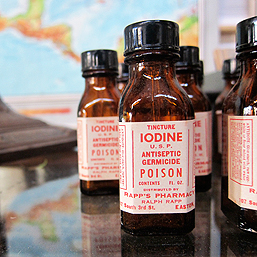
Iodine on Eczema

vintage_iodine_bottles

(Image Courtesy of http://www.misopocky.com)

A few weeks back, I was asked for some advice about how to address the media about a recent story where a news outlet really got the story wrong. The reporter got a hold of some facts, but out of context the story unfolded in a negative light.

The person was prepared to unload on the reporter based on some advice, and “set the record straight.” While we talked, we discussed the possible outcomes and various questions.

Would this approach improve the situation? Would the reporter write a better story as a result? Would this escalate or calm the negativity?

As the conversation progressed, they shared a story with me.

When their child was young, they came home with something that looked like ringworm on their arm. Based on some advice, they immediately applied iodine to the area (look it up kids, this was our parents cure for a lot, especially minor cuts: we think it was the sting that they liked the best).

The area worsened, and became more inflamed. More iodine was applied and the cycle continued.

Eventually, they sought additional advice from a doctor.

“What you have here is a case of eczema.”

“So it is not ringworm?”

“No, and that iodine is just making it worse.”

While we spoke again about the reporter and the story, the question became an easy one: Is this going to be like putting Iodine on Eczema?

The answer was simple: Yes.

Instead of an aggressive approach, they decided to put the facts together like a story. A story that wove in the reasons and the successes associated with those original facts. Instead of just sending it along, they called the reporter and asked for a meeting.

A few days later, I received an email with a link to the new news story. It was positive and even the headline made reference to the earlier article being like comparing apples with oranges.

I had to ask myself, when have I put Iodine on Eczema? When would a little healing salve made things so much better for my situation, my work, my story, or my relationships?

Harvesting My Own Crops: A lesson is being grateful

Two days ago, I went to the grocery store. Not just any grocery store, I went to the busy one at 11:30 AM on a Sunday morning.

The store was packed. Aisles were hard to navigate, and the scene was like something out of a pile up on the freeway. Some carts were pulled over on the side trying to find something, while others darted through small breaks to speed to the next lane. Our turn signals didn’t work, neither did the brake lights and you could sense that tension in the air around every corner, and there were a few small collisions.

As I approached the registers, it was quite a sight. Every register was open, and there was a line of at least four carts in every line. Behind the carts was a massive group of additional carts trying to figure out which line to join, and how to navigate from the group to an individual line.

The manager made an announcement.

“We know that today is busy, but please turn your carts to the side because the lines are so long, we need additional space in the front of the store.”

It was at this moment, I began to observe everyone around me. I slowed down and just began to watch. I also noted the time on my cell phone.

Frowns, swears, and grumbling.

Angrily moving carts to the side.

Hands being thrown up in the air.

Then the voices began to chime in.

“I can’t believe that everyone is shopping today, there is no need for this, you would think we are having a snow storm!”

“Why do we have to turn out carts to the side? I don’t need this!”

My cart eventually found its way from the group to a line, and it slowly edged toward the belt. I loaded my groceries and kept looking around. The bagger was working furiously to keep this line moving and asked the person in front of me if they wanted some larger item bagged or just placed in the cart.

“Just put it in a bag, this would go faster if you didn’t ask such questions!”

They looked towards me for some sort of approval of their statement. I didn’t.

When I arrived at the register, the cashiers were changing shifts. They both looked at me through weary eyes and kept apologizing for the wait. The bagger looked tired as well.

I paused, looked at them all and then something came out of my mouth that I think surprised all of them.

“I just want to thank all of you for working so hard to help us get our groceries today.”

I looked at the assortment of items on the belt, and suddenly I understood what an amazing time it is to be alive. I saw bread, various meats, eggs, fresh fruit and vegetables, and some berries.

“I mean it, think of all the time your little team here has saved me. I didn’t have to harvest my own crops, grind my own grains, bake this bread, tend to my garden, raise a bunch of chickens, cows and pigs. I really should be thanking you for saving me so much time, I can go home and simply watch TV all afternoon if I want. So THANK YOU.”

Smiles appeared on those weary faces. The bagger seemed to stand more upright and kept smiling as they placed items in my bags, and asked me about larger items.

The mood changed. The actual situation didn’t change. The lines were still long, but the perspective changed.

Instead of being angry, I chose being grateful.

Instead of complaining, I chose to say thanks.

As I made my way out to the car, I checked the time again. It had been 17 minutes. Just 17 minutes to accomplish what it would have taken my great, great, great, great grandparents weeks of labor to create. Those grandparents would have never imagined fresh berries and fruit in the winter, or bread you simply grab from the shelf, or the leisure time that I am now afforded.

Where can you choose to be grateful? Where can you thank those around you?

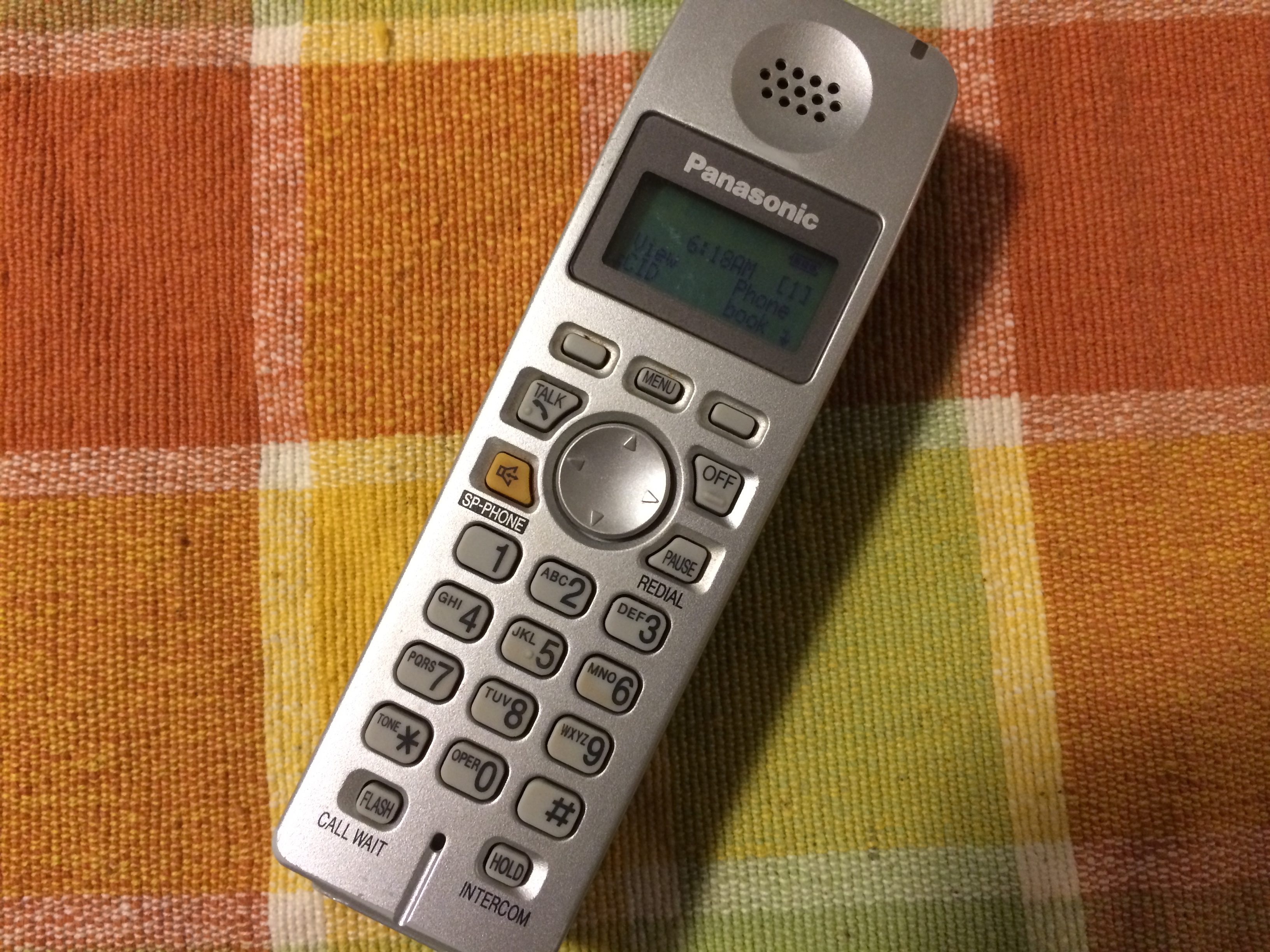
The “Everything is Okay” Phone Call

The Phone

Most of the phone calls that come my way are from people who need something. This seems like an obvious occupational hazard for a consultant who is trying to help others. However, I began to think that this pattern is deeper than just my work world. Over the past few weeks I started to keep track.

Text from kiddo – request for money.

Text from family – request to service their cars.

Phone call from friend – needed advice on issue.

Phone call from colleague – request to cover a meeting.

In the midst of this tracking experiment, there was one call that stood out:

The “Everything is Okay” phone call.

I didn’t actually take the call, it went to voicemail. Imagine my surprise when I listened to that message.

“Hey Carl, just wanted you to know that everything is okay I was just calling to connect with you and say Hi.”

It was just the call I needed. At times, the constant giving of yourself to others, their needs, and their problems can become a solitary place.

Relationships begin to feel like one-way streets.

I am taking this person’s example and trying an experiment of my own. Deliberate and intentional communication with others to connect with them, not to request from them.

Give it a try this week. Who knows, it may just change the world.

“I am good as possible”

I live in New Hampshire. With the exception of my time in the Navy and a few years of grad school, I have lived here my whole life.

Every winter, it snows here…a lot. The world slows down, and we tend to hibernate and stay inside more.

I have a confession: I never learned to ski.

Combine this fact with the fact that I agreed to chaperone my daughter’s ski club helped prompt me to do something that I have been meaning to do for years: learn to ski.

At 44 years old, I decided to stop putting this off and start taking a lesson (the Sunday before a Wednesday ski club). Despite my initial fear, of falling and/or making a fool of myself, the lesson went well and I had enough skills to chaperone. Enough skills to get by. I stared to wonder if I needed additional lessons.

I told this story to a friend. This friend had a story for me. Years ago when their young child was learning to ski, their family would spend days on the slopes. Most of the day was spent in lessons, and occasionally they would “free ski” afterwards. Their child had good skills and some natural talent for skiing and could out-ski most of their peers. The lessons continued.

After lunch, most of the family was going to ski the slopes and the young child had to return to their lesson. The child wanted to ski with the rest of the family, but the lesson continued in the afternoon. A meltdown ensued with this youngster trying to find a reason why they didn’t need to continue the lesson.

“I don’t need another lesson. I am good as possible!” they screamed.

We laughed at the story, but those words remained. “I am good as possible.”

How often do we think we are good enough at something and fail to continue to learn and challenge ourselves? When does “good enough” satisfy us so that we stop refining our skills? Lessons can be boring, especially when compared to skiing down the slopes.

For me, I decided to continue with the lessons. But this story and those words caused me to look to at my own life to see where I have shouted “I am good as possible” instead of realizing that I could improve with just a few more lessons.

Learning to Ski

P.S. For anyone who thinks they are too old, tired, experienced, afraid, (insert word here) to try something new, my instructor told me about a 78 year-old grandfather who decided to learn to snowboard so he could go down the slopes at least once with his grandchildren. And he did!

The Relationship Reset Button

Reset Button

(Image Courtesy of Acceleraction.com)

So often in relationships, whether at home or work, with family or friends or loved ones, the past can overly shape the present.

You had a disagreement with that person. Now every interaction is awkward.

You lost your cool. Now others walk on eggshells around you.

You used to be fascinated by someone’s uniqueness. Now these issues only seem to cause you frustration.

You overly questioned someone’s work. Now they feel that you don’t trust them.

While working with a small group, we noticed this pattern and discussed how it impacts their ability to work together. The more I reflected, the more I noticed this pattern in my own circles.

The past interactions do not disappear, they build on each other to form a strange and often distorted view of others. I read recently that our memories can deceive us. Our memories exist, but each time we access them again they can change and the newer version of the story replaces the old memory.

I thought about how this can impact our relationships. Perhaps this is why it is so hard not to feel like a little kid around your parents. Maybe this is why people in more close relationships are heard complaining about the other one (many times in front of that person). This may be why it is so hard to rebuild a relationship at work that has gone south.

Those memories keep building and changing in a way that reinforces the negative issues.

What we could use is the Relationship Reset Button. This handy device would be available to any two people or a small group where all parties decide to let go of those past hurts, judgements, or misunderstandings. With a simple press of the button, everything would reset. They would be able to start fresh, start new, and get another chance at their relationship.

Yesterday I worked with this small group again. They pushed the Relationship Reset Button. There was history. There was conflict. There was a past. It wasn’t easy, but they stared over.

They let go, and began to appreciate each other’s differences.

They started to anticipate what the others may need, and started to provide that instead of being frustrated by requests.

They started to see that together they could accomplish so much more.

Along the way, some of the past began to return, but they would get together and remind each other that they had started over. These occasional issues didn’t build a new history, but were seen as lingering shadows that would continue to diminish as their new relationships grew.

Where can you use the Relationship Reset Button? Where has the past overly shaped and distorted some of your best relationships? The new year is about to start, so why not go ahead and press it and see what this year brings?