The “Everything is Okay” Phone Call

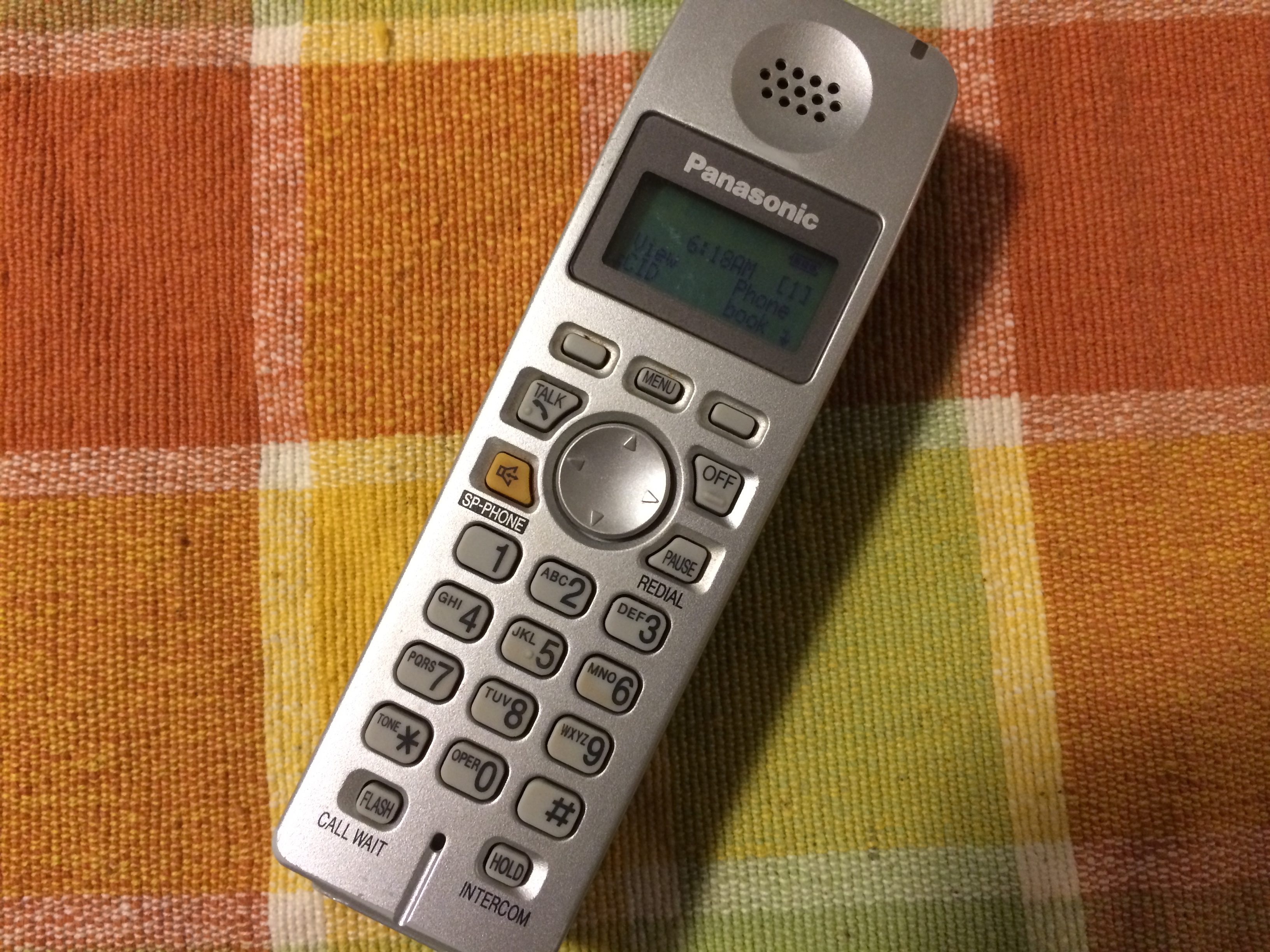
The Phone

Most of the phone calls that come my way are from people who need something. This seems like an obvious occupational hazard for a consultant who is trying to help others. However, I began to think that this pattern is deeper than just my work world. Over the past few weeks I started to keep track.

Text from kiddo – request for money.

Text from family – request to service their cars.

Phone call from friend – needed advice on issue.

Phone call from colleague – request to cover a meeting.

In the midst of this tracking experiment, there was one call that stood out:

The “Everything is Okay” phone call.

I didn’t actually take the call, it went to voicemail. Imagine my surprise when I listened to that message.

“Hey Carl, just wanted you to know that everything is okay I was just calling to connect with you and say Hi.”

It was just the call I needed. At times, the constant giving of yourself to others, their needs, and their problems can become a solitary place.

Relationships begin to feel like one-way streets.

I am taking this person’s example and trying an experiment of my own. Deliberate and intentional communication with others to connect with them, not to request from them.

Give it a try this week. Who knows, it may just change the world.

“I am good as possible”

I live in New Hampshire. With the exception of my time in the Navy and a few years of grad school, I have lived here my whole life.

Every winter, it snows here…a lot. The world slows down, and we tend to hibernate and stay inside more.

I have a confession: I never learned to ski.

Combine this fact with the fact that I agreed to chaperone my daughter’s ski club helped prompt me to do something that I have been meaning to do for years: learn to ski.

At 44 years old, I decided to stop putting this off and start taking a lesson (the Sunday before a Wednesday ski club). Despite my initial fear, of falling and/or making a fool of myself, the lesson went well and I had enough skills to chaperone. Enough skills to get by. I stared to wonder if I needed additional lessons.

I told this story to a friend. This friend had a story for me. Years ago when their young child was learning to ski, their family would spend days on the slopes. Most of the day was spent in lessons, and occasionally they would “free ski” afterwards. Their child had good skills and some natural talent for skiing and could out-ski most of their peers. The lessons continued.

After lunch, most of the family was going to ski the slopes and the young child had to return to their lesson. The child wanted to ski with the rest of the family, but the lesson continued in the afternoon. A meltdown ensued with this youngster trying to find a reason why they didn’t need to continue the lesson.

“I don’t need another lesson. I am good as possible!” they screamed.

We laughed at the story, but those words remained. “I am good as possible.”

How often do we think we are good enough at something and fail to continue to learn and challenge ourselves? When does “good enough” satisfy us so that we stop refining our skills? Lessons can be boring, especially when compared to skiing down the slopes.

For me, I decided to continue with the lessons. But this story and those words caused me to look to at my own life to see where I have shouted “I am good as possible” instead of realizing that I could improve with just a few more lessons.

Learning to Ski

P.S. For anyone who thinks they are too old, tired, experienced, afraid, (insert word here) to try something new, my instructor told me about a 78 year-old grandfather who decided to learn to snowboard so he could go down the slopes at least once with his grandchildren. And he did!

The Relationship Reset Button

Reset Button

(Image Courtesy of Acceleraction.com)

So often in relationships, whether at home or work, with family or friends or loved ones, the past can overly shape the present.

You had a disagreement with that person. Now every interaction is awkward.

You lost your cool. Now others walk on eggshells around you.

You used to be fascinated by someone’s uniqueness. Now these issues only seem to cause you frustration.

You overly questioned someone’s work. Now they feel that you don’t trust them.

While working with a small group, we noticed this pattern and discussed how it impacts their ability to work together. The more I reflected, the more I noticed this pattern in my own circles.

The past interactions do not disappear, they build on each other to form a strange and often distorted view of others. I read recently that our memories can deceive us. Our memories exist, but each time we access them again they can change and the newer version of the story replaces the old memory.

I thought about how this can impact our relationships. Perhaps this is why it is so hard not to feel like a little kid around your parents. Maybe this is why people in more close relationships are heard complaining about the other one (many times in front of that person). This may be why it is so hard to rebuild a relationship at work that has gone south.

Those memories keep building and changing in a way that reinforces the negative issues.

What we could use is the Relationship Reset Button. This handy device would be available to any two people or a small group where all parties decide to let go of those past hurts, judgements, or misunderstandings. With a simple press of the button, everything would reset. They would be able to start fresh, start new, and get another chance at their relationship.

Yesterday I worked with this small group again. They pushed the Relationship Reset Button. There was history. There was conflict. There was a past. It wasn’t easy, but they stared over.

They let go, and began to appreciate each other’s differences.

They started to anticipate what the others may need, and started to provide that instead of being frustrated by requests.

They started to see that together they could accomplish so much more.

Along the way, some of the past began to return, but they would get together and remind each other that they had started over. These occasional issues didn’t build a new history, but were seen as lingering shadows that would continue to diminish as their new relationships grew.

Where can you use the Relationship Reset Button? Where has the past overly shaped and distorted some of your best relationships? The new year is about to start, so why not go ahead and press it and see what this year brings?

Jumping to Offense

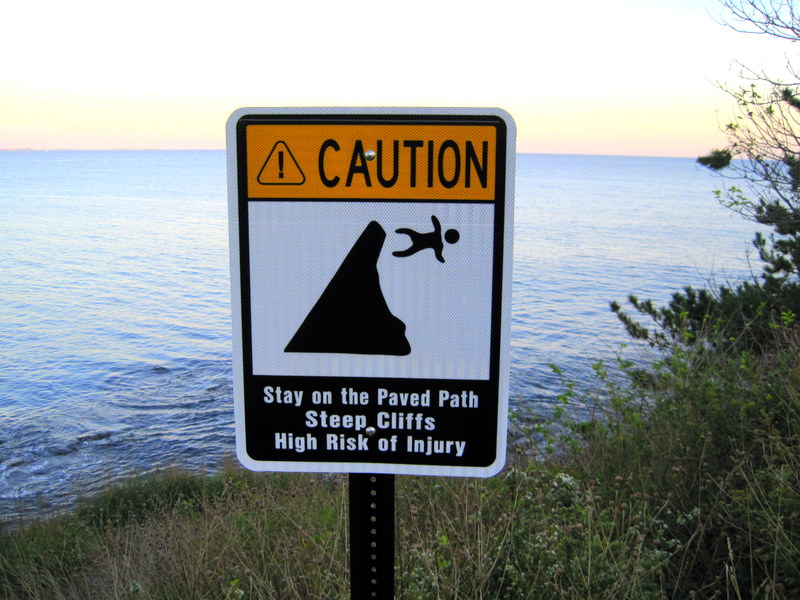
Cliff Sign

(Image Courtesy of http://www.aroundtheworldl.com)

The other day during a conversation with someone close, I noticed something about our interaction. It was a simple conversation, nothing too deep or seemingly important, but a pattern revealed itself.

The pattern was simple: I jump to offense.

Let me explain. This means that my mind appears to be on a quest to find a way to be offended at what someone else is saying. By quest, I mean that my mind considers this its highest priority and will devote both time, energy, and resources to ensure the quest’s success.

Here are a few examples:

“It is getting kind of late for sending out Christmas Cards”

My Jump: So are you saying that I should have sent these out?

“It would be nice to do more interactive things at the next holiday with everyone”

My Jump: So they expect me to plan this then be responsible for meeting everyone’s idea of what is fun?

“We need to make sure we are attentive to the bottom line”

My Jump: So they are saying that I am overspending?

There are risks in jumping to offense, just like the risk of jumping off a cliff. It is dangerous and there is unseen peril just beyond the lip. Luckily I am beginning to notice this pattern as it occurs (or shortly afterwards).

I realize that I need to retrain my mind to see the warning sign on the edge of that cliff before I go off jumping. Picturing that warning sign helps, but also explaining to the person I am talking with if it begins to happen.

Here are a few tips for my fellow jumpers:

  1. Recognize your bent toward Jumping to Offense.
  2. Understand that Jumping to Offense is dangerous, for you and others.
  3. Slow down and listen, don’t respond right away.
  4. Ask clarifying questions, make sure you understand what the other person is saying.
  5. If you do jump, climb back up and reconcile with those around you.
  6. Repeat steps as needed.

Where are you Jumping to Offense? Take a few moments to think about where you could, as my grandmother always used to say, “look before you leap.”

P.S. I am going to print out this photo and put it where I can see it every day.

The Cost of Free

FreeRecently, someone was describing a difficult relationship. This is no ordinary difficult relationship, but one with someone who is deeply connected with this person.

They have a long history.

It has been difficult.

They still have to interact on a regular basis.

To make matters worse, the other person offers things for FREE. Since these things are typically valuable, there is an incentive to accept these FREE items or events.

As this person described the situations, conversations, or interactions leading up to these FREE offerings, something became abundantly clear.

These offers were anything but FREE.

The COST OF FREE was significant to this person, their family, and those close to them.

The COST OF FREE to this person was in the emotional stress and obligations that these FREE offerings came with after the fact. They became indebted to this other person.

The COST OF FREE to their family was the toll the stress had on their ability to connect with them during these difficult times, and the time away that the other person would eventually require as payment.

The COST OF FREE to those close was also in the form of stress, but also the inability to have the time to connect because they owed someone else their time, energy, and creativity.

I encouraged this person to calculate the COST OF FREE from now on and compare it to the value of what was being offered. Before this, they just saw the value of what was being offered and felt the obligation to say YES.

Now they can calculate the COST OF FREE and if that cost outweighs the offer, they can say NO.

Have you considered the COST OF FREE? Maybe it is time count the cost.

You may find a way to FREE yourself.

Unspoken Expectations: Hidden Frustrations

In life, work, home, or family we have expectations of others. Others have expectations of us. Some expectations are shared and we can choose to meet the expectation or not.

Your employer may expect you to show up to work on time. They inform you. You wake up early to meet that expectation. There are consequences for being late, and certain actions will be taken if needed.

Pretty clear expectation with appropriate ramifications.

Not all expectations are as clear.

There are Unspoken Expectations.

Unlike regular expectations, the unspoken version are not clear and you may not know that they exist. Not knowing doesn’t prevent being measured against this standard. In fact, the Unspoken Expectations are typically measured more stringently.

Why do we keep these expectations to ourselves?

Why don’t we tell that employee that we really want them to show initiative and take on a project to call their own?

Why don’t we say we really don’t want to eat out there? Or go visit those people? Or attend that event?

Why don’t we tell our boss that we need more concrete feedback, not a passing “You’re Awesome” as they rush past us in a distracted flurry?

Why don’t we say this his how we need to be treated?

As we measure other people against these expectations, our frustration builds. We are not getting what we think need or want from others, and we keep it hidden.

These Hidden Frustrations pile on each other and create distance and difficulty in our relationships and our organizations.

Something prevents us from speaking out these expectations, and the frustrations grow. These Hidden Frustrations damage our ability to lead, follow, or relate to those around us.

Once we know that we may holding others to Unspoken Expectations, two options appear.

1. If the expectation is that important, we need to move past our fear and have a conversation.

2. If our frustration is being caused by an unrealistic expectation, we may need to let that standard go.

Over the next few days, when you are feeling frustrated with others, take out a sheet of paper. Write down the expectations. Seeing those words and expectations will help determine which option to follow.