Which Race Are You Running?

Yesterday I got to cross off a goal from my list. I ran a 5K.  Sure, running a 5K is a perfectly good goal. Running a 5K has been on my yearly goal list for a few years and I have been able to cross it off each year. This year the goal was different. Simply running a 5K was not the goal yesterday. The actual goal was to run a 5K together with my daughter.

ShoesRunning with my daughter was the goal. We got new shoes (note the distinct advantage I have simply from shoe size) signed us both up a few months ago, and a small competition began. Every few weeks a photo would appear on my phone. The photo was of the treadmill time of her latest run. In addition to these photos, periodic smack-talk began to appear alongside.

Once I get new shoes maybe I’ll smoke you in a race 😉

Perhaps as a way to defend myself, photos of my treadmill times were exchanged (especially when my times were faster), along with various replies, especially when she was getting nervous.

I’m kind of nervous!! I hope I’m not too far after you 😁

Luckily you will have your dad at your side encouraging you

And I hope to have my dad behind me cheering me on

This would cause more photos, and faster times, and more replies. This banter and friendly competition helped both of us stay on track and keep running so we would be ready for race day. But when race day arrived, something happened.

A few people who I know were also racing that day. I tend to be competitive by nature and I have been running at my fastest pace in years. I felt a different goal rise up inside me. This was my chance. A chance to finally demonstrate that I was faster than these other runners and have a “win” and obliterate my last year’s time. My daughter must have sensed something because she casually mentioned that it would be okay if I ran ahead, despite our earlier goal of running together.

I had a choice to make. And isn’t this a choice we all face at some point? We work together with other people. The original idea is a team achievement, then an individual opportunity comes our way. What we decide in that moment is important. Do we honor our original commitment? Do we give into ourselves and break away from the pack in order to “win”? I had to ask myself:

Which race are you running?

My choice appears below. (I am wearing the red hat, she is in the bright yellow shirt.)

As for beating those other people, there is plenty of time and plenty of races ahead of us. (And they should know that I am coming after them in the next race.) For now, I am happy with my choice. A message on my phone as she was driving back to school confirmed that it was the best choice.

But you’re a great dad and ran with me so basically you won the whole race

Today, make sure you are running the right race…It may just change the world.
By the Book or What Book?

DISC

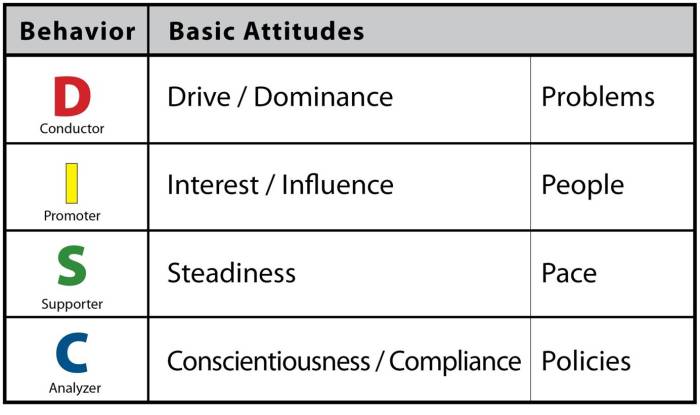
In an earlier post, we talked about the impact of having high Drive or D style and how it can manifest. As a reminder these four categories are part of a DISC assessment based on the work of William Marston. Today we will look at another style, one that measures how we view and comply with rules around us: the C style.

The C in DISC measures a person’s compliance or how they view the rules around them. A higher compliance person is “by the book” and a lower compliance person often asks, “what book?” 

One of the easiest way to determine where you fall on this scale is to think about how you cook. Do you follow the recipe or do you just wing it? Do you look up how to measure a dash, or do you just put it in? The higher compliance people follow the recipe, and lower grab a few ingredients and hope it turns out well.

We recently had a friend over the house to show them how to cook a turkey. (I have a theory that our parents and sitcoms made such a big deal about cooking a turkey that we have somehow determined that they are hard to cook.) Prior to their arrival, I tried to explain how easy it is to cook these birds. You just unwrap it, take out the bag of nasty stuff from inside, rub it with oil and some spices, and sit around for 3 hours while it cooks.

Convinced that this was harder than described, we walked them through the procedure while they took copious notes. The preparation took less than 5 minutes. We joked about their style, and how their high compliance at times looks for rules and procedures, and without a clear plan or recipe, this person can feel a little lost.

On the flip side, this high compliance is an amazing trait. This person is thorough, detail oriented, and keeps an eye on quality. They bring an amazing ability to make sure project are done well and on-time. After we laughed about the note taking, we realized that we had the next 3 hours to connect.  Not a bad recipe for relationships, especially when there was wine.

Are you by the book? Do you follow the recipe, or do you just grab whatever is on the shelf? Do you look at rules and assume they were meant for other people? Next time you are cooking or around someone who is, take a moment and watch.

If you are interested in obtaining your own DISC assessment to see where your compliance ranks, contact me for more details.

The “I’ll be right there” people

Recently I noticed an interesting group of people. These people interact with those around them in a noticeably different way. These people differ in a lot of ways. Some of them are in business or sales, some provide a service, others are just friends to others.

They have one distinct common characteristic: they are “I’ll be right there” people.

“I’ll be right there” people are people who understand the larger relationships at stake, no matter what their role. “I’ll be right there” people answer the call for help or service to meet a need. “I’ll be right there” people help others despite their job description or their pay scale. “I’ll be right there” people are not put off at your request, they see it as an opportunity to connect with you instead.

Imagine the result when your clients consider you an “I’ll be right there” consultant.

Imagine the result when your customers consider you an “I’ll be right there” salesperson.

Imagine the result when your employees consider you an “I’ll be right there” boss.

Imagine the result when your communities consider you an “I’ll be right there” citizen.

Imagine the result when your kids consider you an “I’ll be right there” parent.

Imagine the result when your friends consider you and “I’ll be right there” friend.

Today, instead of just imagining what it would be like, listen for the next request and simply reply…“I’ll be right there.”

Theory, Paper and Real Life

Sadly, a lot of times I am better in theory or on paper than I am in real life.  I have certain beliefs about the way the world or people should be, how they can better connect with and work with each other and I think, write and even periodically teach these concepts. Applying these concepts to my own life has proven to be a challenge.  I will give you a few examples.

Preparing to teach on emotional intelligence and becoming stressed about it and losing my cool with the kids about their homework.

Writing a blog about communicating while getting into an argument with those around me.

Teaching on coaching in the workplace while canceling my coaching session with one of my employees.

My ability to offer great advice to others while failing to take that exact same advice for my own present situation is remarkable (unfortunately).

I heard a very important idea from Jack Enter, a speaker and author.  During a session on failing as a leader, he warned us that believing in something and putting it into practice are two separate things.  He warns us to be careful about being satisfied with our beliefs while never executing on the actions necessary to do the steps needed to be the people and leaders we need to be.

Our (or at least my) ability to allow this disconnect between theory, who we are on paper, and real life is amazing.  The ability to have two seemingly contrary positions without noticing it has become more apparent to me, especially when I fail.

Jack recommends disciplining ourselves to implement these concepts, while being accountable to others so we actually do these things.  How to you make sure your theories or who you are on paper makes it into your real life?

For me, the morning phone call helps because it provides a space to be honest about where I didn’t measure up, and be accountable to others to make changes that bring my life more in line with these theories I believe.

How Cloudy is Your Glass?

Understanding your own emotional state is essential to your development and progress as a leader, a co-worker, or a person.  More and more the importance of emotional intelligence is identified as the difference between good/marginal leaders and great leaders.  Daniel Goleman who wrote Emotional Intelligence in 1995 (and many other books) is the leading voice on these matters.  He states that “90% of the difference between star performers and average performers in senior leadership is Emotional Intelligence.”

Emotional Intelligence is the ability to identify, assess, and control the emotions of oneself, of others, and of groups.  The first step is to identify or become more aware of your own emotional state.  To help identify your own emotional state, I like to use the glass example.  A clear glass represents you in your emotional state where you are healthy, in control, and emotionally neutral.

However, life happens.  When negative events occur, they begin to cloud your glass.  The person who cut you off in traffic.  The missed appointment.  The argument with a significant other.  A tragic life event…and the list goes on.  Any of these can cloud your glass.  Becoming aware of your glass and its current state is a great way to both identify what clouds your glass, and how cloudy you may be on a given day.

Your ability to move from the cloudy glass back to clear is one of the most important skills. For some, this process may take hours or even days until the impact of the negative experience clears and they return to neutral.  Identifying your glass in the first place is a great way to separate yourself a little from the circumstances at hand.  Once you recognize that your glass is getting a little cloudy, it becomes easier over time to recognize what triggers you.  Knowing your triggers can help you clear your emotional state more rapidly over time with practice.

I posted this picture on the door to my office and regularly ask those who come in the status of their glass.  I also let them know on certain days that my glass is a little cloudy and I may need a little space.

The great news with Emotional Intelligence is the fact that we can all become better with practice and experience.  I posted about an online game called SuperBetter that has some ways to help with managing your emotional state, feel free to check it out.  Another interesting thing about emotions is that they are contagious (for good or bad).  This means we can play a role in helping each other when our glasses are cloudy.

My glass is a little cloudy today, but knowing that helps me manage my interaction with anyone who I encounter today.  Knowing the state of my glass requires me to slow the world down a little (especially with my kids today) and not react when something does not go as planned.  As I watch them, they key off my emotional state.  The better I manage my own glass, the better they manage theirs as well.  The last thing they need is for me to pour my glass all over them.

Right Now: how cloudy is your glass?  What causes your glass to become cloudy? Are there things that are making your interactions with others more challenging because of what you are carrying with you.  Take a few moments each day to think about your emotional state.  The very act of taking an emotional inventory helps you become more aware that awareness can lead to better management of your emotional state.

Learning to Say NO!

(Image Courtesy of Sharon Young: Thanks Sharon!)

Learning to say “No” is not always easy.  People ask us to agree to things all the time.

“Will you help out on this committee?”

“Can we get together soon?”

“Will you watch my kids, paint my house, be my friend, volunteer your time, follow me and my cause, buy crap from my kids (well you get the idea).”

I am beginning to hear what I call the “soft yes” in response to these multiple requests. The “soft yes” isn’t really a yes, it is a “no” veiled in terms that are our attempt to politely decline, but we don’t feel comfortable saying it.  I find myself doing this at times and recently this is what I am hearing:

“I guess I can.”

“If I have to.”

“Maybe…”

“Okay.”

How many times have you agreed to something where your heart really wasn’t into it, and you would have preferred to say “no”?  In striking a balance between your life, your work, your family, and just being you, there will be things you need to say no to.  You cannot be all things to all people, and the over-committed life is not a pleasant one (for you or for those around you).

Where do we start?  In his book, Magnificent Mind at Any Age, Dr. Daniel Amen states that the inability to say no (or impulsively say yes) creates an overwhelmed state where you become immersed with other people’s priorities that distract you from your own goals. He offers us a way to reply and encourages us to learn the following phrase when someone asks us to do something:

“I need to think about it.  If I want to do it, I will get back to you.”

Wow.  Simple yet effective.  That one phrase may help bring needed balance to your life. Be prepared, if you have been on “automatic yes” or “soft no” and still agreeing in the end, this may feel strange to those around you.  It is funny, just recently I realized how much I have been giving a “soft no” to someone who has been trying to get together with me, but the truth is I should have just said no instead of stringing them along and rescheduling the meeting.

Try it out, let me know how it works.  This may bring some needed balance to your life, and let you find yourself, not just serve others.  Use it well, and let me know how it goes.  I have a hard phone call to make, but it would have been easier if I had used this phrase in the beginning.

“The art of leadership is saying no, not yes.  It is very easy to say yes.”  Tony Blair