They are Listening

A while ago, I posted Amy Cuddy’s Ted talk about our body language and the impact it can have on us.

Shortly after watching this talk, I mentioned this to our younger kids and had them stand up straighter, and even lift up their hands in a “V” pose with their hands overhead and spread out. This came to be known as the “victory” pose around our house when frustrations such as homework, or other issues caused frustration or anxiety. But as time passed, these moments became infrequent, or dismissed from my perspective as “Dad being Dad.”

Flash forward more than two years.

We were on a long road trip. An important trip where missing the waypoints, or hitting delays have large consequences.

Car trouble.

Frantic search for a dealer.

Work that will most likely result in a delay.

PANIC.

Shuttle to a local mall.

Waiting. Wandering. Waiting.

Then it came.

Encouragement.

Small simple words.

A reminder to hold our hands high.

A reminder to walk in the “victory” pose.

A reminder that we were safe, and that it was going to be okay.

BUT.

The words and reminders were not from me, but from our kids.

The world slowed. (And so did my breathing)

I took their advice, and I raised my hands high and walked around that little mall.

My perspective and emotional state shifted.

We all smiled, laughed, and joked.

Our world shifted for the better that day.

I suddenly realized the impact we have around us, in our circle, and in the lives of others.

I also realized something else, perhaps even more important.

They are listening.
Me Too

Two words.

Two words that are the result of your own journey, hardship, or loss.

Two words that can drive loneliness, fear, doubt, and insecurity away.

Two words that provides comfort in a time of need.

Two words that connect you to others.

I went through…

“Me too.”

I lost…

“Me too.”

I am struggling with…

“Me too.”

I feel scared, insecure, lost, not enough…

“Me too.”

These experiences mold, shape, bend, and sometimes almost break us.

And then we hear those two words that help us see that we can survive, we can move forward, we can become something else, and we can become strong.

Perhaps the more important reminder is that we are not alone.

“Me too.”


Wired for Problems

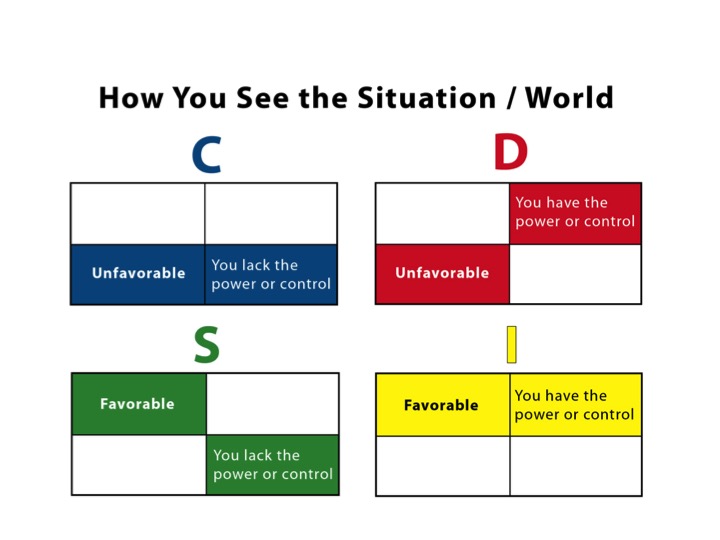
How you see the world

Understanding our own behavioral styles is essential to our long-term success. Knowing that you have a tendency to follow the rules, or that you can connect with others helps you leverage those strengths in your style (maybe you have a passion for finance or you are great at sales).

Knowing how you are wired also helps you know when your style needs to be modified (maybe you are too strict at enforcing rules or you connect so often with others that you are not getting your own work done).

The other day I was having a somewhat difficult interaction and an overreaction. When I react this way, I revisit my own style (often with other people) to help determine the cause and see if this insight provides some solution or an easier way to modify my style in the future.

As I described the situation to someone close, they provided some much-needed insight.

I am wired for problems.

How you see the world (1)


My natural tendency is to see things in an unfavorable light. Combine that with the perception that I am in control or have power over a situation, and things get interesting.

What I see as a problem, others may not even notice.

When I want to fix things, others may not be ready or aware that the problem even exists.

Sometimes this style works well.

If organizations, teams, or individuals need to change or improve.

Sometimes this style doesn’t work out as well.

If we are just having a casual conversation, or interaction.

This greater self-awareness helps me understand that although I would like to fix a lot of things, not everything is broken or a problem that needs fixing.

What is the old saying? “If you are a hammer, after a while everything begins to look like a nail.”

How are you wired?

If you know your own style, take a few moments to revisit your results.

Ask yourself the following questions:

1. What are the best 3 things about my style that really work for me in my role, job, career, or life.

2. What are the 3 things about my style that seem to get in the way the most, or if modified would lead to greater success.

Put that list somewhere where you can see it each day, and leverage what works, and begin to modify what doesn’t work.

If you don’t know your style, drop me a line or connect with someone who can help you identify your style.

Dancers Dance

Dancers Dance

I am surrounded by dance.

Strange rhythmic sounds echo from the upstairs of our house.

Spins occur in our kitchen.

Spontaneous taps break out during random lulls.

Terms foreign to me are thrown around during cookouts.

Pottaburray? Pleeaaayyy? Kickball steps? Kickball chains?

For two decades this foreign culture has invaded my land.

Different language.

Different rituals.

But I am learning.

I learned about the teacher who drives three hours each night after work just to be part of a tribe.

I learned about the young person who was shy and now beams with confidence.

I learned about the mom who started again despite injury and now spins with ease.

(I just learned that the term is turn, not spin!)

I learned about the owner, the instructor, the master-stylist, the sibling, the financial analyst, the consultant, the student, the teacher, the bartender, the business owner, and the parent (and soon to be parent).

I learned about the struggle, the pain, the work, the practice, the goals, the frustration, the ambition, the need, the sorrow, and the joy.

I learned that dancers have different stories.

I learned that dancers have different backgrounds.

I learned that dancers have different reasons.

Most of all I learned that Dancers Dance.


Recalibrating the GPS

It started as a simple conversation about running, pace, and times. We both opened up the app on our phones and talked about some of the struggles, successes, and challenges ahead while scrolling through the history.

Then it came out.

“I must need to recalibrate the GPS, I am not that fast.”

As I heard those words, I couldn’t help myself.

“Really? You have been training hard, staying on schedule, and when you make progress, why does your first thought assume something is wrong with the GPS? Why do you discount your achievements?”

Pause.

Another Pause.

“Well historically…”

“In the past…”

“I used to not…”

All of next few statements were not about the present reality, or celebrating the accomplishment. All were focused on the past.

Past limits. Past thoughts. Past obstacles.

I listened for a few minutes.

“Sounds like is not your GPS that needs recalibrating.”

When do you discount your achievements? When does your past invade the present to take away the things you accomplish? When does your first thought assume that it must be the equipment or a false reading because it cannot be you that reached the goal?

Maybe we could all use a recalibration.

More Flexible, Less Fear

The other day someone asked me to describe my two biggest goals in life. Once I got over the “Hey, I thought this was going to be a casual conversation!” I spent some time thinking about my response.

The reply didn’t come right away, as my mind raced between what I wanted to do and/or achieve and what I wanted to leave behind or be remembered for…then it hit me.

Two simple goals:

1. Be more flexible.

2. Have less fear.

More Flexible. I have noticed something as we progress through life. We tend to become stiff and rigid. This can be physically, mentally, or emotionally. We don’t stretch as often. We stop trying new things. We want things a certain way. We believe certain things. We know we are right and are not afraid to express that view. We have history with others. We hold grudges.

This goal provides a simple reminder. Am I getting stuck? Am I getting stiff? Am I responding and being closed off to new ideas, new activities, or new adventures? Recently I have been trying Yoga as a way to become more flexible physically, and starting to read a variety of books, or articles that may challenge my strongly held opinions. I initially felt resistance to both, but in time, both are becoming more natural.

Less FearLife is pretty ironic. When I was younger with less resources, less experience, and less opportunity, there was little fear. As resources, experience, and opportunity have grown, so has a corresponding fear.

This goal is the other important reminder. What am I afraid of? What is the worst that could happen? What is the cost of not trying these new things? Having this conversation with myself or others helps move me from inaction to action.

I am glad they asked me about my two biggest goals.

Two simple goals.

More Flexible.

Less Fear.

These two goals have become a kind of mantra for me.

Simple enough to remember, yet effective enough to keep me moving.

Now the question is passed to you.

What are your two biggest goals in life?

We all look forward to your answer.