A Little Friendly Research Part 2

Part 2 of this series on friends and friendship. For a little background, check out Part 1, or the inspiration for this series of questions. In short, instead of rattling off things in my own head about friends and friendship, I asked you and your answers did not disappoint!

Question 2: Do you think friendship is hard? Why or why not?

In general, no. I think true friendship is like breathing; it’s just there (and when you stop breathing, or stop friending something catastrophic will happen).

Sometimes it is hard, self-less, sacrificial investment and sometimes it is as easy as breathing – just something that you do naturally.

Commitment to staying in touch takes effort but worth it.

Obviously I can only speak for myself, but I don’t think friendship itself is hard. I do have a difficult time finding friends (i.e. people who want the same things I want from friendship and who are willing to work to make friendship a priority).

When I develop a close friendship, I go into fear mode because I’m afraid I will lose it. There’s a lot of fear in my friendships now that I think about it, and I don’t know what that means but it’s kind of sad.

That is not to say that friendship is not work; it needs effort and care and to be a good friend you have to know how to put other people ahead of you when appropriate.

I think maintaining long distance friendships can be “hard” because both sides have to make an effort. I don’t think friendship is hard when you are work friends or they are part of your daily/weekly social circle.

I am not always a good friend to others because I also struggle with my own insecurities about opening up to other people, being hurt, rejected, etc. Sometimes I get these random fears that my friends actually all hate me and think I’m pathetic and wish I would go away, but again, that’s my own garbage.

Depending on the person some are easy and some are difficult but usually you can determine and take it from there.

If I find a friendship consistently difficult, one where I feel myself afraid to be who I really am or find myself sacrificing all the time, I re-evaluate if there is a really a friendship going on, or more a ministry.

Yes, especially as it grows. You move passed the “courtships” to the “marriage” where you begin to see each other’s faults. You know that you care for them enough and vice versa that you are willing to ride the waves of petty differences and hardships because you value who they are, and you are in it for the long hall.

It can also be hard because conflict is inevitable. Both must be willing to be humble enough to own their own “stuff,” make it right, and love enough to let go and move on.

Sometimes when I’m afraid I’ll go dark on them because I figure that if they can’t find me or they’re not thinking about me, then they won’t leave.

I will work hard, through conflict, distance and silence for friends I know value me.

You know that you care for them enough and vice versa that you are willing to ride the waves of petty differences and hardships because you value who they are, and you are in it for the long hall.

It can be hard. I have to choose to see my friends—being with my friends doesn’t just happen. Decoding another’s secret protocols is tricky.

On to question 3. Thank you for taking this journey with us.


A Little Friendly Research Part 1

Friendships have been on my mind lately.

Who has them? How do they work? What makes a good one?

Instead of providing my viewpoint, I asked you a series of questions.

A big thank you to all who courageously hit reply.

Question 1: What are the best attributes of your good friends?

They are funny, encouraging, and engaging.

They listen to listen, not to reply.

They are always good listeners when I need it, comic relief, and supportive.

They laugh at themselves and at me.

They like to laugh and to play and are wickedly funny in a way that’s not always appropriate.

Integrity, safety/security (based on trust, understanding, compassion, and forgiveness), humor, honesty.

Being there for each other emotionally and spiritually and being a great ear and supporting.

They ask me how my soul is on regular basis.

They listen, ask questions, and show genuine interest/concern in others.

They ask good questions and are ok if I have to not respond for a while.

They’re willing to be real – authentic, vulnerable and open.

They are consistent.

They value friendship and are willing to work through distance, conflicts, etc.

They cheer me on to do the things that scare me most.

They are kind, encouraging, and they try to keep a positive outlook.

We can always “pick up where we left off” no matter how much time has passed since we’ve seen each other in person.

Will accept you for who you are but will call you out when you are being stupid.

They are ready to offer a shoulder to cry on or boot up my ass and aren’t afraid to ask me which one I need most.

We can shift conversations from the deep places to the hilarious and irreverent and back again and not lose our way.

I think all relationships exist on a continuum with the shallow/superficial at one end and the secret at the other. What makes a friendship close is the ability to go from one end to the other, sometimes in the same conversation. Between the two endpoints are additional points—the silly, the serious, the sacred, the sacredly silly. Note: I’m pretty sure the continuum isn’t just populated with words that begin with s.

Again thank you for being part of this experiment. You didn’t have to, but maybe there was a lesson in that simple act of replying.

There were 8 more questions. And the answers just keep getting better and better.

Becoming Equals

They needed some coaching, so you helped encourage and develop.

You needed to run your first 5K, so they helped you train.

They needed to lose weight, so you helped with healthy options, accountability, and support.

You needed assistance with strategy, so they helped provide perspective, options, and focus.

They needed to find a better career, relationship, or life-goal, so you provided some guidance.

You were a little scattered and out there, so they helped organize and ground you.

They were a little structured and serious, so you helped them be messy and fun.

These relationships start in interesting ways.

One of you needs something, and the other is there to help.

At first the roles were clear.

One of you is the expert, coach, parent, mentor, counselor, or consultant. The other one needs what you have.

One of you is giving, the other is receiving.

Typically this approach only works for the short-term. Once the need is met, you disengage and move on.

But sometimes, these relationship continue.

These relationships begin to change.

You are Becoming Equals.

What was once mentoring becomes mutual assistance or expertise.

What was once consulting becomes sharing ideas together.

What was once coaching becomes both playing at the same level.

What was once parenting becomes more like a friendship.

Becoming Equals doesn’t happen overnight.

Becoming Equals requires both of you to shift.

Becoming Equals allows both of you to shine.

One day you notice the person who use to run a few steps behind you is now at your side, and even ahead of you.

One day you are both leading.

One day you are both moving forward.

There is a time and place for the first roles.

But there is something more.

Something better.

Becoming Equals may be what makes relationships really great.

Becoming Equals may be what makes relationships last.


Home Planet

You meet.

You start to talk.

You try to explain some weirdness.

They nod.

They totally get it.

They totally get you.

You connect so quickly.

You feel so understood.

They speak as if in your native language.

They understand the perspective, the weirdness, and the challenges.

It is almost as if, as a good friend of mine says…

“They are from my Home Planet.”

They are out there.

You can find them.

They are from your Home Planet.

P.S. Remind them of their impact when you find them.

They are Listening

A while ago, I posted Amy Cuddy’s Ted talk about our body language and the impact it can have on us.

Shortly after watching this talk, I mentioned this to our younger kids and had them stand up straighter, and even lift up their hands in a “V” pose with their hands overhead and spread out. This came to be known as the “victory” pose around our house when frustrations such as homework, or other issues caused frustration or anxiety. But as time passed, these moments became infrequent, or dismissed from my perspective as “Dad being Dad.”

Flash forward more than two years.

We were on a long road trip. An important trip where missing the waypoints, or hitting delays have large consequences.

Car trouble.

Frantic search for a dealer.

Work that will most likely result in a delay.

PANIC.

Shuttle to a local mall.

Waiting. Wandering. Waiting.

Then it came.

Encouragement.

Small simple words.

A reminder to hold our hands high.

A reminder to walk in the “victory” pose.

A reminder that we were safe, and that it was going to be okay.

BUT.

The words and reminders were not from me, but from our kids.

The world slowed. (And so did my breathing)

I took their advice, and I raised my hands high and walked around that little mall.

My perspective and emotional state shifted.

We all smiled, laughed, and joked.

Our world shifted for the better that day.

I suddenly realized the impact we have around us, in our circle, and in the lives of others.

I also realized something else, perhaps even more important.

They are listening.

Wired for Problems

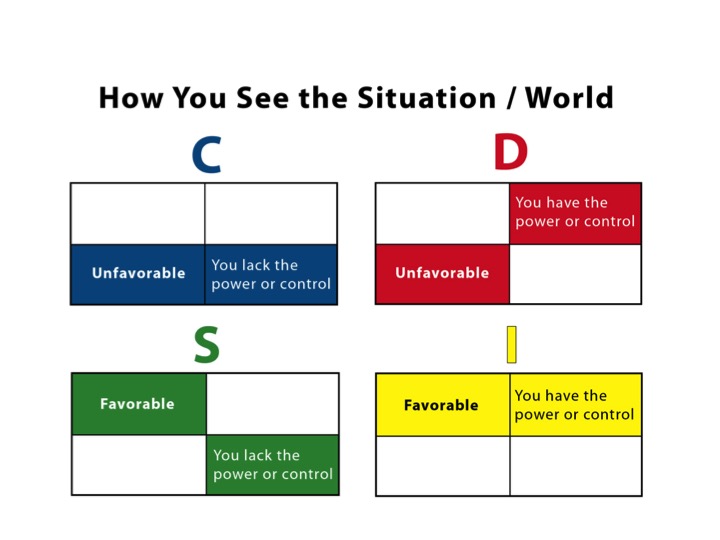
How you see the world

Understanding our own behavioral styles is essential to our long-term success. Knowing that you have a tendency to follow the rules, or that you can connect with others helps you leverage those strengths in your style (maybe you have a passion for finance or you are great at sales).

Knowing how you are wired also helps you know when your style needs to be modified (maybe you are too strict at enforcing rules or you connect so often with others that you are not getting your own work done).

The other day I was having a somewhat difficult interaction and an overreaction. When I react this way, I revisit my own style (often with other people) to help determine the cause and see if this insight provides some solution or an easier way to modify my style in the future.

As I described the situation to someone close, they provided some much-needed insight.

I am wired for problems.

How you see the world (1)


My natural tendency is to see things in an unfavorable light. Combine that with the perception that I am in control or have power over a situation, and things get interesting.

What I see as a problem, others may not even notice.

When I want to fix things, others may not be ready or aware that the problem even exists.

Sometimes this style works well.

If organizations, teams, or individuals need to change or improve.

Sometimes this style doesn’t work out as well.

If we are just having a casual conversation, or interaction.

This greater self-awareness helps me understand that although I would like to fix a lot of things, not everything is broken or a problem that needs fixing.

What is the old saying? “If you are a hammer, after a while everything begins to look like a nail.”

How are you wired?

If you know your own style, take a few moments to revisit your results.

Ask yourself the following questions:

1. What are the best 3 things about my style that really work for me in my role, job, career, or life.

2. What are the 3 things about my style that seem to get in the way the most, or if modified would lead to greater success.

Put that list somewhere where you can see it each day, and leverage what works, and begin to modify what doesn’t work.

If you don’t know your style, drop me a line or connect with someone who can help you identify your style.