The Optimism Zone

optimistic2

(Image Courtesy of Real Balance Wellness)

Soccer, youth travel soccer to be specific, now fills most of our days. Practices fill the week. Games fill the weekend.

Each week we are surrounded by increased skills, increased playing ability, and an increased level of teamwork.

Each week something else has also increased: the negativity of the spectators.

Negativity creeps in, when something doesn’t go the right way. At first negativity is hard to notice, and it may begin as disappointment.

The collective “OH NO, TOO BAD” when a goal is missed, turns into “UGH.”

The “GOOD TRY” becomes “WHY DIDN’T YOU MAKE THAT PLAY.”

About a week ago, the negativity became so loud during the game that it made my emotional glass cloudy. For hours after that game, I had the kind of emotional hangover that lasted for more than a few hours.

At the next day’s game, we set up early and made a declaration:

“This area right here (pointing to the imaginary large circle surrounding our folding chairs) is a declared Optimism Zone. If you feel the need to be negative, you need to go someplace else.”

For the first few minutes of the game we had to remind others a few times.

“As a reminder, you are in the Optimism Zone, all statements and comments should reflect that, if not, you should find another area to sit.”

The game, the comments, and our experience improved dramatically. We were returning to positive comments, and encouraging remarks.

The original negativity comes partly from how much these parents, friends, and family care about the players and how much they want them to succeed, and to win.

What began as coaching, became tearing down. What began as cheering, became criticism. Once negativity becomes the dominant way to express emotions, it slowly becomes the only channel.

Our attitudes and emotional state are contagious.

Perhaps we could all use an Optimism Zone to recalibrate our interactions.
Finding Your Voice

speed_bumps_kill_earth

(Image Courtesy of Autoblog.com)

When working with a fairly large team of leaders one dominant trait was clear. This team drove hard for results, and wanted to accomplish numerous projects and tasks. The intensity manifested itself during their meetings. In between numerous cross-conversations and interruptions, ideas were discussed, challenged, and hashed out.

If you had an idea, you had to defend it.

If you had a suggestion, you had to sell it.

If you had an objection, you had to voice it.

But, there were other members of this team. Team members who did not share the same dominant drive. In meetings, these team members remained silent. They had no voice at the table.

One of the “silent ones” pulled me aside after the session. We talked about finding their voice amongst the team and the challenges associated with speaking up.

“Your voice is important on this team, and you need to find ways to speak up, especially if you have concerns.”

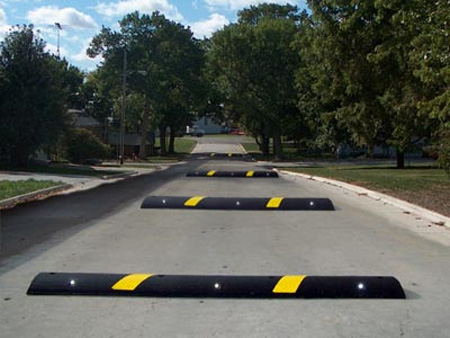
“That is great for you to say, but I think this team just views me as a speed bump on their road to progress.”

After a few moments of stunned silence, a plan developed. We agreed that during the next meeting, this “silent one” would find their voice, stand up, and speak (shout) out the following statement:

“Speed bumps save lives!”

And they did.

After the initial disruption, a brief explanation, and a few laughs, the dominant team members stopped and listened. The “silent one” found their voice, and offered their insight into the project.

Months later, the team dynamic has shifted. More members have found their voices, and the dominant ones are learning to slow down, listen, and even occasionally ask:

“Are there any speed bumps we should know about?”

Finding your voice, in your organization, meeting, or workplace may require a bold step, but being heard is well worth the effort.

Let Me See Your Calendar

Often we wrestle with getting certain projects or activities completed. There are times I wonder if procrastination should be elevated to some sort of art form. The level of creativity that abounds when avoiding certain tasks is nothing short of a masterpiece.

If procrastination was art, I would be Picasso.

This procrastination can permeate through simple tasks and projects, down into our roles both personally and professionally. What starts off as a delay in painting a room or cleaning up your desk, can become putting off coaching employees or participating with your family. One day you wake up to a mountain of unfinished projects, ideas, or roles.

I was listening to a speaker give a talk on what it takes to be a good leader, and one of the keys was following through on certain tasks. When coaching others, this speaker often listens to leaders talk about the things they would like to do, and then says a simple phrase.

“Let me see your calendar.”

The speaker then challenges the leader to show them in their calendar the time the have scheduled to work on that project, and where the deadline appears. Reluctantly, the leaders typically respond that those ideas or projects are not in the calendar. The desire was present, but not the mechanism to create the action needed to complete or make progress on these tasks.

Instead of shaming the person being coached, the speaker then simply works to find dates and times in their calendar and holds them accountable for completion.

I am trying the same approach with myself and others. While coaching a few individuals recently, I realized how much we all need this encouragement and accountability. A few days ago during a coaching session, I realized that there was a project that I had put off for about 12 months. The project itself would take about 1 hour, but there was some sort of procrastination mountain standing in my way.

This morning I spoke that simple phrase, “Let me see your calendar.”

There was space, and the project was scheduled and completed. One simple phrase and the project came off the stalled idea mountain and is now a reality. Imagine the results if we use this simple phrase with ourselves and others.

Try it out, it may just Change the World.

Participants and Observers

The other day we took our oldest daughter to an event. It was the kind of crowded event where people travel for miles to attend with lots of traffic and long lines. We witnessed large groups of people who either dressed up or dressed alike as they walked past us. It was a pretty amazing experience to watch people want to be part of something big.

During the actual event, it became clear that there are two types of people:

Participants, and Observers.

Participants leap with both feet into the experience. Observers watch from the sideline.

Participants take risks. Observers are reserved.

Participants don’t seem to care what others think. Observers are self-conscious.

Participants dress up in goofy costumes. Observers wear their normal clothes.

Participants believe. Observers are skeptics.

My daughter and all of the other Participants seemed to be living life in that moment and letting themselves become lost in the experience as the cares of the world melted away. The Observers seemed resigned to watch, unable to detach from everyday life and its many stresses and problems. Slowly, the Participants encouraged the Observers to join them and be part of the event. As the night wore on, most of us were Participants, even just for a moment.

How often do we find ourselves as Observers when we really want to be Participants? 

Does fear, skepticism, or what others may think, keep us in our seats?

To the Participants: Thank you for jumping in and showing us the way.

To the Observers: You can play too, and it will be worth it.

I still have work to do…

About a month ago, I attended training on a new tool to help match individuals to a job, or to help coach them on a deeper level. This new tool can identify someone’s capacity in various attributes, and how they view the world, understand systems and people. The tool doesn’t stop at the outside world.

This new approach also takes a peek at how you are doing on the inside. Do you understand and balance your various roles, do you see your future as bright or muddled, and are you moving forward or just hanging on.

During the training, the instructor eventually passed out our results throughout the room. My little table of four slowly received the results and each person began flipping through the pages to gain some insight. Somewhat guarded, we all peered at the pages occasionally glancing at the others at the table. Eventually we shared the results.

Despite the individual variation, there was one theme. Each person at the table had a good handle on other people and how to help them (most were consultants or HR professionals), but all of us could use a little work on ourselves. I couldn’t help but feel a little uneasy and my Narrator seemed to try to tell me that unless I get my own act together, I shouldn’t be telling others how to improve.

In the far left corner of the room, there was another consultant. This consultant has been working with individuals and companies for almost 43 years. When speaking or providing insight during the session the room hushed as if everyone in the room wanted to let the words and insight of this wise sage penetrate our minds. It was amazing and intimidating at the same time.

This consultant called me yesterday. Mostly because of my half-joking statement at the end of class when each of us was asked to say what we learned the most during the training.

“I learned that I need to be coached by you” I said speaking directly to that consultant.

It got a laugh, but imagine my surprise during our call. When we were discussing some of the potential areas I may need to develop and work on, I heard the following.

“You know Carl, when I read my own results and report, I realize that I still have work to do.”

It was reassuring that someone who has worked with others almost as long as I have been alive still has work to do and their development journey is far from over.

This conversation reminded me that there are two paths.

One path makes a bold statement.

“I have it all figured out and I will tell you how to make your life, career, job, and world better.”

The second path echoes the simpler statement I heard while on the phone.

“We are on this collective journey together. We still have work to do and if some of the insights we learn help us…great. Let’s see where this takes us.”

I still have work to do, and I look forward to this journey together.

Badfriend.com

badfriend

Have you ever had that friend that just drifted away? You stopped calling. They stopped calling. Weeks pass and evolve into months. The next thing you know, years pass. When you reflect on the relationship, there were no major fights or arguments, but time creates this sort of distance between you. That distance becomes a larger and larger incentive not to pick up that phone, or send that text. Even worse, when you mount the courage to send that message, it is not returned and your efforts are in vain.

While reconnecting with a close friend recently (it had been years without calling or connecting) we talked about ways to prevent this in the future. Both of us need to commit to calling, texting or emailing each other. It makes it harder that this particular friend is 1,824 miles away so the odds of bumping into each other at the local market is pretty slight.

In order to ensure that we stay connected, we came up with an idea for a website and service for anyone who needs a little help being a better friend.

In the spirit of creating funny domain names, we called it badfriend.com (it is not a real site…yet).

Here is how it would work.

You sign up on the website and identify your friends. Your friends are either already members or you can invite them to the service. There are various levels of connection services that help remind you to send that email or text. You can initiate that conversation through the website or app, and automatic reminders are sent to remind you to connect with your friends. You would have your own email address @badfriend.com and the system would send your friends notice when you were not meeting your requirements as a friend.

If you do not connect regularly you are charged a penalty.  However, if you do connect with your friends you earn points. These points enter you into a lottery for cash prizes, similar to the experiment that VW did with speed camera in Sweden.

Relationships are not always easy. Being a good friend takes work. Imagine how amazing it would be to have a website and app managing it all for you and creating the right incentives and penalty.

Until then, it is up to us to make the decision to stay connected, pick up that phone, or send that message.

If it has been a while since you called or connected, you can always start how I initiated my conversation with this friend:

“Hi, this is Carl@badfriend.com, I am sorry for not connecting, lets start again.”

Pick one friend, the one that was once close but time has created distance. It won’t be easy, but pick a day within the next week and connect, it may just be worth it.