Here or There?

“Are you here or there?”

The question seemed simple enough. The originator was concerned with geography and location.

“We are glad you are here.”

A simple statement. An appropriate welcome to a meeting.

“When will we be there?”

One of the most common questions in (my) life.

Somewhat fixated on the original question, my mind kept bringing it forward.

“Are you here or there?”

Are we present in the moment or always looking for some other distant event?

“Are you here or there?”

Are we distracted when I should be focused on those people or events right in front of us?

“Are you here or there?”

Are we enjoying the ride or impatiently hoping the destination will come?

“Are you here or there?”

By focusing on this question, maybe we can become less distracted.

By focusing on this question, maybe we can be more present in the moment.

By focusing on this question, maybe we can remind ourselves of the journey.

“Are you here or there?”

The answer may just change the (your) world.

Hard is Okay

“This is hard. I am not sure if I want to keep doing this.”

“This is hard, much more than I originally thought.”

“I was hoping it would get easier, but this is still hard.”

“Wow, making this change is hard.”

“Training for this [insert life event here] is hard.”

“Trying again is hard. What if I don’t [succeed, get into that school, get that job, get better, maintain that relationship, find the right career, learn to overcome this thing/fear/obstacle, bring value, find my path, finish well, make a difference]”insert any or all of these…

Multiple conversations. Similar statements.

Some statements are from customers or “coachees.” (Those being coached, is that even a word?)

Some statements are from my running partners.

Some statements are from friends.

Some statements are from my daughters who are either trying something for the first time, or pushing through with their life pursuits.

Some statements are my own.

What is an appropriate reply to all these words?

Stop trying? No.

Give up? No.

Easy is a better path? No.

Hard is okay.

It doesn’t mean that Hard is fun.

It doesn’t mean that we always enjoy Hard.

It doesn’t mean that Hard will be easy.

But maybe we can accept Hard for what it is.

Hard is okay.


Savoring the Quirks

IMG_1128 IMG_1129

Everyone has quirks.

Some quirks are endearing.

Some quirks are irritating.

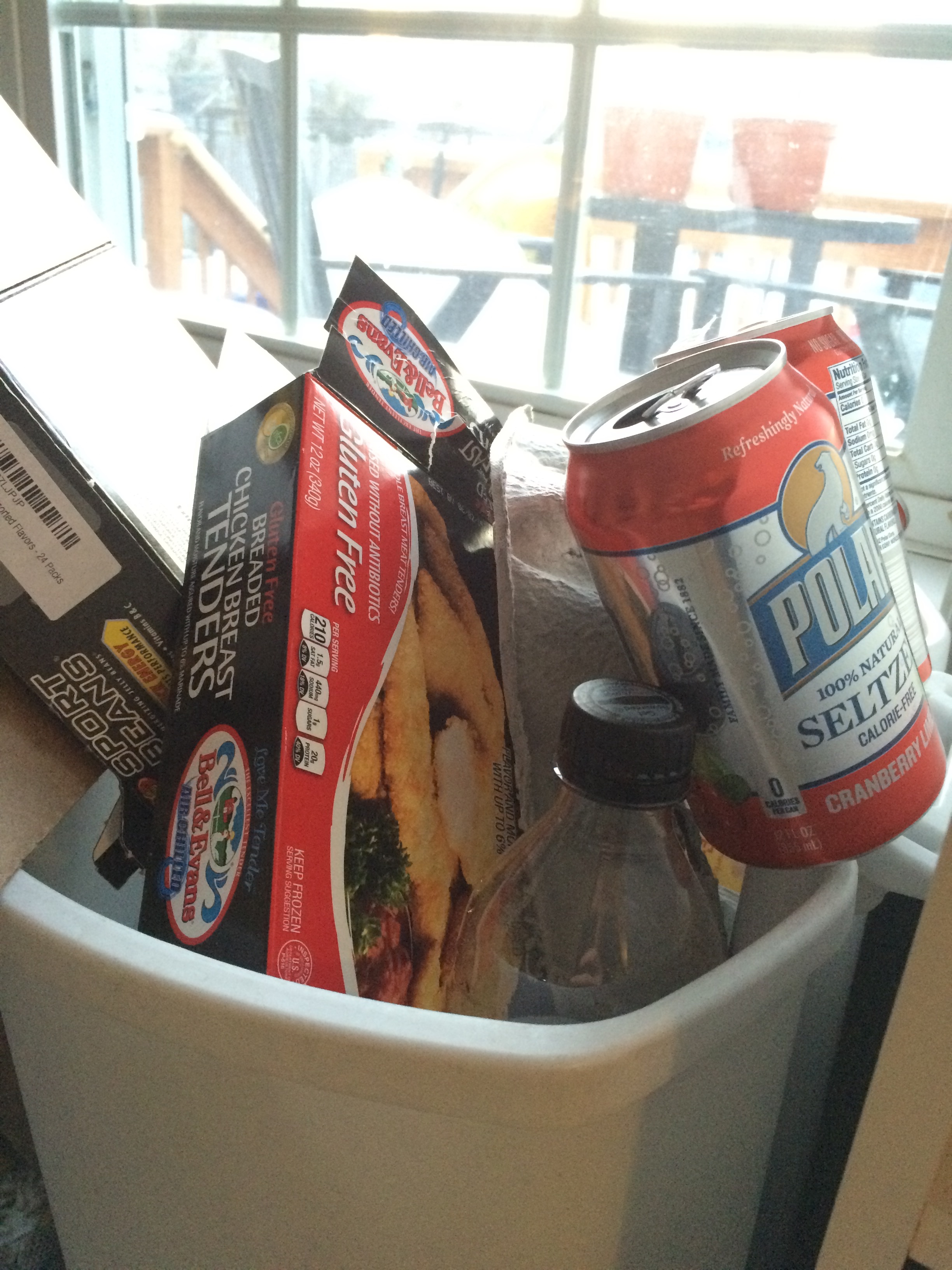
Why don’t they replace that roll?

Why do they wait until the recycling is overflowing?

Why do they always bring up that thing when you visit?

Why do they [insert our issue, pet peeve, history, expectation, or offense] here?

Recently we have experienced some loss.

Recently those around us have experienced some loss.

Recently we got news that more loss is coming.

Loss causes a shift in perspective.

What was once irritation now causes comfort.

An empty roll means they are still here. Maybe just a few moments ago.

Messy toys on a table, way too many wet shoes piled in a heap by the back door, fingernail polish on the coffee table, the piercing pain when you step on a LEGO, the fuel gauge left on empty, piles of unopened mail, the strange pile of receipts by the phone, clutter on the stairs, jackets on the backs of chairs, modeling clay in the carpet, gum in the driveway, mystery stains on the kitchen floor, the overflowing hamper, the heap of clothes by the shower, whatever gets stuck in the drain, loud voices downstairs in the morning, slurping noises while drinking, loud crunchy chewing, and the list goes on, and on, and on.

Today you have all these things. Someday they will cease.

Instead of irritation. Choose savoring the quirks.

Maybe these quirks can be reminders of what you have.


Homework, Frustration, and Emotional Intelligence

Homework

While having lunch the other day with a friend, the conversation moved from simply catching up on the details of our lives to deeper places. We started to talk about emotional intelligence and the role it plays in our success.

To provide an example, I shared a story.

A few years ago, while trying to help one of our daughters with her homework, I got upset. The helping, the explanations, and the examples were not gaining traction. In fact, it seemed to make things worse. My emotional glass got cloudy.

I have already admitted to having Emotional Rickets when it comes to emotional intelligence. Of the five hierarchical steps by Daniel Goleman, the first two always help me unpack issues that I may be having.

Step 1, Self-Awareness

Step 2, Self-Regulation

If I am having a problem with Self-Regulation (getting upset), I go back down a Step to Self Awareness and try to figure out what is happening.

What is the negative emotional trigger? What else may be going on inside?

“Why is helping with her homework causing you to get upset?”

“I don’t know, maybe because I want her to succeed.”

“Ok, that is one possibility, but helping her succeed shouldn’t cause you to be angry. What else is happening, what are you afraid of?”

“I am afraid that she won’t do well, that she won’t get into college, that this time was somehow wasted.”

“Keep going.”

“I am afraid that this means that I have not helped or prepared her enough. That her failing is a reflection of me. That I am not a good Dad.”

There it was: the real issue. Fear of failing as a Dad.

I was trying to Self-Regulate an emotional state around homework that was really about something else. By going back a step, by finding greater Self-Awareness, the Self-Regulation becomes easier.

It was never about the homework. In fact, the inability to Self-Regulate was actually contributing to that fear becoming a reality.

Thankfully, she still lets me help with homework. (After some serious apologizing and a few tears.) Those feelings or fears still exist, but the ability to regulate the emotions in the moment have become much easier.

The next time you find yourself getting upset about homework or having trouble with Self-Regulation when [insert your specific story here] try this simple process.

Take a step back, ask yourself the hard questions.

What is really happening? What are you afraid of?

Decisions versus Feelings

Whether running or life in general, I have noticed a pattern. Feelings can interfere with our decisions

Feelings can disrupt us.

Feelings often provide the much desired excuse to stop moving forward.

Recently I have just been observing how often I hear myself or others verbalizing how feelings have the veto power over our decisions.

Here is what I found: we say these things all the time.

“I am not sure if I will feel like running later.”

“I will let you know how I feel before I decide.”

“I don’t know if I feel up to doing 6 miles today.”

“Let’s see how we feel before we say yes.”

Who gave feelings this power over us? Who said feelings are ahead of everyone else in the line of importance? I understand that feelings are part of the mix, but when did feelings take the chair at the end of the table? The corner office? When did feelings start running the show?

After noticing this pattern during a recent conversation, I couldn’t help but bring it up.

“I heard you say multiple times that this decision is dependent on how you feel. What is preventing you from making the decision now?”

“Multiple times? Really?”

“Yup.” (I know, I know, great follow-up.)

“Well, I guess it is really fear. Fear of not being able to do it. Fear of not being successful after I put myself out there.”

Fear.

One of the most disruptive of feelings. Fear seems to be elbowing its way to the front of the feelings line.

There is a little secret to put feelings in their place.

Decisions.

Decisions to go for that run ahead of time.

Decisions to take on the project.

Decisions to take a risk.

Decisions to push yourself.

I heard a great quote about feelings:

“Feel what you feel. But do not trust them as objective reality.”

When feelings start elbowing their way to the front of the line, try making a few decisions to put them back where they belong.

P.S. Our little running team made the decision to run the other day when it was below 20 degrees and dropping almost a degree every 15 minutes.

Moats, Distance, and Drawbridges

Caerlaverock_Castle_from_the_air_1


(Caerlaverock Castle in Scotland courtesy of Wikipedia)

On the call the other day, I was connecting and checking in with someone important to me. They were describing an old relationship that did not end well. They had been hurt. Words were exchanged. The relationship, although important, had essentially ended.

Because of some recent circumstances, they needed to connect with this other person. Connecting after a falling out is never easy. They were wrestling with how to proceed, and the feelings associated with the time that had passed.

As we talked, I explained that sometimes we need to create Moats. Moats are protections for our core relationships. We keep those inside safe, and others are kept at a healthy Distance.

Distance is the natural by-product of a Moat. Those relationships can be good, but they have limits. Those relationships may be “not so good” but the Distance helps you keep your emotions and expectations in perspective.

Those inside are kept healthy and safe (including you).

When discussing how to move forward, we realized that Moats need Drawbridges.

Drawbridges allow us to let people in when needed. Drawbridges allow us to connect with the greater world by making a decision to lower the bridge.

The Moat still exists, but the connection can be made. When the time has passed, the Drawbridge can be raised again, when and if needed.

We all have Moats. The logical by-product of these Moats are Distance.

It is the Drawbridge that helps us manage both.