Making the Customer Do the Work: Another Flawed Strategy

Customer Service

(Image Courtesy of touch support.com)

During a conversation about the salad post, someone shared yet another flawed strategy in customer service.

The details.

Repair person comes to the house.

Repair person doesn’t have the right part.

Person at business office didn’t order the right part or write order correctly.

Person at business office says it will be a week or so to order the right part.

Repair person leaves.

Customer wasted their time for the appointment.

Customer must now wait for an undetermined amount of time.

Customer must now call again once the part has arrived to make another appointment.

The Strategy.

I am busy.

I made an error.

I said I would order the right part this time.

I have to go.

I am busy.

I have other large repairs to do.

I will get back to you when I can.

I will wait for you to call before I come back.

I am busy.

The Flaw.

You made the mistake.

But you insist on making the customer do the work.

You have to order the new part.

But you do not find the exact date it will arrive.

You are busy and have other customers to see.

But you make the customer in front of you feel less important.

You need to reschedule.

But you do not set a date on the spot, and expect the customer to call you again once the part arrives.

The Solution.

When you make a mistake: acknowledge your mistake.

When you make a mistake: make the correction easy, painless, and seemless.

When you make a mistake: do not make the customer do the work.

Take Credit For Yourself As Well

Coaching is an interesting process. Your role as a coach is to help provide the structure, clarify the issues, and ask a lot of questions. Occasionally, you also provide the accountability to hold people to deadlines or tasks. A coach must also resist the temptation of being the expert, especially if your “expertness” comes with pre-formed solutions.

Sometimes the coaching process feels like a meandering path. Other times, coaching resembles a highway with clear mile markers and ways to measure fast progress. Either way, as time passes there is movement. There are accomplishments. There are achievements.

When those accomplishment or achievements occur, those being coached are grateful. Some express their appreciation.

“Thanks Coach.”

“I owe it to you.”

“You are the reason this happened.”

After a coaching session, I heard similar expressions. I needed to reply.

“Take credit for yourself as well. I am not the reason this is happening. You are doing the work, I am just here to help you find the path.”

This appreciation if left unaddressed can become the second temptation of coaching: Taking all the credit.

Coaching should diminish as both accomplishments and confidence rises. Those being coached begin to ask their own questions, set their own goals, and hold themselves accountable. Coaching may continue through the progress, but at a lessor degree and may eventually cease.

Properly balanced coaching can move people forward with their life, career, business, and/or personal goals. No matter which side of the coaching relationship you are in, keep these two things in mind:

If you are coaching others, remember to resist both temptations (expert and credit).

If you are being coached, remember to take credit for yourself as well.


The Less Than Default Switch

After hearing similar narratives during different coaching sessions, a pattern became clear.

Different people, same narratives.

Different issues, same descriptions.

Different positions, same struggles.

“I want to write, I would love to write, but I am not good enough compared to him/her.”

“Other people in the office seem to have their act together, but not me.”

“I am not as [insert word here] as her/him.”

“That [job, career, relationship, achievement] is for someone else, not me.”

“I’m sorry…[not always for anything specific, but a response to lots of circumstances or conflicts, even when they are not at fault].”

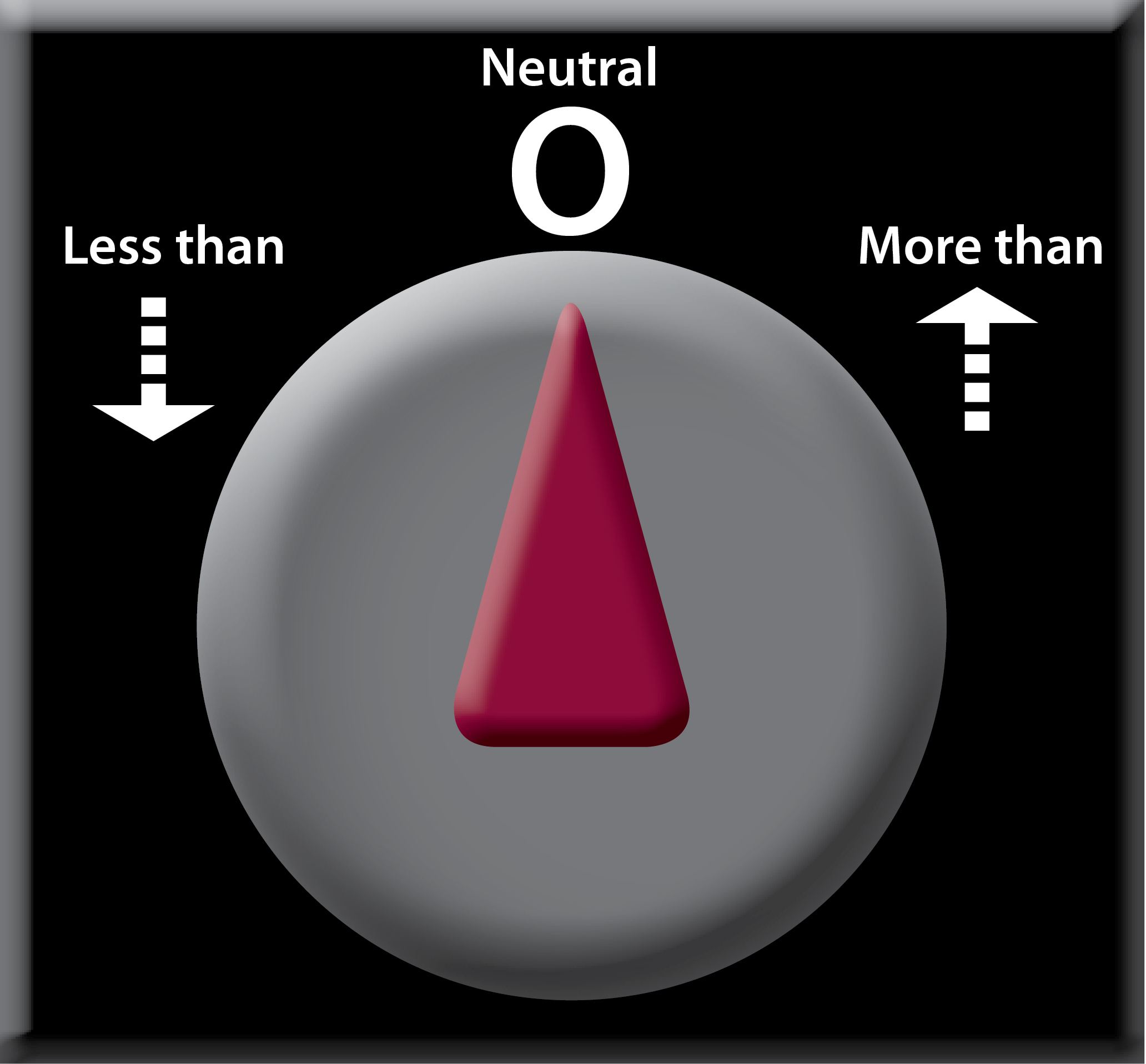
An image of a switch came to my mind. A switch buried deep within their being that was stuck on the Less Than setting by default.

Neutral Switch_Less than

The Less Than Default Switch.

No matter what actually is occurring in their lives, the switch in this position interprets them as being Less Than others. When they achieve something great, accomplish a goal, or create something amazing, the switch discounts all of it.

Even worse, when thinking about trying something new, striving for a goal, or being creative, the Less Than Default Switch short-circuits the motivation to try.

I mentioned the switch.

Surprise. Revelation. A few tears.

“Just for a moment, imagine that switch. See it in the Less Than position…Now, turn the switch to Neutral.”

Understanding.

“Just think about what you could do, accomplish, try, achieve, create, or pursue now that your switch is in the Neutral position.”

Hope.

Neutral Switch

Listen, to yourself and those around you. If your Less Than Default Switch is active, go ahead and give that knob a turn. Move it to Neutral. If someone around has the switch on Less Than, help them move their knob as well.

Over time, Neutral can become your new default setting.

No more discounting.

No more comparison.

Just you; allowing your gifts, talents, creativity, and art to flow.


Customer Service Coaching and the Salad

Quick-Leftover-Salmon-Salad-9-e1343092869766

(Image Courtesy of http://thehealthyfoodie.com)

While eating at a restaurant while traveling, an interesting customer service interaction unfolded that I could not ignore. As the three people at the adjacent table received their food, I noticed one of them make a face and explain to the staff that something was in the salad. Something that should not be in a salad.

The plate was removed, and the other two people shared their food until a replacement meal arrived. You couldn’t help but notice a pretty thorough examination of the second salad. It was declared clean, and the meal continued.

I gave my salad a close look when it arrived as well.

Although the meal continued, you could not help but notice how this interaction somehow tainted what would normally be a pleasant lunch. Whatever topics that would have filled their time together, had been replaced by a salad and service.

The bill arrived. Redness appeared on faces and necks. Conversation intensity increased.

I could only guess that the salad remained on the bill, and no gesture was made to make up for the prior issue. One of them pulled out their credit card and placed it down with the bill.

I got up and walked over.

“Sorry to bother you, but customer service is an interest of mine, talk to you for a minute?”

They agreed, but were still a little stunned/agitated by the whole lunch interaction. I explained that I witnessed and was aware of what had transpired.

“What is really upsetting is not that the salad remained on the bill, it was the indifferent attitude of the staff. We explained what happened, and instead of apologizing, they simply said ‘ok’ and took the salad away.”

I encouraged them to speak up. Talk to the manager or someone to explain what happened. Typically, a business only hears from 4 percent of their dissatisfied customers. That means for every 100 times you drop the ball, only 4 people will tell you.

Never assume that the absence of complaints equates to satisfaction.

That doesn’t mean your customers are not telling someone. Despite not talking to you, those same dissatisfied customers will tell 8 to 10 other people about their interaction, and some will tell up to 20. With social media, now they can tell hundreds or thousands of people.

They spoke up. I watched a manager come over to talk to them, and a new bill arrived. Their tone, and demeanor changed. They smiled, and prepared to leave.

“We told them that we needed to talk about the bill and the lunch experience, now that we had been coached on customer service.”

We laughed and shook hands as they left.

Things will go wrong with your customers. You will make a mistake, or fail especially when things are hectic or busy. How you treat you customers when you make that mistake can makes all the difference.

Apologize.

Acknowledge.

Keep in mind, there may be others coaching your customers to make you better as well.

Running as a Team

It was an afternoon where the temperature hovered close to freezing when our small group of four decided to run together for the first time. We work together. We talk about running together.

Why not run together?

Running can be pretty solitary.

Running can be you, a pair of shoes, and the road ahead.

Thomas Hobbes described life in a way that a lot of people would describe running: solitary, poor, nasty, brutish, and short.

When you run alone, no one sees you fail.

When you run alone, no one sees your flaws.

When you run alone, no one sees you stop on the hill.

Despite the insecurity, the fears, a larger question develops.

Why run together?

When you run together, you share in each others successes.

When you run together, your flaws (that only you notice anyway) seem smaller as the laughter and encouragement arrives.

When you run together, hills seem smaller when you are side by side.

Our team has grown to six, and will grow again next month. Each member of the running team is different.

We run various paces and distances depending on the day, but everyone is running a little faster and a little longer than when we first started.

Life and running doesn’t always have to be as Hobbes described. Maybe he just needed to be part of a team.

Transactional or Relational?

Transactional is taking orders, processing materials, and enforcing rules or procedures.

Relational is meeting a need, asking and knowing, and providing solutions.

Transactional can be short-sighted.

Relational sees the whole picture.

Transactional says “the rules are rules.”

Relational says “I see where an exception may be in order.”

Transactional says, “Thank you for shopping or placing that order.”

Relational says, “Thank you for placing your trust in us or partnering with us.”

Transactional is easy.

Relational is hard.

Transactional is clean.

Relational is messy.