Perspective

60 (1)

Ironically I got to speak to a group on emotional intelligence a week before the holidays. We joked about how the class was a perfect place to learn and practice before we interacted with our families and friends at various celebrations.

Stress can run high during this season, and sometimes we need Perspective.

I found that Perspective in a post called The Tail End on one of my new favorite sites WaitButWhy.com that demonstrates visually a life time of events. Super Bowls left to watch, dumplings left to eat, visits to Fenway Park remaining…

What brought the most perspective was the remaining time the author projects he has remaining with his parents (5% remaining) and his siblings (15% remaining).

Perspective is when you suddenly realize that there may only be 15 or 20 more holidays together if you are lucky.

Perspective is when you remember that there are no more holidays with others.

Perspective is when you just want a little more time.

I did my own calculations with some people close to me and I realized that between holidays, and birthdays, and the 3 to 4 other times we hang out per year, I may only have 60 more times to connect with them.

That is it, 60 more days.

When someone is diagnosed with something critical, we tend to rally, connect, and spend more time in those remaining days. The small things fade away, as we try to savor those last moments that remain.

Ordinary time has a funny way of pretending to be in unlimited supply.

Perspective reminds us to not be fooled by time’s pretending.


Celebrate Events

Flags in DC

(Image Courtesy of My Daughter, and the Washington Monument)

A few years ago I wrote about lessons I learned from my mom.

They were simple lessons:

Be Tough. Work Hard. Celebrate Events.

Last week, I was able to share these lessons with the crowd of family and friends that gathered for her memorial service.

More than just the words, or the lessons. We decided to put one of her lessons into practice: Celebrate Events.

We decided to make this 3,138 mile journey memorable and celebrated events along the way.

Car Trouble.

Mountain views.

Hershey Park.

Fast Rides.

Park food.

Visits with great friends.

Sushi. (Arguably the best I have had.)

Long days in the car.

Audio books.

Car Dancing.

Hotel pools.

Traffic.

Food. Food. Food.

Hugs from those who are close.

Tears, memories, and more hugs.

Connection with those you love.

Ocean.

More driving.

Sea World.

Cousins!

More rides.

Florida rain.

A round of frozen drinks to toast the one we lost.

Driving still.

The meal at the Bull.

Washington D.C.

Gluten Free Grilled Cheese!!!

Memorials that move you.

Remembering great people and great events.

Walking. Walking. Walking.

Museum.

More road time.

TRAFFIC.

Family.

Driving still.

Home.

Despite the loss, despite the sadness, we celebrated.

Great new memories.

New stories.

Mom, we will miss you.

Thanks again for the lessons.


More Flexible, Less Fear

The other day someone asked me to describe my two biggest goals in life. Once I got over the “Hey, I thought this was going to be a casual conversation!” I spent some time thinking about my response.

The reply didn’t come right away, as my mind raced between what I wanted to do and/or achieve and what I wanted to leave behind or be remembered for…then it hit me.

Two simple goals:

1. Be more flexible.

2. Have less fear.

More Flexible. I have noticed something as we progress through life. We tend to become stiff and rigid. This can be physically, mentally, or emotionally. We don’t stretch as often. We stop trying new things. We want things a certain way. We believe certain things. We know we are right and are not afraid to express that view. We have history with others. We hold grudges.

This goal provides a simple reminder. Am I getting stuck? Am I getting stiff? Am I responding and being closed off to new ideas, new activities, or new adventures? Recently I have been trying Yoga as a way to become more flexible physically, and starting to read a variety of books, or articles that may challenge my strongly held opinions. I initially felt resistance to both, but in time, both are becoming more natural.

Less FearLife is pretty ironic. When I was younger with less resources, less experience, and less opportunity, there was little fear. As resources, experience, and opportunity have grown, so has a corresponding fear.

This goal is the other important reminder. What am I afraid of? What is the worst that could happen? What is the cost of not trying these new things? Having this conversation with myself or others helps move me from inaction to action.

I am glad they asked me about my two biggest goals.

Two simple goals.

More Flexible.

Less Fear.

These two goals have become a kind of mantra for me.

Simple enough to remember, yet effective enough to keep me moving.

Now the question is passed to you.

What are your two biggest goals in life?

We all look forward to your answer.

Moats, Distance, and Drawbridges

Caerlaverock_Castle_from_the_air_1


(Caerlaverock Castle in Scotland courtesy of Wikipedia)

On the call the other day, I was connecting and checking in with someone important to me. They were describing an old relationship that did not end well. They had been hurt. Words were exchanged. The relationship, although important, had essentially ended.

Because of some recent circumstances, they needed to connect with this other person. Connecting after a falling out is never easy. They were wrestling with how to proceed, and the feelings associated with the time that had passed.

As we talked, I explained that sometimes we need to create Moats. Moats are protections for our core relationships. We keep those inside safe, and others are kept at a healthy Distance.

Distance is the natural by-product of a Moat. Those relationships can be good, but they have limits. Those relationships may be “not so good” but the Distance helps you keep your emotions and expectations in perspective.

Those inside are kept healthy and safe (including you).

When discussing how to move forward, we realized that Moats need Drawbridges.

Drawbridges allow us to let people in when needed. Drawbridges allow us to connect with the greater world by making a decision to lower the bridge.

The Moat still exists, but the connection can be made. When the time has passed, the Drawbridge can be raised again, when and if needed.

We all have Moats. The logical by-product of these Moats are Distance.

It is the Drawbridge that helps us manage both.


The Hill Rule

The Hill Rule

Our youngest daughter recently began running with me. We found some new shoes and planned a run.

“How far do you want to go on your first run?”

“How far do you normally go when you go off running?”

“Well my typical everyday route is a 5k.”

“How far is that?”

“3.1 miles.”

“Okay we should do that.”

We ran. We talked. We laughed.

We had to slow down a few times. She is used to sprinting on the soccer field.

As I watched her, her stride, gate, and frame something became clear: it is only a matter of time before she can out run me. With a combination of pride and a little envy, I realized my job is to coach her well, enjoy this time with her, and help her excel in something that she seems designed to do.

Each step confirmed that she is a runner.

But there is a hill.

In addition to providing encouragement and some tips on breathing, I explained that there is The Hill Rule in running. For those of you not familiar with this particular rule, let me explain.

The Hill Rule: when running up a hill, you are not allowed to stop. If you need to stop there are only two options.

1. Stop before you get to the hill, catch your breath, then proceed up the hill.

2. Stop at the top of the hill, after you run up the hill.

The reason for The Hill Rule is simple. A large part of running is a mental game. Stopping in the middle of a hill imprints a pattern that you cannot run hills, and you will tend to stop when faced with the next larger hill. The Hill Rule breaks this pattern, and does acknowledge that hills are hard, but there are options to overcome them.

The more I thought about The Hill Rule, the more I could see how it applies to any obstacle we face. When we give up or stop in the middle, we develop a pattern that can continue the next time that obstacle arises. Frankly, a large part of life is a mental game. 

Try applying The Hill Rule to your next obstacle. Either stop and rest before you tackle it, or rest when it is over. No stopping in the middle.

We ran up that hill without stopping. We rested at the end, and celebrated the run.

We are looking forward to the next run, and there will be hills.


Glasses or Binoculars

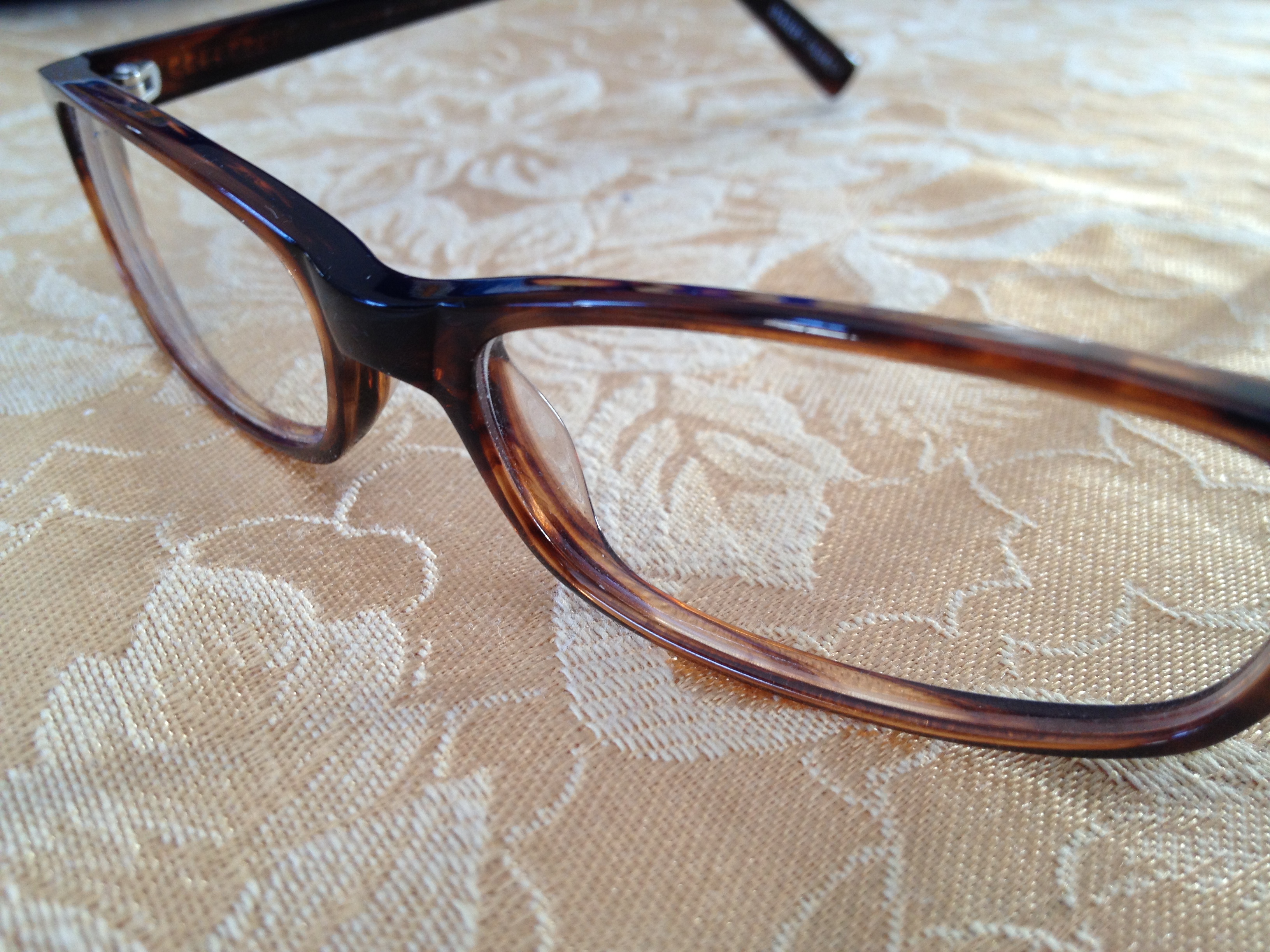
GlassesBoth of these tools have lenses, and are designed to help us see the world more clearly in their respective application. They are not competing with each other, but we may favor one over the other in our lives.

When looking at a situation, do you reach for your glasses or your binoculars?

Glasses help you see clearly.

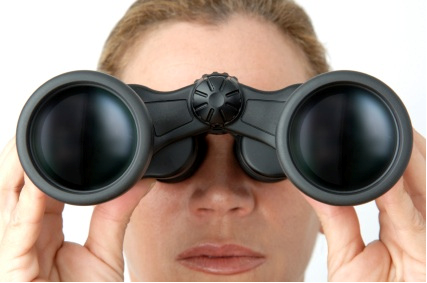
Binoculars exaggerate and make everything appear closer.Binoculars

Glasses address things right before your eyes.

Binoculars help you see things that are far away, but may need your attention.

Glasses may need new lenses as life changes and our vision fades.

Binoculars may take some practice to learn to focus and interpret events.

Both glasses and binoculars have their respective role, application and usefulness. They become a burden when we get so used to using one, that we forget to change when the situation warrants.

A life lived solely through glasses makes the world seem smaller, as a quiet seclusion develops over time. Everything around you is in focus, but there is everything “out there” that is fearful and unknown. The life close to you is clear, but there may be a larger world around you that too far off in the distance to be seen.

A life lived solely through binoculars makes everything feel more close, more personal, more perilous. Interactions are overly scrutinized. Risks appear larger than life. Even the past events stay close because of the ability to keep them in sight, long after they have passed. This distorted view may cause you to miss the life that happens close, since your focus is much further away.

Where have you used glasses when binoculars were needed? When have your binoculars exaggerated aspects of your life when glasses would have brought the much-needed focus?

Picking the right application for both glasses and binoculars can be the key.

(Images courtesy of my iPhone and Lifesun)