The Optimism Zone

optimistic2

(Image Courtesy of Real Balance Wellness)

Soccer, youth travel soccer to be specific, now fills most of our days. Practices fill the week. Games fill the weekend.

Each week we are surrounded by increased skills, increased playing ability, and an increased level of teamwork.

Each week something else has also increased: the negativity of the spectators.

Negativity creeps in, when something doesn’t go the right way. At first negativity is hard to notice, and it may begin as disappointment.

The collective “OH NO, TOO BAD” when a goal is missed, turns into “UGH.”

The “GOOD TRY” becomes “WHY DIDN’T YOU MAKE THAT PLAY.”

About a week ago, the negativity became so loud during the game that it made my emotional glass cloudy. For hours after that game, I had the kind of emotional hangover that lasted for more than a few hours.

At the next day’s game, we set up early and made a declaration:

“This area right here (pointing to the imaginary large circle surrounding our folding chairs) is a declared Optimism Zone. If you feel the need to be negative, you need to go someplace else.”

For the first few minutes of the game we had to remind others a few times.

“As a reminder, you are in the Optimism Zone, all statements and comments should reflect that, if not, you should find another area to sit.”

The game, the comments, and our experience improved dramatically. We were returning to positive comments, and encouraging remarks.

The original negativity comes partly from how much these parents, friends, and family care about the players and how much they want them to succeed, and to win.

What began as coaching, became tearing down. What began as cheering, became criticism. Once negativity becomes the dominant way to express emotions, it slowly becomes the only channel.

Our attitudes and emotional state are contagious.

Perhaps we could all use an Optimism Zone to recalibrate our interactions.
Finding Your Voice

speed_bumps_kill_earth

(Image Courtesy of Autoblog.com)

When working with a fairly large team of leaders one dominant trait was clear. This team drove hard for results, and wanted to accomplish numerous projects and tasks. The intensity manifested itself during their meetings. In between numerous cross-conversations and interruptions, ideas were discussed, challenged, and hashed out.

If you had an idea, you had to defend it.

If you had a suggestion, you had to sell it.

If you had an objection, you had to voice it.

But, there were other members of this team. Team members who did not share the same dominant drive. In meetings, these team members remained silent. They had no voice at the table.

One of the “silent ones” pulled me aside after the session. We talked about finding their voice amongst the team and the challenges associated with speaking up.

“Your voice is important on this team, and you need to find ways to speak up, especially if you have concerns.”

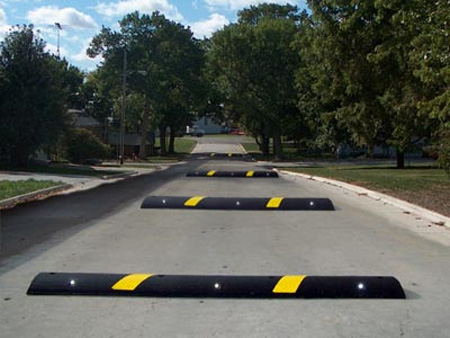
“That is great for you to say, but I think this team just views me as a speed bump on their road to progress.”

After a few moments of stunned silence, a plan developed. We agreed that during the next meeting, this “silent one” would find their voice, stand up, and speak (shout) out the following statement:

“Speed bumps save lives!”

And they did.

After the initial disruption, a brief explanation, and a few laughs, the dominant team members stopped and listened. The “silent one” found their voice, and offered their insight into the project.

Months later, the team dynamic has shifted. More members have found their voices, and the dominant ones are learning to slow down, listen, and even occasionally ask:

“Are there any speed bumps we should know about?”

Finding your voice, in your organization, meeting, or workplace may require a bold step, but being heard is well worth the effort.

Keep Your Story Fresh

“What do you do with all that random information?”

A close friend asked me the other day. I must have been spouting off about some random facts that I had learned, but the details today escape me.

Apparently, my habit of trying to learn everything about anything I can get my hands on can be a little annoying if you are on the receiving end of my latest rant.

Within a week, during a routine drive time conversation with another close friend they experienced a question from a colleague after presenting to a large group.

“How do you know all that random information that you somehow weave into your presentation?”

“I need to keep my story fresh” they replied.

Those words resonated.

I need to keep my story fresh.

If we are going to stay relevant, current and in demand the old stories won’t do.

We have to learn, grow, develop, and stay teachable.

The seemingly random facts.

The new interactions.

The new class.

The new book.

The new experience.

They all join together to keep your story fresh.

To my first friend, I finally have the answer about my random rants and continual need to devour any information that comes my way.

“I am keeping my story fresh.”

To my second friend, thanks for the words we all needed to hear.

Noticing the Artwork

Painting by Iain Young

(Image Courtesy of Iain Young)

At work we are conducting an experiment.

By “we” I mean me and another coworker.

By “experiment” I mean we are messing with stuff and watching for results.

The Background

Throughout the building there are various framed photos, paintings, or prints: Artwork. This artwork appears in offices, hallways, and conference rooms. This artwork includes outdoor scenes, rivers, fields, and the occasional abstract image. For the most part, the artwork is pretty nice, and every person in the building has artwork within their view.

The Experiment

For the past 6 months on Friday afternoons we have been moving the artwork.

Seriously, every few weeks or month we take a minute or two when others have left for the weekend and we swap out the artwork.

When the first Monday arrived, we were beside ourselves, hardly containing the laughs thinking about what will happen when someone notices the change.

Months pass.  Artwork moves. No one notices.

That moment never came.

We even coached a few people while in a meeting where two breathtaking new images appear in a small conference room.

“Wow, this room has such a nice feel today.”

“Oh yeah, maybe the cleaners dusted recently.”

The Conclusion

We move through life and have things to do. We become familiar with our surroundings. We keep our heads down. We fall into routine.

When this happens, we fail to notice the artwork: the small beautiful changes around us.

It happens to all of us.

But we can try.

For the next few weeks, slow down. Lift your head and look around. You may just start noticing the artwork all around you.

Moon and Sun

(Image Courtesy of Another Daughter: Keep painting kiddo!)

Learning to Lose

Learning to Lose


(image courtesy of my daughter: thanks kiddo!)

There are some things that come easy to us. It may be a task, a sport, a relationship, a job that we are either naturally gifted at, or has just gone well for us. Nothing about this was particularly hard or required a lot from us, but we had success.

The success can lull us into thinking that if we continue the same level of effort, the same level of accomplishment will be ours. As if success is a simple machine and as long as we keep feeding it the same parts, the product just pops out the other side.

Something happens.

The other team wins.

Our relationship fails.

We get fired.

We lose.

The loss hits us hard and we scramble to figure out why.

We blame ourselves. Sometimes we blame others.

We struggle and get back up.

We play more games, and don’t always win.

We meet more people, and don’t always find the one.

We apply for more jobs, and they don’t call us or they pick someone else.

The old stuff that made us a success is no longer enough.

So…

We train harder.

We work on our stuff.

We refine our skills.

After some time passes, we begin to win again.

We become better players.

We develop deeper relationships.

We discover better careers.

Learning to lose reminded us that what was good enough for yesterday won’t get you through tomorrow. Success can get you pretty far, but learning to lose challenges you to become great.

What is in it for you?

We all need to earn a living right? There is work to be done and bills to be paid. Unless you are the heir to some fortune; we get up each day and head to work.

But money is not always the primary motivator.

A sense of accomplishment, making a difference, helping others, learning a new task, leading a project, or creative expression tend to be higher on the list for many people.

While coaching someone recently, they paused and asked a direct question.

“What is in it for you?”

Their question made me think about my own motivation and why I do what I do.  I thought about my sentence, or the guiding articulated reason behind a lot of my actions. It helped me develop a reply.

“Helping talented people find the right position that fits who they are.”

But their question was more profound than they perhaps imagined. It remained with me long after our time together. The question spurred others.

Why do we blog?

Why do we consult?

Why do we coach others?

Why do we create?

Sure sometimes it is to make a living, but not all of our hard work generates income. Except for a few rare cases, blogging doesn’t create cash-flow. Not all consulting is on the clock and billable. Not all coaching arrangements come with an invoice. Creativity is not always for the pursuit of an immediate reward.

If you are interested, Dan Pink does a great job of explaining some insight into what motivates us in his book Drive, and below is a 10 minute video summary of the book.

As you contemplate “What is in it for you?” Understanding your motivations and even your sentence may be a good place to start.