After

After.

After is harder than I imagined.

Before is filled with fear, anxiety, and tension.

Before is about setting a goal that would stretch and challenge.

Before is the decision to try.

During is about action.

During requires getting up each day to train, learn, or push.

During has failures, setbacks, and obstacles.

During connects you to others on that goal or project.

During feels alive.

When the big day arrives, all the training shines through.

Goals are accomplished.

After comes next.

After has a brief time for celebration.

After brings about an end.

After is when the team moves on to other things.

After there is a feeling of loss, as lives return to normal.

After there is a feeling of being lost, as you think about the next big goal.

After is a time to rest and gain perspective.

Before returns.

During will bring a new structure, a new routine, a new plan.

After will come again.

Here or There?

“Are you here or there?”

The question seemed simple enough. The originator was concerned with geography and location.

“We are glad you are here.”

A simple statement. An appropriate welcome to a meeting.

“When will we be there?”

One of the most common questions in (my) life.

Somewhat fixated on the original question, my mind kept bringing it forward.

“Are you here or there?”

Are we present in the moment or always looking for some other distant event?

“Are you here or there?”

Are we distracted when I should be focused on those people or events right in front of us?

“Are you here or there?”

Are we enjoying the ride or impatiently hoping the destination will come?

“Are you here or there?”

By focusing on this question, maybe we can become less distracted.

By focusing on this question, maybe we can be more present in the moment.

By focusing on this question, maybe we can remind ourselves of the journey.

“Are you here or there?”

The answer may just change the (your) world.

Hard is Okay

“This is hard. I am not sure if I want to keep doing this.”

“This is hard, much more than I originally thought.”

“I was hoping it would get easier, but this is still hard.”

“Wow, making this change is hard.”

“Training for this [insert life event here] is hard.”

“Trying again is hard. What if I don’t [succeed, get into that school, get that job, get better, maintain that relationship, find the right career, learn to overcome this thing/fear/obstacle, bring value, find my path, finish well, make a difference]”insert any or all of these…

Multiple conversations. Similar statements.

Some statements are from customers or “coachees.” (Those being coached, is that even a word?)

Some statements are from my running partners.

Some statements are from friends.

Some statements are from my daughters who are either trying something for the first time, or pushing through with their life pursuits.

Some statements are my own.

What is an appropriate reply to all these words?

Stop trying? No.

Give up? No.

Easy is a better path? No.

Hard is okay.

It doesn’t mean that Hard is fun.

It doesn’t mean that we always enjoy Hard.

It doesn’t mean that Hard will be easy.

But maybe we can accept Hard for what it is.

Hard is okay.


What is Stopping You?

The meeting concluded.

Papers and seats moved and the rustling and sliding began.

Then came the questions.

“When can you schedule another meeting?”

“How about you get us back together again at the 6, 12, and 18 month mark?”

“Can you arrange for this to happen?”

There was a pause.

A longer pause.

Scanning the room.

Eyes hungrily peering back, waiting for a reply.

“What is stopping you from getting together on your own?”

Silence.

Revelation.

Action.

Sometimes you get used to someone else driving.

Sometimes you get used to someone else setting the agenda.

Sometimes you get used to someone else scheduling that meeting or get-together.

Sometimes you get used to someone else managing that project or idea.

Sometimes you get used to…

Pause.

Longer pause.

What is stopping you?


What are you training for?

“What are you training for?”

A few years ago a friend posed this question when we decided to go out for a run together.

I wasn’t sure how to reply. I was just running. No plan, just running.

“Nothing really, I am just running.”

Their question stayed with me after that day. I couldn’t seem to shake it.

Later that day we talked about goal setting, and how important creating a set of goals can be to focus our lives, our activities, and our energy.

In the past year I set a goal to run a “longer than my normal” race.

A goal that would require discipline, time, and a plan.

A goal that would require activity despite the weather, feelings, or attitude.

A goal that would require moving past obstacles and fear.

That day is almost here, and the race will end. So will the training. My mind and body are looking forward to a little rest.

But, part of me doesn’t quite know what to do when the goal is complete. There is a strange sense of loss when you return to a normal routine after you have been pursuing hard after a goal. The training that once felt like a burden, is now savored because the end is near.

Maybe I just need to keep asking my friend’s question, but not limit it to running.

“What are you training for?”

Having an answer to that question for additional aspects of life may be just what we need.


Pipelines and Pails

PipelinesA2

A friend recently told me a story about pipelines and pails. They learned about this concept in reference to creating a business that pays off in the long-term. The story compares two people one who carries two pails and gets paid for every pail. The second carries pails while spending time building something larger, something greater (a pipeline to deliver water).

If you search the concept you get a nice little cartoon about the difference.

But the concept resonated with me in a different way. I began to think about organizations and processes. I began to think about leaders, managers, and their employees. I began to see how all organizations carry buckets and how some have pipelines.mini-rusty-buckets-6-2
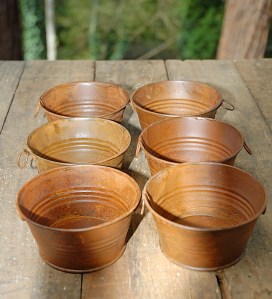
Pails may be a single task, or many tasks combined together. Pails have shape and volume, and specific processes. Pails may be self-generated, or were handed down by the one who came before you. Pails are efficient when the goal is to move a small amount of something from one place to another. However, as a company grows, pails are not enough.

Pipelines are introduced to automate, streamline, and carry more something in the same amount of time. Pipelines allow a company to grow and develop and scale. But sometimes pipelines replace people or at least make them fear their presence.

Trouble may arise when you move from pails to pipelines. At first that change is tough. People got used to their pails. They painted their pails. They stenciled their name on their pails, and their kids helped decorate the little handle. They were used to pails.

The pipeline brought change.

The pipeline brought fear.

The pipeline brought loss.

The transition to pipelines from pails is not always easy. We don’t always give pail carriers time to adjust to the pipeline, or explain why they are needed.

Sometimes explaining “why” helps, and moving slowly towards that new process or procedure or method.

But pipelines do not continue without care and maintenance.

Sometimes pipelines are broken.

Broken pipelines make everyone reach back for their pails.

Sometimes people find a way to shut off the valve, and go back using pails even when they are not broken.

Sometimes that old method, process, or way returns almost without notice.

One day you are standing at the end of a broken pipeline watching people fill their pails.

Think about your organization.

Where are the pails? Where are the pipelines? Where would pipelines better serve the need? Where have pails returned? Why did the move towards the pipeline fail?

I find my mind looking for pails and how to move, scale, change, or break the status quo to ensure pipelines and their impact can be built.

To my friend: Thank You for the perspective.