Gates, Locks, and Keys

Image courtesy of Robin Lake

The following is an excerpt from Page 45 of the Muse’s Guide: Your guide to Humans. This little known manual was recently discovered. A copy is provided to each of our Muse’s during their orientation as they wait to be assigned to a Human. This series will reveal some of the insight contained within the dog eared and highlighted pages of the Muse’s Guide.

Humans make a lot of decisions and choices in life. Some decisions are well reasoned, careful, and deliberate. Some decisions are emotional, reactive, and spur of the moment. They have a lot going on and they don’t always understand the result or consequences of these decisions.

How these Humans view these decisions and events in their lives can seriously impact your work. As you work to inspire them each day, the weight of the prior decisions might limit their ability to hear you. Some Humans view these events or decisions as Gates.

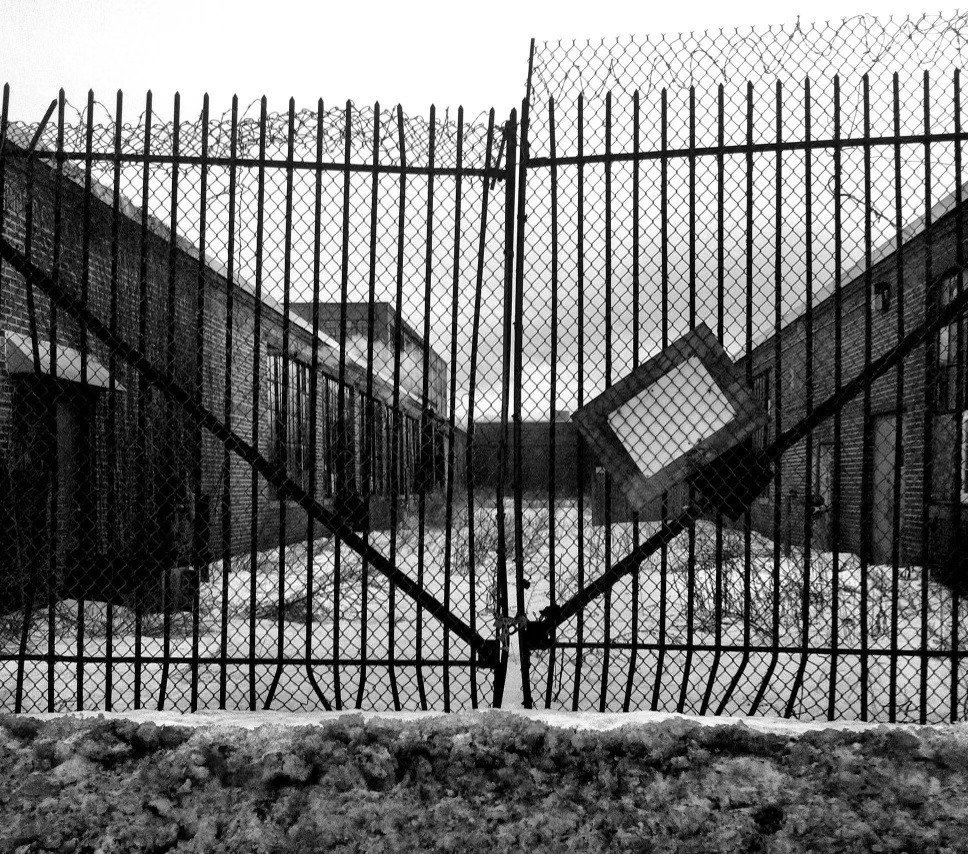
Gates that are locked.

Image Courtesy of Robin Lake

These Gates represent where the events in life and the resulting decisions have closed off options or opportunities. Many Humans stop dreaming of something more because they walk up to these Gates, feel the cold steel, touch the lock, peer beyond at a life that is no longer for them. Their dreams fade as they stand before these Gates. Creativity and their capacity to dream big fades.

As their Muse, watching this unfold can be heartbreaking. Your magical Human crushed by the weight of events, life, circumstances and their decisions.

There is some truth to what your Human is feeling. The past is like a Lock. Their decision, that event, that thing that happened is in the past and is locked and cannot be changed (even a Muse cannot alter the past, despite being a top Human request).

Humans cannot see everything you see. They are trying to make sense of everything so when they see a Lock, they assume that it must be locking them out of something. They internalize decisions and events and their Narrator reminds them of any “failure” to disqualify them from future creation and they stand outside of the Gates.

But not all Locks are on Gates.

Image courtesy of Amanda Weber

Some Locks simply commemorate events.

Humans do this all the time (but still misunderstand Locks).

They put Locks on fences and bridges all the time to remind them of when they met someone special, their birthday, anniversaries or the passing of a loved one.

Those Locks are memories. Those Locks are simply things that happened on their timeline.

Some Locks are filled with Joy.

Some Locks are painful.

Some Locks are beautiful.

Some Locks are hard to view.

Some Locks are in the wrong place.

Some Locks may be on Gates, but didn’t Lock the Gate.

Image courtesy of Geoff Martin

Do you remember the Keys we issued you at Orientation? Every Muse has a set of Keys that fit the Locks of your Human. As we said before, these Locks (decisions, events, memories) cannot be changed, but they can be moved.

Some Locks are just in the wrong place.

As you help your Human organize these Locks along the fence they will begin to see their timeline appear.

These Locks were never meant to be on the Gates.

Locks were meant to remind them of their Journey.

Locks are memories, not limits.

Locks are what helped make them who they are, and who they are becoming.

Locks are the Key to moving forward (see what we did here?).

Sometimes your Human will just need a little help moving those Locks into perspective.

Thanks for your meaningful work as a Muse, these Humans need you more than ever.

Use Your Keys! Muse away!
Wired for Solutions

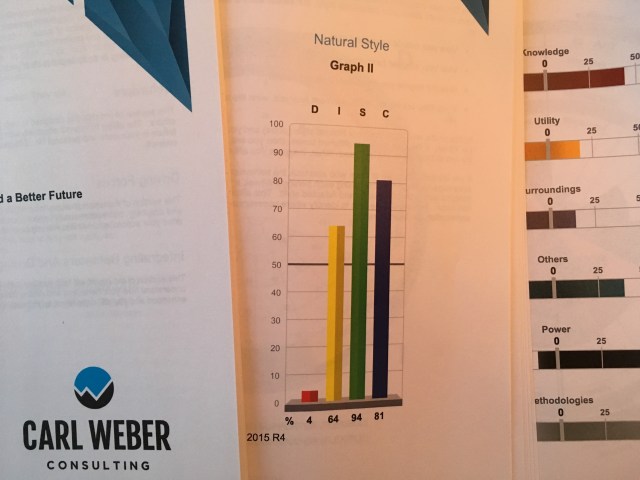
We have already talked about being wired for problems. We all have different styles, and some behavioral styles have this uncanny ability to scan the environment for problems.

At first this sounds negative.

Always pointing out what is wrong.

But there is a flip side to having a style or mind that is wired to discover problems.

That same mind or style is also wired for solutions.

The more I work with people about their style, the more they need to see these two sides.

Not everything about our style is positive.

Sometimes we don’t always like everything about our style.

But our styles have two sides.

You may be more prone to follow the rules, and that same style promotes excellence and accuracy.

You may be prone to be talkative and social, and that same style can move people to believe, and hope, and dream.

You may be prone to be a little scattered or distracted, and that same style breaks out of the status quo and moves organizations forward through change.

You may be prone to focus on the task or the process, and that same style will build organizations that can scale.

Knowing who you are, and your style is the first step. If you haven’t taken one of these assessments, contact me and let’s find how you are wired, and how you can make the most impact in your world, your business, and your journey.

LLKA (Life Lane Keep Assist)

340256-200

(Icon Created by Richard Nixon from the Noun Project)

Our cars have become technology powerhouses. Cars remind you where they parked, describe alternative routes to upcoming traffic, make noise when you get too close to the curb, brake to prevent collision, and my new favorite: keep you in your lane.

These cars scan the road ahead. If you start to veer our of your lane, the car is there to help by gently nudging the wheel to keep you in your lane.

Small gentle nudges to keep you safe.

Small gentle nudges to provide direction when you get a little distracted and start to drift.

Imagine if this technology was available for us.

I can see the commercial.

Cue the dramatic music, and cut to video of busy, distracted living, while people race down winding roads.

[A voice begins]

Do you get distracted from your larger picture life goals? Do you spend time thinking about what you could have done, or should have done, instead of working on that thing right in front of you? Have you felt the pull of comparison to others and the resulting and life-stalling envy?

Welcome to the Life Lane Keep Assist.

The new Life Lane Keep Assist is designed to keep you in your lane.

Life Lane Keep Assist is a friendly nudge when the distractions or comparisons in life tempt you to compare your self with others, forget that you have value, and veer away from your own journey.

Life Lane Keep Assist works with you and your mind, head, and heart to turn to back to what is important in your life. It starts with a small nudge, builds to a larger push if needed.

[The cameras pan to a few individuals for one-on-one testimonials.]

“There I was, going though life while comparing my journey to others. It was discouraging, but with Life Lane Keep Assist, I began to live in my own lane. At first it was hard, I kept wanted to go back, but the small nudges and re-directions provided a much needed focus.”

“It was hard to focus. There were so many demands and needs, I was trying to do it all. I didn’t know how to say no. Thank you Life Lane Keep Assist for helping me steer away from the unimportant, and focus on how to make a real difference.”

“Before Life Lane Keep Assist I got way to involved in other people’s lives and created unnecessary conflict. Life Lane Keep Assist helped me from putting myself in the middle of conflict that wasn’t even mine to begin with.”

Life Lane Keep Assist – Available to help in your life journey today.

[Music Fades and screen goes blank]

Until Life Lane Keep Assist is standard equipment in our lives, we will have to just remind ourselves when we start to drift into the wrong lane. When we get out of our own lane, our own journey, our own lives, maybe it is just a simple nudge that can help us get back.

Cross-Examine the Narrator

That Narrator.

That voice.

The one who cuts you down.

The one who seems to have a job description to regularly review your faults and past failures and bring a case against you.

We can try to silence the Narrator, but simply recognizing and trying to ignore that voice is not always enough.

During a coaching session we talked about the Narrator, and how often it reminds us of faults or short-comings. And, how when we silence that voice in one area or approach, the Narrator seems to find another angle, another strategy, another way to try to disrupt us.

But there is another way.

Cross-Examine the Narrator.

Instead of just taking in these words, these accusations, maybe it is time for us to examine the evidence, and take issue with these old approaches and rehashing of past failures.

Maybe it is time we put the Narrator on the stand after each statement or accusation that is leveled against us.

“Well you are not very consistent, if you were, you would be more successful. Look at the time you have wasted, and where you could be today.”

Hold on a second, now it is my turn and in my best pretend courtroomy lawyerly voice.

“I may not always be consistent, but part of my behavioral style allows me to be flexible and move quickly which is a strong quality. And as far as success, I am successful and here are the areas that I have had great success. [list of the evidence]”

“Yes, but…”

“So, you agree that I have had successes, but you keep insisting on bringing up old news, or old events. Your honor, I move to dismiss all charges.”

“I object!”

“Object all you want. You have no case. You have no relevant facts, and your accusations are groundless and are more of a distraction. Case dismissed!”

Don’t let the Narrator’s voice go unchallenged.

Speak up and Cross-Examine the Narrator.

Present the evidence.

Be tough on that voice that has been tough on you.

Dismiss the case against you.

Move forward and be free.

Mourning the loss of who you thought you would be

cemetery 8

(Image Courtesy of the Great Robin Lake)

We start out in life thinking we are going to be a certain thing.

We make plans. We make choices. We move in a direction. We become invested in who we are going to be.

Sometimes dreams don’t work out. Plans change. Choices are made. Sometimes we fail. Maybe we succeed at different things. Our journey took us in interesting directions, and the people we met and experiences we had created forks in the road. We took some of those forks.

We are “here” today, right where we ended up. Not to say that “here” is a bad place.

In some ways “here” is better than we expected, in other ways maybe not as good.

However, there was a lot of us in the original plan. It was part of our story. Part of our narrative about who we were, and how we described ourselves.

And if, as I recently realized about my own original plan, it was wrapped up in a healthy (or unhealthy) dose of ego and pride, part of it remains with us years or decades later.

A few recent events triggered some interesting emotions surrounding an old plan. What I thought was long gone, had just been lying dormant. The freshness of the ego and pride associated with these events caught me a little off guard.

But I had to ask,

“Why are these emotions still here years later?”

“These plans, or goals are long dead, how did they return?”

It was in asking the questions that the answer came into focus.

Long dead.

What do we do when someone or something dies? We mourn.

Mourn:to feel regret or sadness about (the loss or disappearance of something).

When we don’t mourn, losses remain.

Even when we move forward, un-mourned losses lay dormant.

I never took the time to mourn the loss of who I thought I would be. Life moved forward, the plans changed. Life turned out better than the original plan.

But the un-mourned losses remained.

Where has your life taken you? Where have your plans changed, and your dreams shifted?

Where should you be mourning the loss of who you thought you would be?

Mourn. And may mourning help you move forward in your journey.