Send The Words

A small brown envelope.

A blue sticker “Par Avion Air.” (Airmail)

Diamond Harbor, New Zealand.

The cutest cat and flower card.

The Words replying to an earlier parcel.

The Words remembering our time a colleagues.

The Words about timing and being seen.

The Words about “shoulds, shame, disappointments, and shattered expectations.”

The Words about the shared impact we have on each other.

The Words about being part of a community through shared experiences.

The Words that were perfectly timed.

The Words that I needed.

The Words that they needed.

The Words.

Grab a card (especially one with cats and flowers).

Get a stamp.

Use a pen.

Send the Words.

Page 37 The Muse’s Guide: Comparison

The following is an excerpt from Page 37 of the Muse’s Guide: Your guide to Humans. This little known manual was recently discovered. A copy is provided to each of our Muse’s during their orientation as they wait to be assigned to a Human. This series will reveal some of the insight contained within the dog eared and highlighted pages of the Muse’s Guide.

…you will remember that despite being tough or even confident on the outside, a human’s real battles is within. That Narrator (inner voice) is determined to keep them from creating. Each Human has a creative spark within them. They are designed to bring that creativity into the world. That creativity is continually attacked, but not always directly. The subtlety of each attack depends on your human, but one of the worst attacks is comparison.

A few years ago, there was this one Human. You can look it up, but Stephanie was assigned to this mustached one that became some sort of leader. Teddy something, but that is not important. The key was what he learned from Stephanie about comparison.

“Comparison is the thief of Joy.”

Instead of moving forward in their own journey, humans continually look around and measure themselves against others. This comparison helps steal joy away, especially when they are first getting started.

The Narrator gets really loud. The Narrator seeks out ways to compare your Human to others and conclude that your human should stop, give up, because they are not at valuable as someone else.

A recent example involved James who was assigned to that artist, writer, and potter Annie. Annie has been on our radar for a while now. She is so talented. Her creativity has manifested through various mediums, yet the same things keep getting in the way. Comparison seems to really work on her to stop her from sharing her gifts with others.

We recently found a transcript of the Annie’s Narrator as she was thinking about sharing or even selling some of her recent pottery.

“You are making some progress, but you are not ready to share your work. Look around at Jim’s recent creation, you are not at his level. Maybe you never will be at that level.”

The Narrator starts with some acknowledgment of Annie’s progress, then takes away her confidence and discounts her work.

It gets worse.

“You are pretty good, but look at all these other artists. It is not only Jim, and Alex, and Pam in your class, but these others are so much better than you. Maybe they worked harder, but they appear to have more natural talent than you. You are not ready. You are not good enough.”

The Narrator finds an endless comparison list. As soon as Annie feels confident that her progress matches that first standard, the standard changes again. And again, and again with a never-ending list of comparisons.

Remember, everything fails by an irrelevant standard.

Don’t be fooled into thinking that comparison is a new tactic. It has been happening from the beginning. The new ways your human compares themselves to others are just faster versions and make your job a little more challenging.

Muse Suggestions against Comparison – remember each human is unique so this guide will provide some ideas to help and you may need to try variations to best meet your human’s needs.

Human’s and Self-Worth – Remember that poster in the Muse break room “Human beings, not Human doings” that helps us understand the real issue. Humans forget that they have worth just by being, not by what they do. This connection between what they do or accomplish and how they feel about themselves is strong.

Strong but Wrong.

Remind them of their value.

Remind them of their worth.

Remind them that creating or accomplishing feels good, but those feelings are in addition to feeling good about their own value or worth.

Comparison Triggers – Each Human finds a mix of comparison markers to measure themselves against. Some will be in their actual circles (friends, colleagues, family members) but many of these comparisons are strangers from across the globe. Humans see others from the outside, feel their own inner battle, and forget that other humans also have inner battles.

Remind them to take a break from viewing others.

Remind them that they are not alone when they struggle.

Remind them to be aware of what triggers negative feelings when viewing others.

Remind them that all Humans are racing together, and not against each other.

Being a Muse is not an easy job.

Being a Muse is not about a formula or following steps to solve a problem. Humans are not a problem. Humans are magnificent, strange, creative, complex, weird, temperamental, and insecure.

Your job is to guide, support, inspire, and encourage your Human.

Acting As If

It was painful to the touch.

I never realized how heavy my own head could be, especially when I could barely turn or lift it.

The pain radiated from the back of my skull through my neck, clavicle, and down my back.

An accident? Nope.

An injury while doing something risky? Again, no.

An event that happened that required physical feats of strength? I wish.

Apparently just “sleeping wrong” created this overload of spasms and agony. Mid-life occupational hazard.

Four days. Ibuprofen overload.

Four pain-filled days. Learning to move, not move, and do simple tasks.

Relief. Physical Therapy and stretching.

The next few days were interesting.

Despite being pain free, I found myself acting as if the pain was still there.

Cautiously moving, acting as if the soreness and stiffness remained.

Acting as if…

Acting as if is a concept in positive psychology that has us aspire to what we want to become or goals we want to achieve, and then start acting as if we have already arrived or achieved those goals in the face of challenges or obstacles.

Acting as if, builds our self confidence, our self-perceptions, and helps against self-sabotage and builds a more positive mindset.

By the second pain-free day, I began to notice the power of acting as if.

When I was acting as if the pain was still there, I was stiff, cautious, moved slower, and was afraid.

In that moment, I had to remind myself that the pain was gone and start acting as if things were normal. My movements became more fluid and natural.

My mind wandered to all the times I have been acting as if pain, limitations, and obstacles are still here. Limiting me.

I began to think about all the time WE have all been acting as if a lot of things are still present. Limiting us.

Where could we all try acting as if?

Acting as if that pain is no longer present.

Acting as if we achieved our goals.

Acting as if we are enough.

I look forward to hearing about your acting as if journey, and until then I will be here acting as if we have already arrived together.

Relational atrophy

It’s been a while.

When the world shut down, so did my relationships.

I fell out of practice.

Survival, stress, and a focus on tasks and solving problems took the main stage.

I got rusty.

New habits formed: isolating habits that didn’t include the same connection as before.

It was a long, but subtle shift.

From less, to more, to loss.

Less phone calls, less fun, less light-hearted conversations.

Less time WITH others.

Less time FOR others.

Less.

When there is less, something will fill that void.

More negativity, more urgency, more stress, more vigilance, more protection mode, more burn-out.

The results were loss.

Loss of connection.

Loss of friends.

Loss of time.

Loss.

The best way to describe where I am today is a state of Relational Atrophy.

Weaker, out of practice, easily tired, and doing simple things are much harder.

Understanding and acknowledging this Relational Atrophy helps.

Finding a way forward is next.

Similar to exercise, this process won’t happen overnight.

It might take some time for these muscles to remember.

Small steps.

Apologies.

Invites to get coffee.

Invites to connect.

Invites to get gelato.

Phone calls.

Texts.

Scheduling time for others.

Scheduling time WITH others.

Time.

Those relational muscles will return.

New habits will form.

Take a moment to think about how these past few years impacted you and your relationships.

How has Relationship Atrophy impacted you?

Where have you fallen out of practice with others?

How can you take one step today to flex those relationship muscles?

The good news is we might not be alone, and we can try moving forward together.

One more idea – schedule time under the tree. Let me know, I will make the coffee.

Decidedly Different: A riff about workplace culture

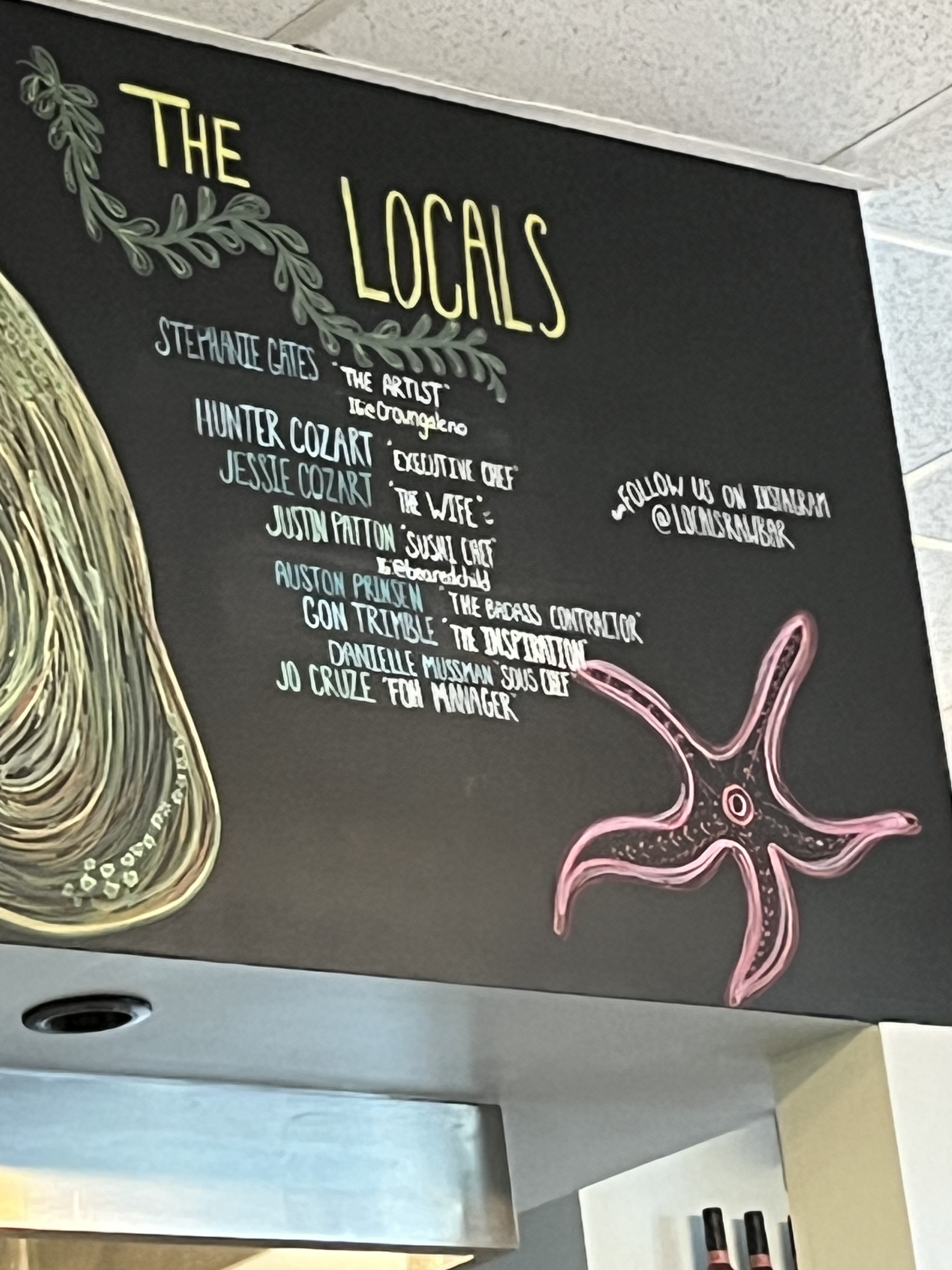
Jessie Cozart, Justin Patton, Christopher Roberts, Hunter Cozart, and Danielle Mussman.

The “Magic” behind Local’s Raw Bar

https://www.facebook.com/people/Locals-Raw-Bar/100091781995548/

I’m in the middle of preparing a talk for an upcoming leadership program.

I have presented before this group before, but they are looking for something different.

Something new.

Something fresh.

In my little notebook I sketched out the talk. Ideas that would challenge them on the impact that Culture has on recruitment, retention, and productivity.

I could already hear the opposition.

“You don’t understand the constraints we have.”

“This is how we were treated and trained.”

“In this industry, we cannot change the way things are.”

I needed an example, but serious writers block set in.

Lunch seemed like the appropriate remedy.

I wanted something different, and did a little search.

We arrived, but it was closed. I neglected to check the hours and the fact that a few days a week they are “out fishing.”

Hunter greeted us at the door. It was his place, and he was excited to tell us about the food, and the fish that was coming in the following day. We made plans to return (when it was open).

We sat at the bar. We could see everything happening in the kitchen.

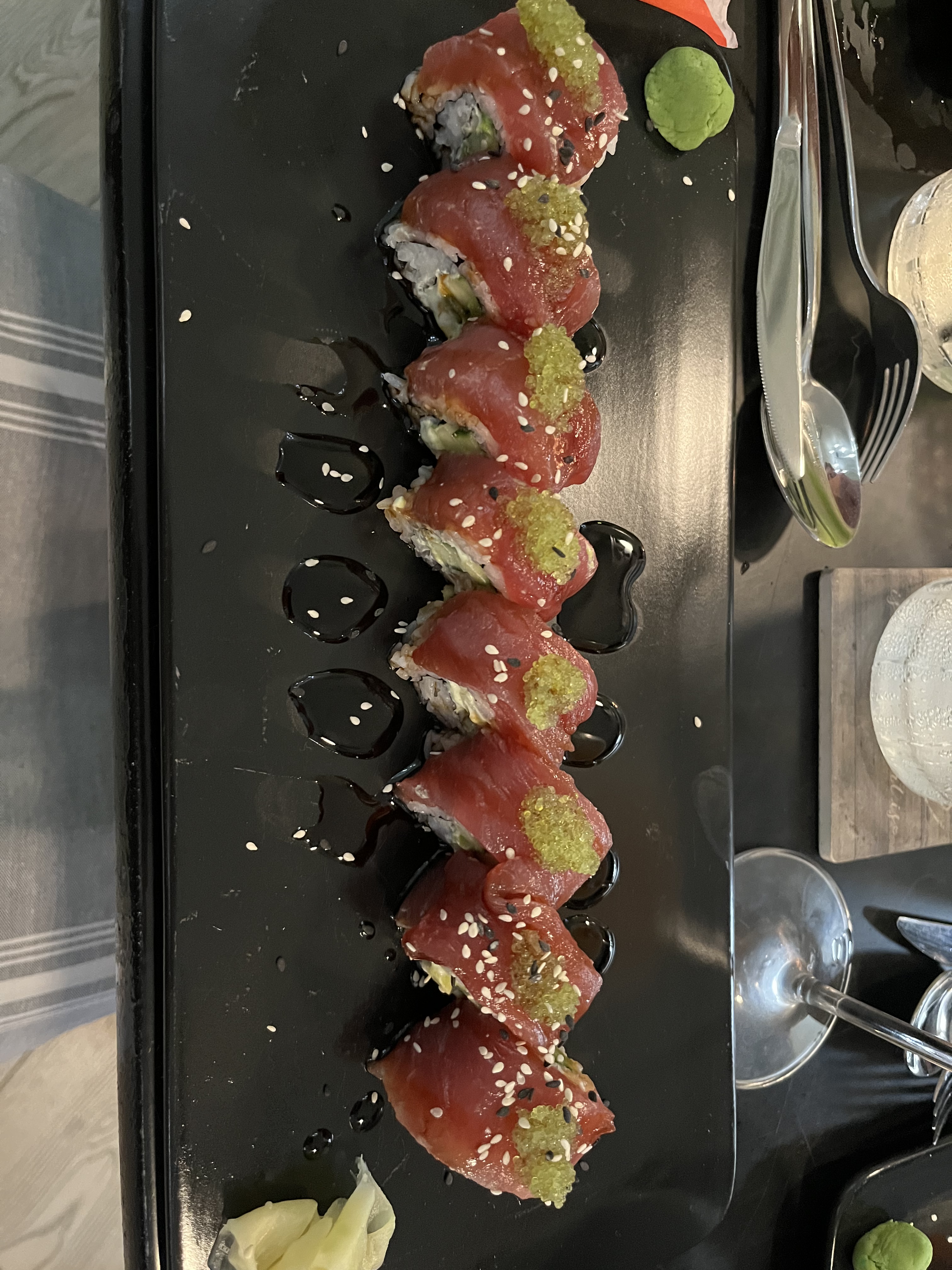
The greeting, seating, chopping, slicing, sushi rolling, frying, mixing, plating, and serving.

Something was different.

There was flow.

There was timing.

There was fun.

There were minor adjustments.

There was respect.

Everyone had a part to play.

Everyone was part of this team.

The mezmerizing symphony played out before our eyes.

The food was amazing, but the culture was just as memorable.

We returned a second time.

They remembered us and greeted us.

The cultural symphony played again.

We returned again. Third time in a week is a charm right?

This time I had to ask.

I had to understand why this was so different.

Jessie came over and gave us some of their story.

Young local couple works in a high end restaurant in a big City.

They learn lots of skills, but see the culture: big egos, yelling, disrespect and negative Culture.

They move to another City, another high end restaurant.

More Skills.

More of the same Culture.

They decide to make a change.

They move back home.

They start something new.

They leverage their skills, but decide to create a different Culture.

Respect, Fun, and Passion.

Something new.

Something fresh.

Exactly the example I needed.

It takes courage to go against the Culture of your industry.

It takes courage to try something new.

How can you be Decidedly Different with your workplace Culture?

How can you leverage the skills, but have the courage to abandon the negative parts that don’t serve you or your staff?

Based on the crowds on our fourth visit, I would say it is well worth the risk.

Do what You love

“I Do What I Love.”

I turned off my head phones.

It was during my post-run walk and I still had my music on.

I almost missed it.

I asked again just to make sure.

I Do What I Love.”

She lives next door.

She grew up with our kids.

We have little chats when she is walking the dog or after my runs when she is outside.

This time she was playing basketball on the curb.

“I love basketball.”

“I love music.”

“I also love dance.”

“That is a great list of things you love.”

She beamed.

She took a few steps back.

The music was playing.

She paused and planted her feet.

Now watch this!”

It was a choreographed masterpiece.

A few moves back and forth.

Dance steps towards the basket.

A full 360 spin.

Raised arms with the ball.

Swoosh.

Score.

“It’s better when you combine what you love.”

I couldn’t help but clap.

I thanked her and finished my walk home.

As I turned into my driveway, she called out one last time.

Remember, Do What You Love!

As I am writing this, I caught a glimpse of her Mom out walking the dog this morning.

Little does she know that her daughter provided such wisdom for me, and for all of us.

Thank you little neighbor for leading the way.

Do What You Love.

And when you can combine them, it gets even better.