What are you training for?

“What are you training for?”

A few years ago a friend posed this question when we decided to go out for a run together.

I wasn’t sure how to reply. I was just running. No plan, just running.

“Nothing really, I am just running.”

Their question stayed with me after that day. I couldn’t seem to shake it.

Later that day we talked about goal setting, and how important creating a set of goals can be to focus our lives, our activities, and our energy.

In the past year I set a goal to run a “longer than my normal” race.

A goal that would require discipline, time, and a plan.

A goal that would require activity despite the weather, feelings, or attitude.

A goal that would require moving past obstacles and fear.

That day is almost here, and the race will end. So will the training. My mind and body are looking forward to a little rest.

But, part of me doesn’t quite know what to do when the goal is complete. There is a strange sense of loss when you return to a normal routine after you have been pursuing hard after a goal. The training that once felt like a burden, is now savored because the end is near.

Maybe I just need to keep asking my friend’s question, but not limit it to running.

“What are you training for?”

Having an answer to that question for additional aspects of life may be just what we need.


Pipelines and Pails

PipelinesA2

A friend recently told me a story about pipelines and pails. They learned about this concept in reference to creating a business that pays off in the long-term. The story compares two people one who carries two pails and gets paid for every pail. The second carries pails while spending time building something larger, something greater (a pipeline to deliver water).

If you search the concept you get a nice little cartoon about the difference.

But the concept resonated with me in a different way. I began to think about organizations and processes. I began to think about leaders, managers, and their employees. I began to see how all organizations carry buckets and how some have pipelines.mini-rusty-buckets-6-2
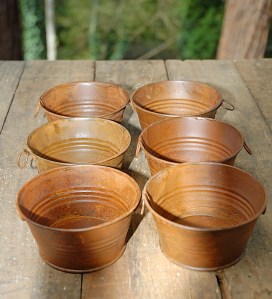
Pails may be a single task, or many tasks combined together. Pails have shape and volume, and specific processes. Pails may be self-generated, or were handed down by the one who came before you. Pails are efficient when the goal is to move a small amount of something from one place to another. However, as a company grows, pails are not enough.

Pipelines are introduced to automate, streamline, and carry more something in the same amount of time. Pipelines allow a company to grow and develop and scale. But sometimes pipelines replace people or at least make them fear their presence.

Trouble may arise when you move from pails to pipelines. At first that change is tough. People got used to their pails. They painted their pails. They stenciled their name on their pails, and their kids helped decorate the little handle. They were used to pails.

The pipeline brought change.

The pipeline brought fear.

The pipeline brought loss.

The transition to pipelines from pails is not always easy. We don’t always give pail carriers time to adjust to the pipeline, or explain why they are needed.

Sometimes explaining “why” helps, and moving slowly towards that new process or procedure or method.

But pipelines do not continue without care and maintenance.

Sometimes pipelines are broken.

Broken pipelines make everyone reach back for their pails.

Sometimes people find a way to shut off the valve, and go back using pails even when they are not broken.

Sometimes that old method, process, or way returns almost without notice.

One day you are standing at the end of a broken pipeline watching people fill their pails.

Think about your organization.

Where are the pails? Where are the pipelines? Where would pipelines better serve the need? Where have pails returned? Why did the move towards the pipeline fail?

I find my mind looking for pails and how to move, scale, change, or break the status quo to ensure pipelines and their impact can be built.

To my friend: Thank You for the perspective. 

But We Ran

IMG_1177

Running this winter has been hard. Layer upon layer. Attempts to cover every inch of exposed surfaces. Runs when temperatures dropped from single digits to zero and below before we ended.

But we ran.

The combination of record cold and record snow has combined to create what we are affectionately calling “winter fatigue.”

But we ran.

This has not been our fastest year. Many of our times have slowed. We became sick, tired, frustrated, injured, and cold.

But we ran.

We ran on days when it was dark. We ran on days when the wind almost stopped all forward progress.

But we ran.

Despite spring arriving on the calendar, we have had near record cold again. Winter seems to want to keep us in a state of hibernation. Days that should be in the 40s and 50s have been in the 30s.

But we ran.

What is coming our way next?

More weather, more illness, more injury, more road blocks, more [insert term here] issues?

I am not sure. There is only one thing I know for sure.

We will run.


Bootleg

Besides the references to smuggling alcohol during prohibition, or the particular cut of jeans, Bootleg is typically when something is an unauthorized or counterfeit. However, sometimes Bootleg is when you have settled for a less than replacement for Real.

Bootleg may be all that we can afford.

Bootleg may be all that we have access to at the moment.

Bootleg may be the cheaper alternative until our circumstances change.

But there is trouble with Bootleg.

We get used to Bootleg.

Our lives become entwined with Bootleg.

We have settled and moving from Bootleg to Real takes effort.

What was meant to be temporary has become permanent.

That relationship is comfortable, but not Real or deep.

That business partner works, but you are giving more than you receive.

That job pays the bills, but there is no inspiration.

Bootleg has a way of keeping us comfortable with less.

Don’t settle for Bootleg.

Real is sometimes more costly.

Real is deeper and more meaningful.

Real is what we all need.


Two Obstacles

There are two obstacles. Or maybe at least two categories of obstacles.

Internal obstacles and external obstacles.

Internal obstacles include fear, doubt, our inner voice, regret, commitment, procrastination, and fear (yes I put it on the list twice).

External obstacles include time, resources, location, people, bosses, organizations, regulations, climate, and the entire world.

When we do not accomplish something it is so tempting to blame the external obstacles.

You didn’t have the time.

You didn’t have the resources.

The organization got in the way.

Those people derailed you.

The weather didn’t cooperate.

In reality, our internal obstacles play a larger role.

You were afraid.

Your inner voice reminded you that you are an imposter.

You thought you might fail.

You were afraid.

You didn’t commit.

The genius of the internal obstacles is that they convince you to look elsewhere. To look outside.

Internal obstacles hold up a magnifying glass and convince us that the external obstacles are large. Larger than life.

We forget that a magnifying glass, although helpful in viewing details, is a distortion of reality.

This distortion convinces us that we have no power to move forward. The external obstacles are too large, too menacing, too much to overcome.

The internal obstacles get off easy by blaming the external obstacles.

Next time, don’t let them off so easily.

Put down that magnifying glass, and take that first step.

Fear not the obstacles in your path.

(I can no longer type or say OBSTACLES without thinking of this movie scene. I hope you enjoy it as much as I do. However, now all I hear is “OB-STACK-ELLS”)

“I cannot tell you how long this road shall be, but fear not the obstacles in your path, for fate has vouchsafed your reward. Though the road may wind, yea, your hearts grow weary, still shall ye follow them…”

Blind Seer in O Brother, Where Art Thou?

Service Shifts

Customers are all around us.

They are both internal and external, and have needs, questions, and requests.

Sometimes we become hardened towards them.

But not always.

Sometimes we simply fall into a routine.

They have a need, we meet it.

They have a question, we answer it.

They have a request, we follow-up on it.

Routines are not bad, they are routine.

Some routines need to be disrupted by Service Shifts.

Service Shifts are when you realize that you can provide more, and meet a need that is greater than you originally expected.

Service Shifts make you pause and ask yourself a few questions.

“Is there a greater need beyond this specific request?”

“Who else needs to know this answer I am about to send this customer, client, or team member?”

“Does this really answer their specific question, or do they need a little background?”

“What else should I be providing?”

Service Shifts happen when you discover greater needs and provide deeper solutions.

Service Shifts happen when you inform others so everyone involved understands the situation.

Service Shifts happen when you create value by building relationships above routines.

Service Shifts happen when you create trust as customers see you and your operation as a partner.

How will your Service Shifts make a difference?