I Stink at Positivity

When you listen to people, you can hear the funniest things. We were connecting with a friend the other night and were talking about being positive.

“I stink at positivity!” They blurted out.

We all laughed.

For the remainder of our time together I kept coming back to that statement. I haven’t been able to shake it.

Our words reveal so much about us.

We can be so hard on ourselves.

Our words can create self-imposed limits.

We stop pushing against and become defined by those limits.

Spend the next few days listening to your own words, and those around you. Listen especially for the “I am” statements. Once you understand the landscape, maybe a similar approach can be used to reverse the trend.

Instead of limits, we could speak of possibilities.

“My positivity can be better, and I am making progress.”

This conversation reminded me of another recent interaction I had with someone who runs. I kept hearing the same statement over and over.

“I am not a runner.”

When I pressed further, I realized that this person ran about five races last summer. They trained hard, but past self-limits had convinced them that they were not a runner. They had convinced themselves that “a runner” was a specific kind of person who was better, faster, and thinner than they were.

We talked about how contrary this self limit was in the face of the evidence.

Running Shoes: Check.

Running regularly: Check. (But the internal voice kept telling them it wasn’t enough.)

Running outfits: Check.

Running five races: Check.

The evidence was clear: and it added up to a runner.  However, the self-limiting narrative remained. It took few tries, but eventually they were able to articulate the change.

“I am a runner.”

Without these self-imposed limits…we may just Change the World.

After Injury

As a follow-up to my the post “I am good as possible” it seemed important to share what can happen when we take that risk, try something new, and stretch ourselves.

My Right Knee

(Image Courtesy of My X-Ray, My Youngest Daughter and a Ski Jump)

Injury. It happens to all of us.

In this case, it happened to my right knee. While skiing/trying to catch up with my youngest daughter, I followed her over a jump. Regret arrived almost as quickly as the decision was made, only to be overshadowed by intense pain.

Obviously, it was not a great decision. That split second resulted in numerous bags of ice, pain relievers, doctors visits, x-rays, and some physical therapy.

But, we all sustain injury. Injury may be physical, emotional, or relational. Injury can happen at home, at work, on the slopes, or just about anywhere.

Injury will happen.

Some injury can be prevented, but not all.

During injury, we have to manage the pain, rest, and rebuild.

The choices we make after injury may be the most important.

We may choose to avoid.

We may choose to fear.

We may choose to stop trying.

We may choose to try again, but perhaps with a little more caution/wisdom.

The decisions we make after injury determine if our world becomes a smaller place, with less risk, less adventure.

Keeping our world big after injury is its own risk.

As my leg healed and the pain left, I kept anticipating that the pain would return. My steps were more cautious, and the memory of the pain was almost as real as when it actually hurt.

The other night was my first time chaperoning without skiing. I was not ready to put on those skis, so I modified my role. I encouraged the kids. I made sure they all knew where they were going, and cheered them on.

I have decided to ski next week. I am making the choice to keep my world big, despite the fear and memory of the pain, and possibility of another injury.

Where has injury impacted you?

What choices can you make after injury?

To continue in my role from the other night…

Don’t give up.

You can do it.

Keep your world big.

Get back up.

Get back on those skis.

Iodine on Eczema

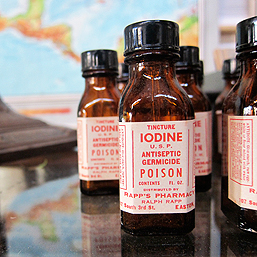
vintage_iodine_bottles

(Image Courtesy of http://www.misopocky.com)

A few weeks back, I was asked for some advice about how to address the media about a recent story where a news outlet really got the story wrong. The reporter got a hold of some facts, but out of context the story unfolded in a negative light.

The person was prepared to unload on the reporter based on some advice, and “set the record straight.” While we talked, we discussed the possible outcomes and various questions.

Would this approach improve the situation? Would the reporter write a better story as a result? Would this escalate or calm the negativity?

As the conversation progressed, they shared a story with me.

When their child was young, they came home with something that looked like ringworm on their arm. Based on some advice, they immediately applied iodine to the area (look it up kids, this was our parents cure for a lot, especially minor cuts: we think it was the sting that they liked the best).

The area worsened, and became more inflamed. More iodine was applied and the cycle continued.

Eventually, they sought additional advice from a doctor.

“What you have here is a case of eczema.”

“So it is not ringworm?”

“No, and that iodine is just making it worse.”

While we spoke again about the reporter and the story, the question became an easy one: Is this going to be like putting Iodine on Eczema?

The answer was simple: Yes.

Instead of an aggressive approach, they decided to put the facts together like a story. A story that wove in the reasons and the successes associated with those original facts. Instead of just sending it along, they called the reporter and asked for a meeting.

A few days later, I received an email with a link to the new news story. It was positive and even the headline made reference to the earlier article being like comparing apples with oranges.

I had to ask myself, when have I put Iodine on Eczema? When would a little healing salve made things so much better for my situation, my work, my story, or my relationships?

Harvesting My Own Crops: A lesson is being grateful

Two days ago, I went to the grocery store. Not just any grocery store, I went to the busy one at 11:30 AM on a Sunday morning.

The store was packed. Aisles were hard to navigate, and the scene was like something out of a pile up on the freeway. Some carts were pulled over on the side trying to find something, while others darted through small breaks to speed to the next lane. Our turn signals didn’t work, neither did the brake lights and you could sense that tension in the air around every corner, and there were a few small collisions.

As I approached the registers, it was quite a sight. Every register was open, and there was a line of at least four carts in every line. Behind the carts was a massive group of additional carts trying to figure out which line to join, and how to navigate from the group to an individual line.

The manager made an announcement.

“We know that today is busy, but please turn your carts to the side because the lines are so long, we need additional space in the front of the store.”

It was at this moment, I began to observe everyone around me. I slowed down and just began to watch. I also noted the time on my cell phone.

Frowns, swears, and grumbling.

Angrily moving carts to the side.

Hands being thrown up in the air.

Then the voices began to chime in.

“I can’t believe that everyone is shopping today, there is no need for this, you would think we are having a snow storm!”

“Why do we have to turn out carts to the side? I don’t need this!”

My cart eventually found its way from the group to a line, and it slowly edged toward the belt. I loaded my groceries and kept looking around. The bagger was working furiously to keep this line moving and asked the person in front of me if they wanted some larger item bagged or just placed in the cart.

“Just put it in a bag, this would go faster if you didn’t ask such questions!”

They looked towards me for some sort of approval of their statement. I didn’t.

When I arrived at the register, the cashiers were changing shifts. They both looked at me through weary eyes and kept apologizing for the wait. The bagger looked tired as well.

I paused, looked at them all and then something came out of my mouth that I think surprised all of them.

“I just want to thank all of you for working so hard to help us get our groceries today.”

I looked at the assortment of items on the belt, and suddenly I understood what an amazing time it is to be alive. I saw bread, various meats, eggs, fresh fruit and vegetables, and some berries.

“I mean it, think of all the time your little team here has saved me. I didn’t have to harvest my own crops, grind my own grains, bake this bread, tend to my garden, raise a bunch of chickens, cows and pigs. I really should be thanking you for saving me so much time, I can go home and simply watch TV all afternoon if I want. So THANK YOU.”

Smiles appeared on those weary faces. The bagger seemed to stand more upright and kept smiling as they placed items in my bags, and asked me about larger items.

The mood changed. The actual situation didn’t change. The lines were still long, but the perspective changed.

Instead of being angry, I chose being grateful.

Instead of complaining, I chose to say thanks.

As I made my way out to the car, I checked the time again. It had been 17 minutes. Just 17 minutes to accomplish what it would have taken my great, great, great, great grandparents weeks of labor to create. Those grandparents would have never imagined fresh berries and fruit in the winter, or bread you simply grab from the shelf, or the leisure time that I am now afforded.

Where can you choose to be grateful? Where can you thank those around you?

The “Everything is Okay” Phone Call

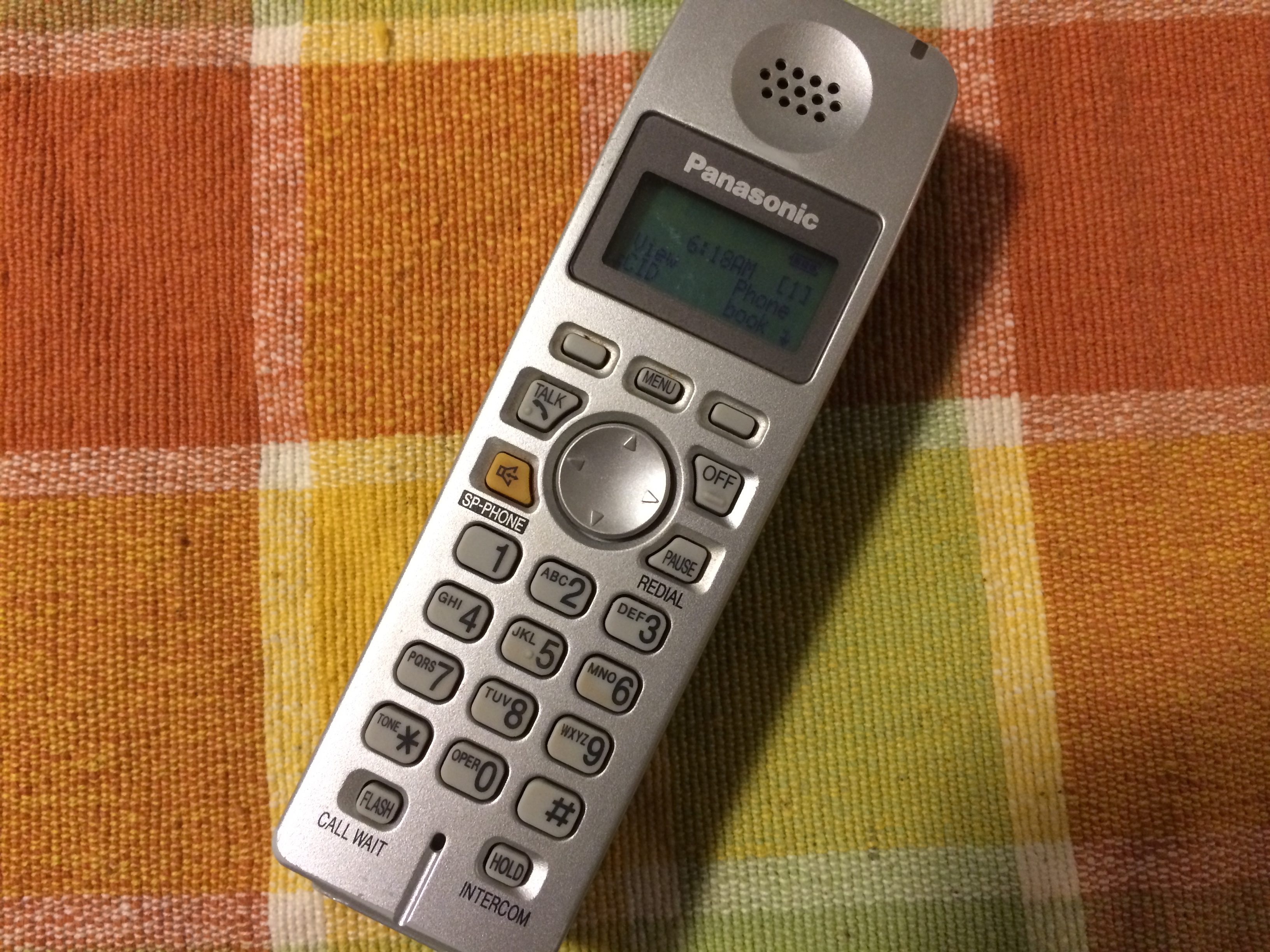
The Phone

Most of the phone calls that come my way are from people who need something. This seems like an obvious occupational hazard for a consultant who is trying to help others. However, I began to think that this pattern is deeper than just my work world. Over the past few weeks I started to keep track.

Text from kiddo – request for money.

Text from family – request to service their cars.

Phone call from friend – needed advice on issue.

Phone call from colleague – request to cover a meeting.

In the midst of this tracking experiment, there was one call that stood out:

The “Everything is Okay” phone call.

I didn’t actually take the call, it went to voicemail. Imagine my surprise when I listened to that message.

“Hey Carl, just wanted you to know that everything is okay I was just calling to connect with you and say Hi.”

It was just the call I needed. At times, the constant giving of yourself to others, their needs, and their problems can become a solitary place.

Relationships begin to feel like one-way streets.

I am taking this person’s example and trying an experiment of my own. Deliberate and intentional communication with others to connect with them, not to request from them.

Give it a try this week. Who knows, it may just change the world.

For When You Ship

During the holidays it is hard to say “this is my favorite gift.” Undoubtably someone will wonder why their gift didn’t make the list, and then the comparing will begin. In order to thwart this comparison and potential hurt feelings, let’s simply agree that certain gifts stir our souls. Often this stirring is not a reflection of cost or value, but because the giver connected with us in a way that went deep and said “I know you.”

A few months ago, we hosted a get-together at our house for an educational experiment. Seth Godin announced a relational educational initiative where people get together and learn together.

The first class focused us on picking ourselves, overcoming fear, and learning to “ship.” Shipping as Seth describes it is the act of getting our product, idea, proposal, or whatever off the ground and out the door. The class ended with each of us completing the handy “SHIPIT Journal” that helped us work through the obstacles that typically prevent us from moving forward.

While opening gifts this year, I opened a small shelf organizer for magazines. It was black with a little metal tab. The kind of organizer that you may find on library shelves.

IMG_0667

After thanking the giver, I thought to myself…“That is cute, but are my magazines in such disarray that I need some organization?” Also, we had started the second Seth Godin class based on the work of Gretchen Rubin and the Happiness Project and a big part of our discussions were based on cleaning up clutter in our lives, homes, and surroundings. My first impression connected this gift to the second class.

It was then that I found the note. Tucked inside the organizer was the real reason for the gift. There were only four words, but those four words touched my soul. The giver instantly changed a simple gift into a memorable one.

For When You Ship

The ordinary organizer had transformed into something more. This simple black box with a metal handle was now the place where accomplishments would reside. This box was now the monument, the official record, or the proof of shipping, overcoming obstacles, fears, and doubts.

To the Giver: Thank you for transforming something so simple into a lasting memory.

To All of Us: Connect with others when we can in the simplest but meaningful ways.

To the Universe: I shipped!

The Record of Shipping