Parachuting In

MARSOC_parachutist

(Image Courtesy of Pinterest)

While getting coffee before a consulting gig, I happened to bump into two leaders from that same organization who were at a table sipping their morning brew. There was a brief pause.

“Hey, are you parachuting in again today?”

“Yes.”

Awkward pause.

“It’s not us right?”

“Nope, you are fine. In fact your departments are doing well.”

“Great. Good luck. We are just glad it is not us.”

Parachuting In: the new term this group jokingly uses when I stop by to help a division or group of folks in the organization understand themselves better, work through conflict, or learn to be a more effective team.

I kind of like it.

Parachuting in means someone is in immediate need of help.

Parachuting in means that you have come to help.

Parachuting in means that your mission or goal may be secret (you are not going to air another department’s issues when questioned).

Parachuting in means that your work is temporary.

Parachuting in means that you are bringing needed assistance, resources, and strategy.

Parachuting in means that it is their department, their operation, and their team.

That simple phrase has stuck with me. Partly because the work has been long-term enough to earn a nick-name.

What will your work’s nick-name be?

Is your art, your craft, your life, your relationships, your consulting, your business creating the right resonance to earn its own phrase or nick-name?

The other part that I remember is how happy they seemed that I was not there to see them.

The Contest (and rules and giveaway)

Know Yourself. Change the World

The Contest

Know Yourself. Change the World. A lot of my work with people starts with a better understanding of their own styles. Either in the coaching relationship or when working with leadership teams, starting with better self-knowledge is a key step towards making progress and improvement.

Ever wonder about your behavioral style and how you are wired? Have you wanted to know yourself better and learn ways to be more effective in the workplace or life? Do you ever wish that you could communicate better with others, and have a better handle on who you are?

Here is your chance.

The Giveaway

One lucky winner will receive a complimentary assessment of their behaviors and motivators along with a one hour debrief with me via Skype or FaceTime (a $500 value). This is an online assessment and you will receive a report (around 46 to 52 pages) that will allow you to better understand yourself (both strengths and weaknesses). We will spend a little time together talking about how this new insight will help you in your career, life, relationships, and journey.

The Rules

To enter this drawing, all you have to do is leave a comment in the comments section of this post. Pretty simple. You don’t have to comment more than once, that doesn’t help your chances. Remember to leave your name or some identifier so I can announce the winner and contact you. A winner will be picked at random.

The Contest is open until 5 PM (EST), Friday October 3rd, 2014. A winner will be announced shortly after this deadline.

Let the contest begin!

If you have already taken one of these assessments with me, send this to someone you know who could benefit from greater self-awareness and understanding.

Spread the word.

The Less Than Default Switch

After hearing similar narratives during different coaching sessions, a pattern became clear.

Different people, same narratives.

Different issues, same descriptions.

Different positions, same struggles.

“I want to write, I would love to write, but I am not good enough compared to him/her.”

“Other people in the office seem to have their act together, but not me.”

“I am not as [insert word here] as her/him.”

“That [job, career, relationship, achievement] is for someone else, not me.”

“I’m sorry…[not always for anything specific, but a response to lots of circumstances or conflicts, even when they are not at fault].”

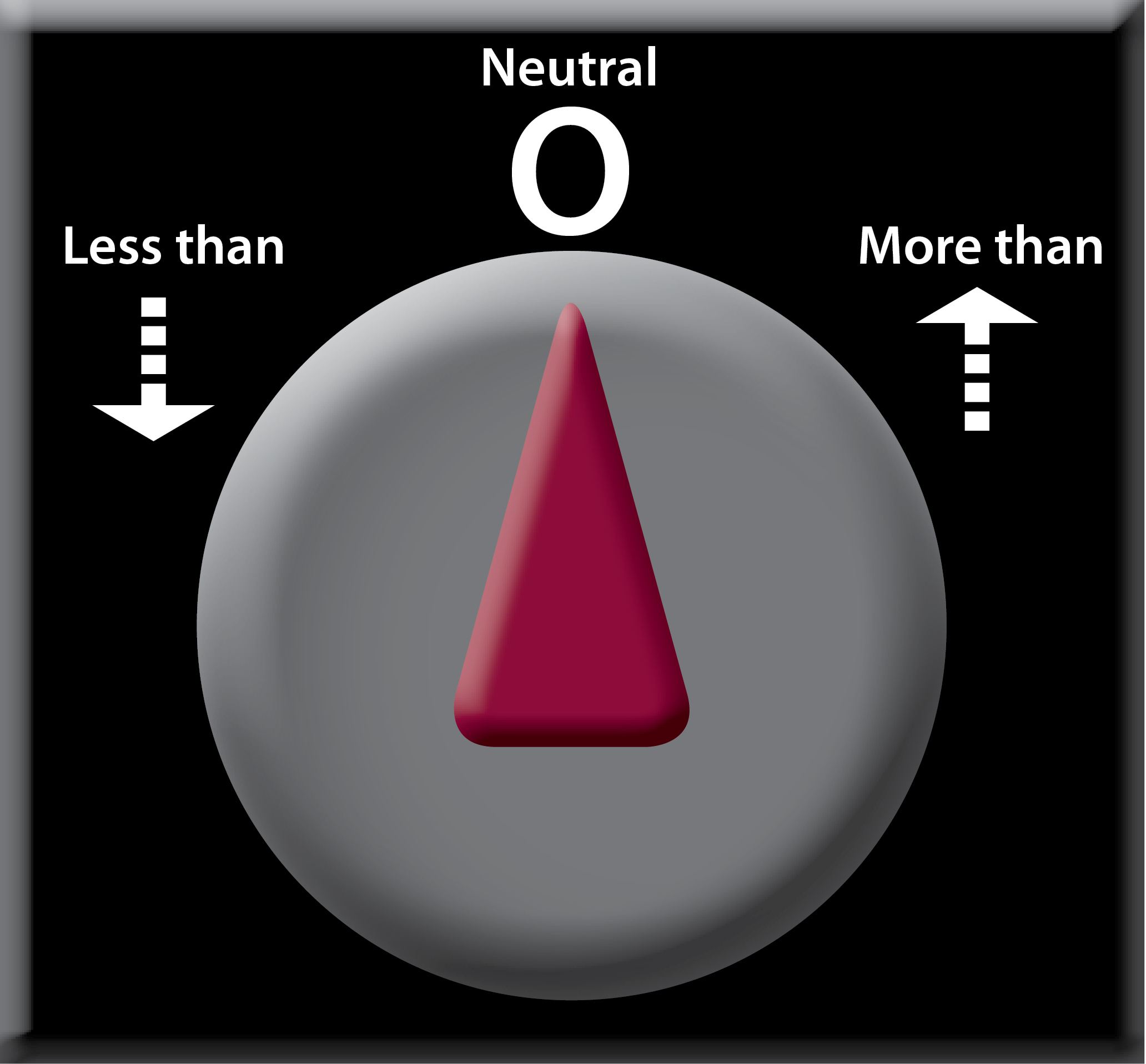
An image of a switch came to my mind. A switch buried deep within their being that was stuck on the Less Than setting by default.

Neutral Switch_Less than

The Less Than Default Switch.

No matter what actually is occurring in their lives, the switch in this position interprets them as being Less Than others. When they achieve something great, accomplish a goal, or create something amazing, the switch discounts all of it.

Even worse, when thinking about trying something new, striving for a goal, or being creative, the Less Than Default Switch short-circuits the motivation to try.

I mentioned the switch.

Surprise. Revelation. A few tears.

“Just for a moment, imagine that switch. See it in the Less Than position…Now, turn the switch to Neutral.”

Understanding.

“Just think about what you could do, accomplish, try, achieve, create, or pursue now that your switch is in the Neutral position.”

Hope.

Neutral Switch

Listen, to yourself and those around you. If your Less Than Default Switch is active, go ahead and give that knob a turn. Move it to Neutral. If someone around has the switch on Less Than, help them move their knob as well.

Over time, Neutral can become your new default setting.

No more discounting.

No more comparison.

Just you; allowing your gifts, talents, creativity, and art to flow.


Transactional or Relational?

Transactional is taking orders, processing materials, and enforcing rules or procedures.

Relational is meeting a need, asking and knowing, and providing solutions.

Transactional can be short-sighted.

Relational sees the whole picture.

Transactional says “the rules are rules.”

Relational says “I see where an exception may be in order.”

Transactional says, “Thank you for shopping or placing that order.”

Relational says, “Thank you for placing your trust in us or partnering with us.”

Transactional is easy.

Relational is hard.

Transactional is clean.

Relational is messy.

Rusty Connections

RustyOldHinges

(Image Courtesy of http://www.angiesroost.com)

A friend recently reached out to make sure we were okay. Nothing specific happened, just a little time passed since we last connected.

“Are we okay?”

“Yes. Why, do you think something is wrong?”

“No, just sometimes when time passes our connections get a little rusty.”

Rusty Connections. As time passes things don’t move with the same fluidity. There can be resistance or breakdown. Sometimes, things just stop working.

Our relationships and our connections with others can get rusty. They may have become stiff and lack the flexibility they once had. The passage of time may have caused them to stop working the same way they did years ago.

There is good news. With effort, many of these Rusty Connections can move again. That effort may take the form of a phone call, a text or email, or even a letter (see below). But remember, a rusty hinge doesn’t return to its original state. Time has passed, and it will move again but in a slightly different way. Perhaps with a little more effort.

(I have a good friend who is single-handedly attempting to bring back the written correspondence approach, and I applaud and am participating in this effort. Why not give it a try?)

The Shirt, the Challenge, and the Surprise

Coach T-Shirt

The Shirt

When teaching a class on coaching, I joke with the class about having shirts made up that say “COACH” and threaten to hand them out and make them wear them in their workplace.

 “What if I gave you a shirt like this and made you wear it in your workplace when you get back on Monday? Who here would want to wear it? What would your employees say?”

A few replies to my questions from a recent group of leaders during a class on coaching appear below.

“Not a chance.”

“They would ask me if I started coaching one of my kid’s teams.”

“I would be laughed out of the place.”

I pressed a little further to find the root of the hesitation on being labeled the “COACH” in their workplace. Each was a leader in their organization. Each had a title and at least a few employees. But something was stopping them from coaching.

As the conversation progressed, the obstacles became more clear. There wasn’t enough time to coach (and get their own work done). The culture would be critical of this approach. They were not coached as employees, and the list went on and on until an even more revealing answer came to light.

“Because when a team is failing, they fire the Coach!”

There it was, the real fear behind the hesitation. Being the focus of performance may result in the owners switching leaders if the organization is not performing. With the fear out in the open we could move towards agreeing on why coaching is essential to the team’s success.

Coaching goes beyond holding people accountable for task completion. Coaching is about developing people as individuals, stretching them, and helping them achieve more both individually and collectively. Coaching requires a combination of encouragement and accountability. Coaching is needed for teams.

The Challenge

Beyond a mere threat, I actually had these shirts made up and hand them out at the end of the class. Periodically, I would get an email about how wearing the shirt in the workplace helped the leader focus on coaching their employees, despite the initial awkwardness. I even heard from a leader who must wear a uniform each day at work, but wears the “COACH” shirt underneath once a week as a reminder to coach their employees.

A few months ago, I changed my strategy. In addition to having them take a shirt, I issued a challenge. The first leader to email me a picture of them in their workplace wearing the shirt would win a prize.

The Surprise

The responses have been great. Within a day or two I start to receive photos of these leaders wearing their “COACH” shirt in the workplace. The challenge helped provide some incentive, but the results have been greater than just a prize. Many leaders have been surprised as they experience something more once the awkwardness fades: their employees have embraced the concept and are enjoying the coaching.

But that is not the only surprise.

Last week I taught the Coaching class in the morning, but then there was a break where the group had a few other instructors before concluding the day with me. I headed back in the room and started the session.

It was when I clicked to the second slide of the PowerPoint.

There it was. A photo appeared on the screen. It was a photo of the entire class wearing their “COACH” shirts in the lobby. They had managed to take the photo and put it into the presentation during the break.

“Technically, since we are all on the clock, this counts as working.”

I laughed. I was encouraged by their creativity. I was surprised.

After giving out prizes to all of them, I reminded them that now that they had gotten over their initial hesitation, they could all become better coaching in their workplace.

Over the next few days, other photos appeared in my inbox. Coaches were identifying themselves, and starting to do the work. They were making a difference.

How about you? Do you need a shirt as well?

Make a list of those in your workplace, circles, or life that need some coaching. Once the awkwardness fades, it may be just what they need.