The “Everything is Okay” Phone Call

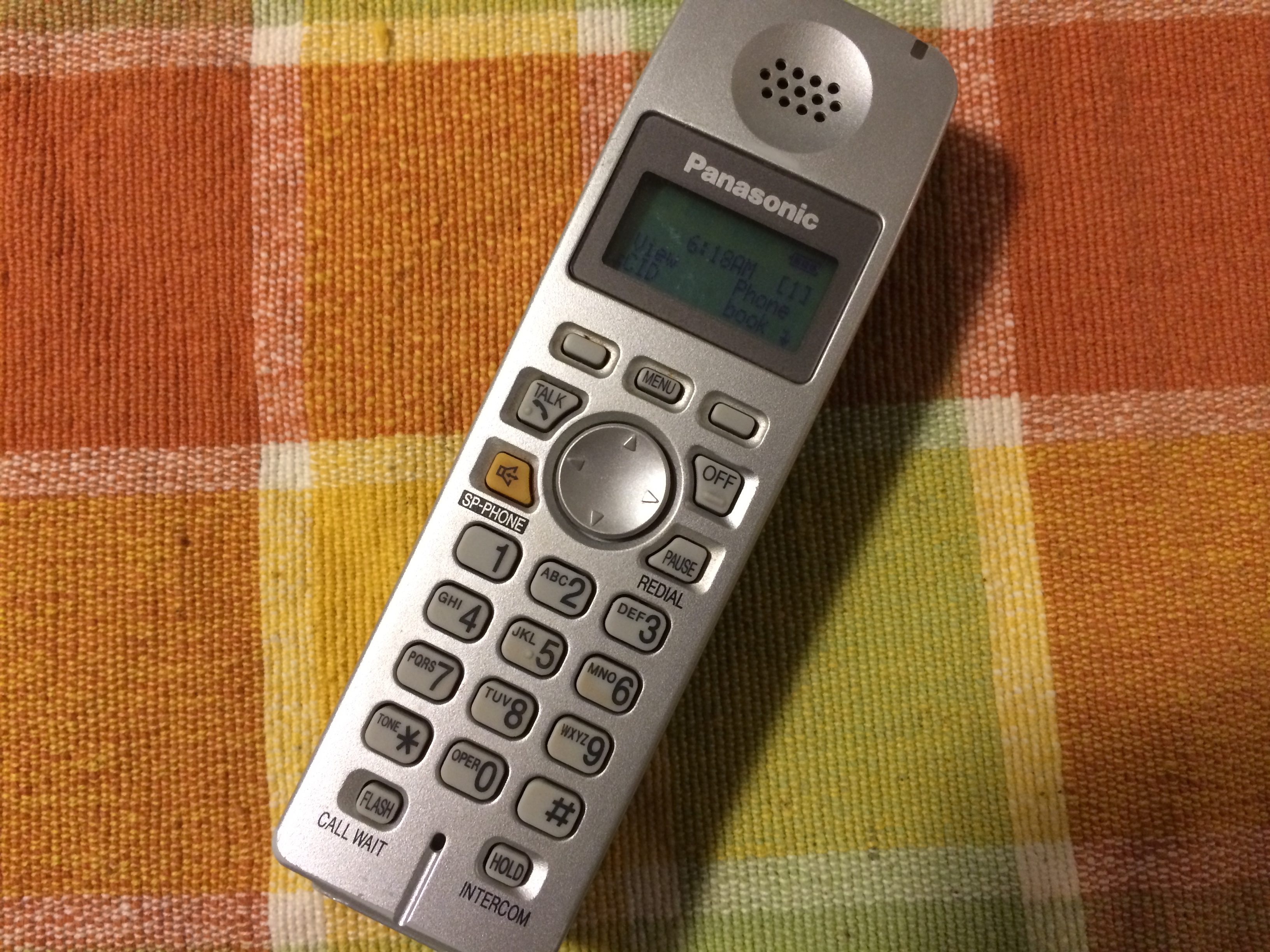
The Phone

Most of the phone calls that come my way are from people who need something. This seems like an obvious occupational hazard for a consultant who is trying to help others. However, I began to think that this pattern is deeper than just my work world. Over the past few weeks I started to keep track.

Text from kiddo – request for money.

Text from family – request to service their cars.

Phone call from friend – needed advice on issue.

Phone call from colleague – request to cover a meeting.

In the midst of this tracking experiment, there was one call that stood out:

The “Everything is Okay” phone call.

I didn’t actually take the call, it went to voicemail. Imagine my surprise when I listened to that message.

“Hey Carl, just wanted you to know that everything is okay I was just calling to connect with you and say Hi.”

It was just the call I needed. At times, the constant giving of yourself to others, their needs, and their problems can become a solitary place.

Relationships begin to feel like one-way streets.

I am taking this person’s example and trying an experiment of my own. Deliberate and intentional communication with others to connect with them, not to request from them.

Give it a try this week. Who knows, it may just change the world.

The Relationship Reset Button

Reset Button

(Image Courtesy of Acceleraction.com)

So often in relationships, whether at home or work, with family or friends or loved ones, the past can overly shape the present.

You had a disagreement with that person. Now every interaction is awkward.

You lost your cool. Now others walk on eggshells around you.

You used to be fascinated by someone’s uniqueness. Now these issues only seem to cause you frustration.

You overly questioned someone’s work. Now they feel that you don’t trust them.

While working with a small group, we noticed this pattern and discussed how it impacts their ability to work together. The more I reflected, the more I noticed this pattern in my own circles.

The past interactions do not disappear, they build on each other to form a strange and often distorted view of others. I read recently that our memories can deceive us. Our memories exist, but each time we access them again they can change and the newer version of the story replaces the old memory.

I thought about how this can impact our relationships. Perhaps this is why it is so hard not to feel like a little kid around your parents. Maybe this is why people in more close relationships are heard complaining about the other one (many times in front of that person). This may be why it is so hard to rebuild a relationship at work that has gone south.

Those memories keep building and changing in a way that reinforces the negative issues.

What we could use is the Relationship Reset Button. This handy device would be available to any two people or a small group where all parties decide to let go of those past hurts, judgements, or misunderstandings. With a simple press of the button, everything would reset. They would be able to start fresh, start new, and get another chance at their relationship.

Yesterday I worked with this small group again. They pushed the Relationship Reset Button. There was history. There was conflict. There was a past. It wasn’t easy, but they stared over.

They let go, and began to appreciate each other’s differences.

They started to anticipate what the others may need, and started to provide that instead of being frustrated by requests.

They started to see that together they could accomplish so much more.

Along the way, some of the past began to return, but they would get together and remind each other that they had started over. These occasional issues didn’t build a new history, but were seen as lingering shadows that would continue to diminish as their new relationships grew.

Where can you use the Relationship Reset Button? Where has the past overly shaped and distorted some of your best relationships? The new year is about to start, so why not go ahead and press it and see what this year brings?

Jumping to Offense

Cliff Sign

(Image Courtesy of http://www.aroundtheworldl.com)

The other day during a conversation with someone close, I noticed something about our interaction. It was a simple conversation, nothing too deep or seemingly important, but a pattern revealed itself.

The pattern was simple: I jump to offense.

Let me explain. This means that my mind appears to be on a quest to find a way to be offended at what someone else is saying. By quest, I mean that my mind considers this its highest priority and will devote both time, energy, and resources to ensure the quest’s success.

Here are a few examples:

“It is getting kind of late for sending out Christmas Cards”

My Jump: So are you saying that I should have sent these out?

“It would be nice to do more interactive things at the next holiday with everyone”

My Jump: So they expect me to plan this then be responsible for meeting everyone’s idea of what is fun?

“We need to make sure we are attentive to the bottom line”

My Jump: So they are saying that I am overspending?

There are risks in jumping to offense, just like the risk of jumping off a cliff. It is dangerous and there is unseen peril just beyond the lip. Luckily I am beginning to notice this pattern as it occurs (or shortly afterwards).

I realize that I need to retrain my mind to see the warning sign on the edge of that cliff before I go off jumping. Picturing that warning sign helps, but also explaining to the person I am talking with if it begins to happen.

Here are a few tips for my fellow jumpers:

  1. Recognize your bent toward Jumping to Offense.
  2. Understand that Jumping to Offense is dangerous, for you and others.
  3. Slow down and listen, don’t respond right away.
  4. Ask clarifying questions, make sure you understand what the other person is saying.
  5. If you do jump, climb back up and reconcile with those around you.
  6. Repeat steps as needed.

Where are you Jumping to Offense? Take a few moments to think about where you could, as my grandmother always used to say, “look before you leap.”

P.S. I am going to print out this photo and put it where I can see it every day.

Unspoken Expectations: Hidden Frustrations

In life, work, home, or family we have expectations of others. Others have expectations of us. Some expectations are shared and we can choose to meet the expectation or not.

Your employer may expect you to show up to work on time. They inform you. You wake up early to meet that expectation. There are consequences for being late, and certain actions will be taken if needed.

Pretty clear expectation with appropriate ramifications.

Not all expectations are as clear.

There are Unspoken Expectations.

Unlike regular expectations, the unspoken version are not clear and you may not know that they exist. Not knowing doesn’t prevent being measured against this standard. In fact, the Unspoken Expectations are typically measured more stringently.

Why do we keep these expectations to ourselves?

Why don’t we tell that employee that we really want them to show initiative and take on a project to call their own?

Why don’t we say we really don’t want to eat out there? Or go visit those people? Or attend that event?

Why don’t we tell our boss that we need more concrete feedback, not a passing “You’re Awesome” as they rush past us in a distracted flurry?

Why don’t we say this his how we need to be treated?

As we measure other people against these expectations, our frustration builds. We are not getting what we think need or want from others, and we keep it hidden.

These Hidden Frustrations pile on each other and create distance and difficulty in our relationships and our organizations.

Something prevents us from speaking out these expectations, and the frustrations grow. These Hidden Frustrations damage our ability to lead, follow, or relate to those around us.

Once we know that we may holding others to Unspoken Expectations, two options appear.

1. If the expectation is that important, we need to move past our fear and have a conversation.

2. If our frustration is being caused by an unrealistic expectation, we may need to let that standard go.

Over the next few days, when you are feeling frustrated with others, take out a sheet of paper. Write down the expectations. Seeing those words and expectations will help determine which option to follow.

Learning to Lose

Learning to Lose


(image courtesy of my daughter: thanks kiddo!)

There are some things that come easy to us. It may be a task, a sport, a relationship, a job that we are either naturally gifted at, or has just gone well for us. Nothing about this was particularly hard or required a lot from us, but we had success.

The success can lull us into thinking that if we continue the same level of effort, the same level of accomplishment will be ours. As if success is a simple machine and as long as we keep feeding it the same parts, the product just pops out the other side.

Something happens.

The other team wins.

Our relationship fails.

We get fired.

We lose.

The loss hits us hard and we scramble to figure out why.

We blame ourselves. Sometimes we blame others.

We struggle and get back up.

We play more games, and don’t always win.

We meet more people, and don’t always find the one.

We apply for more jobs, and they don’t call us or they pick someone else.

The old stuff that made us a success is no longer enough.

So…

We train harder.

We work on our stuff.

We refine our skills.

After some time passes, we begin to win again.

We become better players.

We develop deeper relationships.

We discover better careers.

Learning to lose reminded us that what was good enough for yesterday won’t get you through tomorrow. Success can get you pretty far, but learning to lose challenges you to become great.

私に好意的に見てください (Please look favorably on me)

At breakfast the other day, a close friend mentioned that a Japanese exchange student would be staying with them soon. In order to prepare for the visit, they were brushing up on their Japanese to welcome the student.

At first I thought “who brushes up on their Japanese?” but I pushed that reaction down to listen to the phrases.

The phrases began with “nice to meet you” and “I am (insert your name)” pretty standard interaction when meeting with new people.

It was the third phrase that caught my attention.

“It is a pleasure to meet you” or more literally “please look favorably on me”.

I was struck by the importance of this request: please look favorably on me. It is a simple request. Essentially be nice to me and treat me well, but for me it went a little deeper.

Please look favorably on me includes not reading into my actions and assuming negative motives. Please look favorably on me encourages others to look towards the positive and not simply pointing out my flaws or shortcomings. Please look favorably on me asks for the benefit of the doubt and a level of grace for who I am and what I do.

How many times do we connect with others for the first time, or for the hundredth time that this simple reminder would provide some helpful ground-rules for the interaction.

There are a lot of people who I have to interact with over the next few days that provides numerous opportunities to try this out.

What simple phrase would help you? How can you provide a simple request to assist you in your relationships? What are the few words that could reset the dynamics in your workplace or family?

Having the courage to utter the phrase may be hard, but the reward may be worth the risk of being vulnerable.

I will let you know how it goes…but first, please look favorably on me.