Wired for Problems

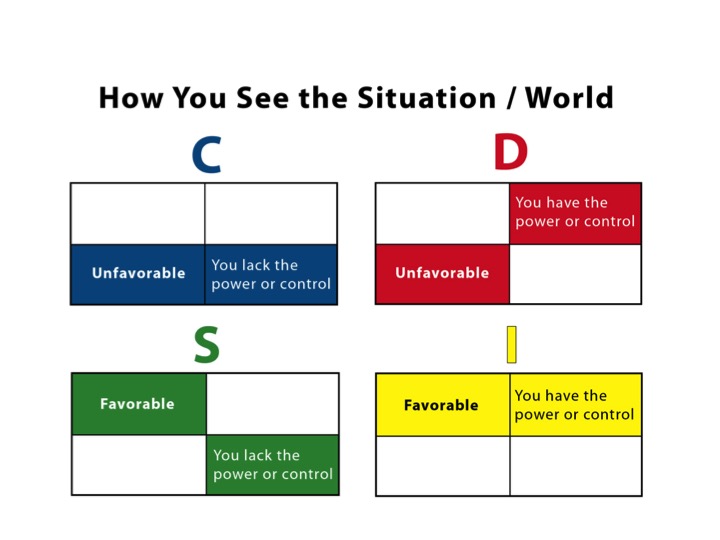
How you see the world

Understanding our own behavioral styles is essential to our long-term success. Knowing that you have a tendency to follow the rules, or that you can connect with others helps you leverage those strengths in your style (maybe you have a passion for finance or you are great at sales).

Knowing how you are wired also helps you know when your style needs to be modified (maybe you are too strict at enforcing rules or you connect so often with others that you are not getting your own work done).

The other day I was having a somewhat difficult interaction and an overreaction. When I react this way, I revisit my own style (often with other people) to help determine the cause and see if this insight provides some solution or an easier way to modify my style in the future.

As I described the situation to someone close, they provided some much-needed insight.

I am wired for problems.

How you see the world (1)


My natural tendency is to see things in an unfavorable light. Combine that with the perception that I am in control or have power over a situation, and things get interesting.

What I see as a problem, others may not even notice.

When I want to fix things, others may not be ready or aware that the problem even exists.

Sometimes this style works well.

If organizations, teams, or individuals need to change or improve.

Sometimes this style doesn’t work out as well.

If we are just having a casual conversation, or interaction.

This greater self-awareness helps me understand that although I would like to fix a lot of things, not everything is broken or a problem that needs fixing.

What is the old saying? “If you are a hammer, after a while everything begins to look like a nail.”

How are you wired?

If you know your own style, take a few moments to revisit your results.

Ask yourself the following questions:

1. What are the best 3 things about my style that really work for me in my role, job, career, or life.

2. What are the 3 things about my style that seem to get in the way the most, or if modified would lead to greater success.

Put that list somewhere where you can see it each day, and leverage what works, and begin to modify what doesn’t work.

If you don’t know your style, drop me a line or connect with someone who can help you identify your style.


Take Credit For Yourself As Well

Coaching is an interesting process. Your role as a coach is to help provide the structure, clarify the issues, and ask a lot of questions. Occasionally, you also provide the accountability to hold people to deadlines or tasks. A coach must also resist the temptation of being the expert, especially if your “expertness” comes with pre-formed solutions.

Sometimes the coaching process feels like a meandering path. Other times, coaching resembles a highway with clear mile markers and ways to measure fast progress. Either way, as time passes there is movement. There are accomplishments. There are achievements.

When those accomplishment or achievements occur, those being coached are grateful. Some express their appreciation.

“Thanks Coach.”

“I owe it to you.”

“You are the reason this happened.”

After a coaching session, I heard similar expressions. I needed to reply.

“Take credit for yourself as well. I am not the reason this is happening. You are doing the work, I am just here to help you find the path.”

This appreciation if left unaddressed can become the second temptation of coaching: Taking all the credit.

Coaching should diminish as both accomplishments and confidence rises. Those being coached begin to ask their own questions, set their own goals, and hold themselves accountable. Coaching may continue through the progress, but at a lessor degree and may eventually cease.

Properly balanced coaching can move people forward with their life, career, business, and/or personal goals. No matter which side of the coaching relationship you are in, keep these two things in mind:

If you are coaching others, remember to resist both temptations (expert and credit).

If you are being coached, remember to take credit for yourself as well.


The Contest (and rules and giveaway)

Know Yourself. Change the World

The Contest

Know Yourself. Change the World. A lot of my work with people starts with a better understanding of their own styles. Either in the coaching relationship or when working with leadership teams, starting with better self-knowledge is a key step towards making progress and improvement.

Ever wonder about your behavioral style and how you are wired? Have you wanted to know yourself better and learn ways to be more effective in the workplace or life? Do you ever wish that you could communicate better with others, and have a better handle on who you are?

Here is your chance.

The Giveaway

One lucky winner will receive a complimentary assessment of their behaviors and motivators along with a one hour debrief with me via Skype or FaceTime (a $500 value). This is an online assessment and you will receive a report (around 46 to 52 pages) that will allow you to better understand yourself (both strengths and weaknesses). We will spend a little time together talking about how this new insight will help you in your career, life, relationships, and journey.

The Rules

To enter this drawing, all you have to do is leave a comment in the comments section of this post. Pretty simple. You don’t have to comment more than once, that doesn’t help your chances. Remember to leave your name or some identifier so I can announce the winner and contact you. A winner will be picked at random.

The Contest is open until 5 PM (EST), Friday October 3rd, 2014. A winner will be announced shortly after this deadline.

Let the contest begin!

If you have already taken one of these assessments with me, send this to someone you know who could benefit from greater self-awareness and understanding.

Spread the word.

Customer Service Coaching and the Salad

Quick-Leftover-Salmon-Salad-9-e1343092869766

(Image Courtesy of http://thehealthyfoodie.com)

While eating at a restaurant while traveling, an interesting customer service interaction unfolded that I could not ignore. As the three people at the adjacent table received their food, I noticed one of them make a face and explain to the staff that something was in the salad. Something that should not be in a salad.

The plate was removed, and the other two people shared their food until a replacement meal arrived. You couldn’t help but notice a pretty thorough examination of the second salad. It was declared clean, and the meal continued.

I gave my salad a close look when it arrived as well.

Although the meal continued, you could not help but notice how this interaction somehow tainted what would normally be a pleasant lunch. Whatever topics that would have filled their time together, had been replaced by a salad and service.

The bill arrived. Redness appeared on faces and necks. Conversation intensity increased.

I could only guess that the salad remained on the bill, and no gesture was made to make up for the prior issue. One of them pulled out their credit card and placed it down with the bill.

I got up and walked over.

“Sorry to bother you, but customer service is an interest of mine, talk to you for a minute?”

They agreed, but were still a little stunned/agitated by the whole lunch interaction. I explained that I witnessed and was aware of what had transpired.

“What is really upsetting is not that the salad remained on the bill, it was the indifferent attitude of the staff. We explained what happened, and instead of apologizing, they simply said ‘ok’ and took the salad away.”

I encouraged them to speak up. Talk to the manager or someone to explain what happened. Typically, a business only hears from 4 percent of their dissatisfied customers. That means for every 100 times you drop the ball, only 4 people will tell you.

Never assume that the absence of complaints equates to satisfaction.

That doesn’t mean your customers are not telling someone. Despite not talking to you, those same dissatisfied customers will tell 8 to 10 other people about their interaction, and some will tell up to 20. With social media, now they can tell hundreds or thousands of people.

They spoke up. I watched a manager come over to talk to them, and a new bill arrived. Their tone, and demeanor changed. They smiled, and prepared to leave.

“We told them that we needed to talk about the bill and the lunch experience, now that we had been coached on customer service.”

We laughed and shook hands as they left.

Things will go wrong with your customers. You will make a mistake, or fail especially when things are hectic or busy. How you treat you customers when you make that mistake can makes all the difference.

Apologize.

Acknowledge.

Keep in mind, there may be others coaching your customers to make you better as well.

The Shirt, the Challenge, and the Surprise

Coach T-Shirt

The Shirt

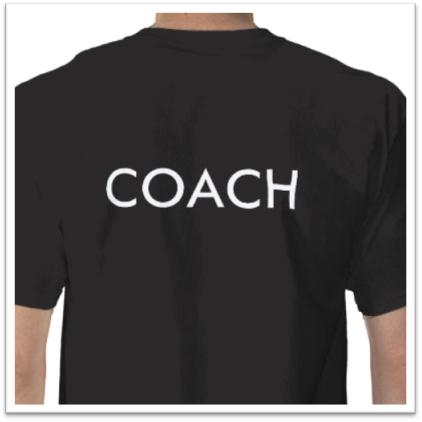
When teaching a class on coaching, I joke with the class about having shirts made up that say “COACH” and threaten to hand them out and make them wear them in their workplace.

 “What if I gave you a shirt like this and made you wear it in your workplace when you get back on Monday? Who here would want to wear it? What would your employees say?”

A few replies to my questions from a recent group of leaders during a class on coaching appear below.

“Not a chance.”

“They would ask me if I started coaching one of my kid’s teams.”

“I would be laughed out of the place.”

I pressed a little further to find the root of the hesitation on being labeled the “COACH” in their workplace. Each was a leader in their organization. Each had a title and at least a few employees. But something was stopping them from coaching.

As the conversation progressed, the obstacles became more clear. There wasn’t enough time to coach (and get their own work done). The culture would be critical of this approach. They were not coached as employees, and the list went on and on until an even more revealing answer came to light.

“Because when a team is failing, they fire the Coach!”

There it was, the real fear behind the hesitation. Being the focus of performance may result in the owners switching leaders if the organization is not performing. With the fear out in the open we could move towards agreeing on why coaching is essential to the team’s success.

Coaching goes beyond holding people accountable for task completion. Coaching is about developing people as individuals, stretching them, and helping them achieve more both individually and collectively. Coaching requires a combination of encouragement and accountability. Coaching is needed for teams.

The Challenge

Beyond a mere threat, I actually had these shirts made up and hand them out at the end of the class. Periodically, I would get an email about how wearing the shirt in the workplace helped the leader focus on coaching their employees, despite the initial awkwardness. I even heard from a leader who must wear a uniform each day at work, but wears the “COACH” shirt underneath once a week as a reminder to coach their employees.

A few months ago, I changed my strategy. In addition to having them take a shirt, I issued a challenge. The first leader to email me a picture of them in their workplace wearing the shirt would win a prize.

The Surprise

The responses have been great. Within a day or two I start to receive photos of these leaders wearing their “COACH” shirt in the workplace. The challenge helped provide some incentive, but the results have been greater than just a prize. Many leaders have been surprised as they experience something more once the awkwardness fades: their employees have embraced the concept and are enjoying the coaching.

But that is not the only surprise.

Last week I taught the Coaching class in the morning, but then there was a break where the group had a few other instructors before concluding the day with me. I headed back in the room and started the session.

It was when I clicked to the second slide of the PowerPoint.

There it was. A photo appeared on the screen. It was a photo of the entire class wearing their “COACH” shirts in the lobby. They had managed to take the photo and put it into the presentation during the break.

“Technically, since we are all on the clock, this counts as working.”

I laughed. I was encouraged by their creativity. I was surprised.

After giving out prizes to all of them, I reminded them that now that they had gotten over their initial hesitation, they could all become better coaching in their workplace.

Over the next few days, other photos appeared in my inbox. Coaches were identifying themselves, and starting to do the work. They were making a difference.

How about you? Do you need a shirt as well?

Make a list of those in your workplace, circles, or life that need some coaching. Once the awkwardness fades, it may be just what they need.

The Hill Rule

The Hill Rule

Our youngest daughter recently began running with me. We found some new shoes and planned a run.

“How far do you want to go on your first run?”

“How far do you normally go when you go off running?”

“Well my typical everyday route is a 5k.”

“How far is that?”

“3.1 miles.”

“Okay we should do that.”

We ran. We talked. We laughed.

We had to slow down a few times. She is used to sprinting on the soccer field.

As I watched her, her stride, gate, and frame something became clear: it is only a matter of time before she can out run me. With a combination of pride and a little envy, I realized my job is to coach her well, enjoy this time with her, and help her excel in something that she seems designed to do.

Each step confirmed that she is a runner.

But there is a hill.

In addition to providing encouragement and some tips on breathing, I explained that there is The Hill Rule in running. For those of you not familiar with this particular rule, let me explain.

The Hill Rule: when running up a hill, you are not allowed to stop. If you need to stop there are only two options.

1. Stop before you get to the hill, catch your breath, then proceed up the hill.

2. Stop at the top of the hill, after you run up the hill.

The reason for The Hill Rule is simple. A large part of running is a mental game. Stopping in the middle of a hill imprints a pattern that you cannot run hills, and you will tend to stop when faced with the next larger hill. The Hill Rule breaks this pattern, and does acknowledge that hills are hard, but there are options to overcome them.

The more I thought about The Hill Rule, the more I could see how it applies to any obstacle we face. When we give up or stop in the middle, we develop a pattern that can continue the next time that obstacle arises. Frankly, a large part of life is a mental game. 

Try applying The Hill Rule to your next obstacle. Either stop and rest before you tackle it, or rest when it is over. No stopping in the middle.

We ran up that hill without stopping. We rested at the end, and celebrated the run.

We are looking forward to the next run, and there will be hills.