Running as a Team

It was an afternoon where the temperature hovered close to freezing when our small group of four decided to run together for the first time. We work together. We talk about running together.

Why not run together?

Running can be pretty solitary.

Running can be you, a pair of shoes, and the road ahead.

Thomas Hobbes described life in a way that a lot of people would describe running: solitary, poor, nasty, brutish, and short.

When you run alone, no one sees you fail.

When you run alone, no one sees your flaws.

When you run alone, no one sees you stop on the hill.

Despite the insecurity, the fears, a larger question develops.

Why run together?

When you run together, you share in each others successes.

When you run together, your flaws (that only you notice anyway) seem smaller as the laughter and encouragement arrives.

When you run together, hills seem smaller when you are side by side.

Our team has grown to six, and will grow again next month. Each member of the running team is different.

We run various paces and distances depending on the day, but everyone is running a little faster and a little longer than when we first started.

Life and running doesn’t always have to be as Hobbes described. Maybe he just needed to be part of a team.

Rusty Connections

RustyOldHinges

(Image Courtesy of http://www.angiesroost.com)

A friend recently reached out to make sure we were okay. Nothing specific happened, just a little time passed since we last connected.

“Are we okay?”

“Yes. Why, do you think something is wrong?”

“No, just sometimes when time passes our connections get a little rusty.”

Rusty Connections. As time passes things don’t move with the same fluidity. There can be resistance or breakdown. Sometimes, things just stop working.

Our relationships and our connections with others can get rusty. They may have become stiff and lack the flexibility they once had. The passage of time may have caused them to stop working the same way they did years ago.

There is good news. With effort, many of these Rusty Connections can move again. That effort may take the form of a phone call, a text or email, or even a letter (see below). But remember, a rusty hinge doesn’t return to its original state. Time has passed, and it will move again but in a slightly different way. Perhaps with a little more effort.

(I have a good friend who is single-handedly attempting to bring back the written correspondence approach, and I applaud and am participating in this effort. Why not give it a try?)

Habit Residue

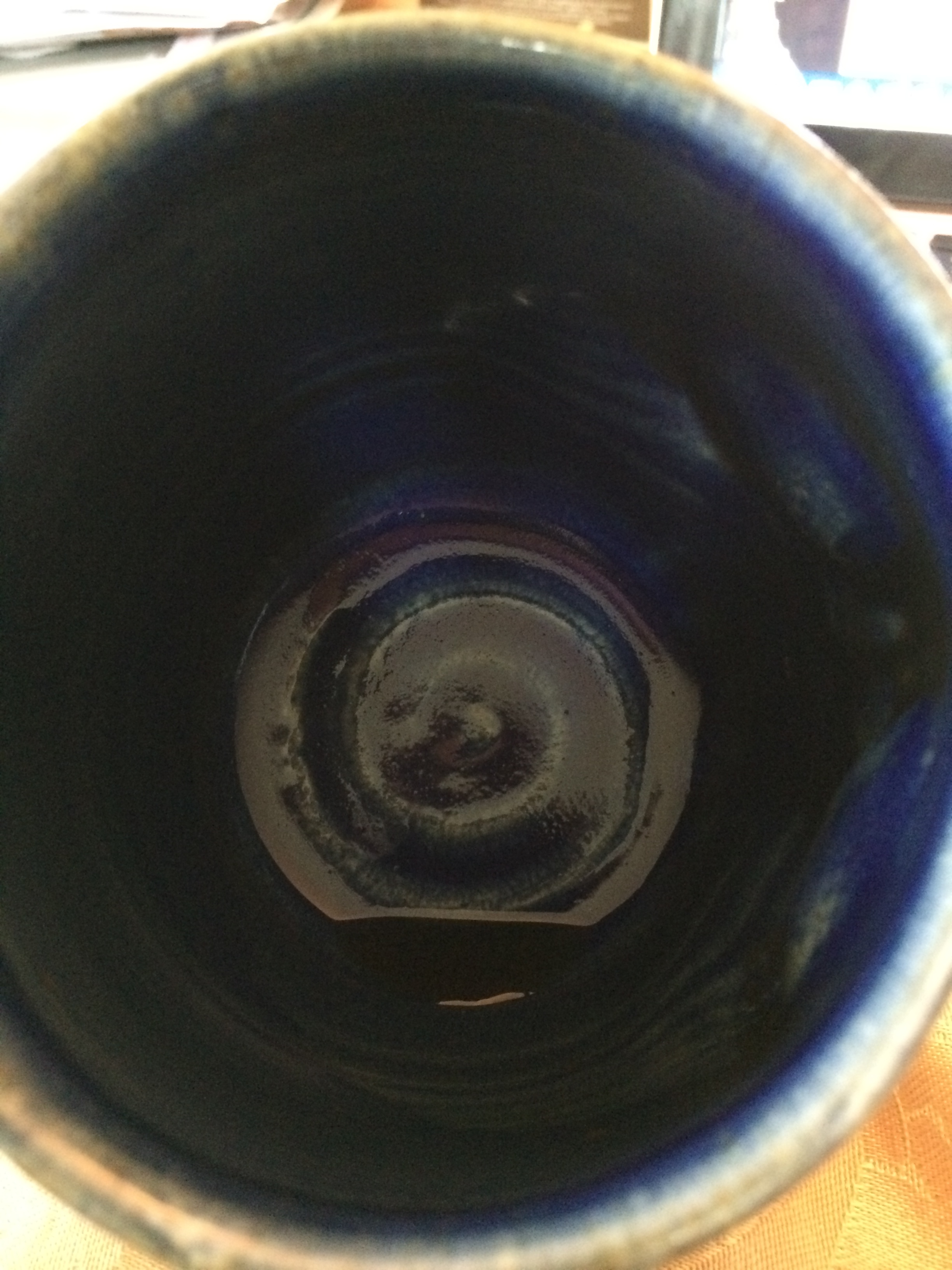
Coffee Residue

We all have Habits.

Certain things we do that are a recurring pattern. Some we enjoy and are positive in our lives. Others are not great for us, and we struggle with changing them.

Habits become wired in our brains so we can focus on other more important aspects of our lives. Try to be more aware the next time you brush your teeth, take a shower, or get dressed, watch how this pattern of brushing, washing and dressing unfolds. The odds are you have a Habit that follows a pattern.

However, breaking a prior habit and re-wiring something new takes time and effort. In the first few weeks of trying something new, the old Habit tries to reestablish its dominance.

While helping someone establish a new Habit and replace and old one, they became frustrated when the old Habit returned.

“It seems to be back. I am trying.”

“You have made a lot of progress, maybe that is just the Habit Residue.”

“What are you taking about?”

“You know, what is left behind after something is gone. After I drink my coffee, there is coffee residue in the mug. The coffee is gone, I can still smell it, but the actual coffee is no longer here.”

We laughed and they were able to move forward. Somehow putting the Habit Residue in its place made it seem less powerful, less able to reassert itself back in their life.

What Habits are not working for you? What areas of your life, work, home, or relationships could use some new patterns?

Changing these Habits may not be easy, especially when the Habit Residue pretends to be the real thing. Putting the Habit Residue in its place may be a good place to start.

There is More to this NO than I can Explain

NO

NO. Followed by a puzzled look and a little pushback.

Sometimes there is more to this NO than I can Explain.

Sometimes there is no time to give the explanation due to the circumstances.

Sometimes there are others around who cannot hear the details.

NO needs Trust.

Trust that when the awkward No arrives and seems out of context that there is something more at stake.

Trust that when the situation calms or the opportunity arises, the explanation will come.

Trust that trusts you.

The Inspirational Ones

Sunrise Inspiration

You know the ones.

The ones that encourage you.

The ones that build you up.

The ones that can see your energy and passion.

The ones that you look forward to seeing and connecting with.

The ones that meet you for breakfast and leave you thinking you can accomplish anything.

The ones that say “Wow” when they see your work.

They are the Inspirational Ones.

Remember to thank them for the role they play in your life.

But don’t just rely on them to be the ones who inspire others.

You too can be one of the Inspirational Ones.

Encourage.

Build Up.

See Energy and Passions.

Connect.

Meet.

Say Wow!

Give it a try today, it may just Change the World.

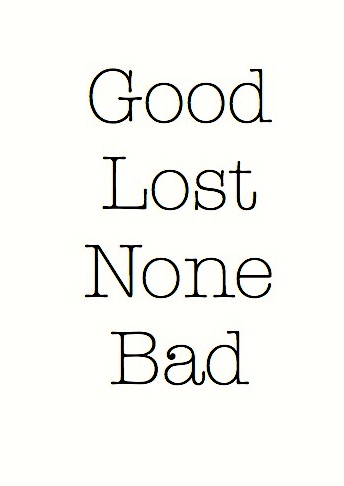
Good Lost None Bad

Good, Lost, None, and Bad

For some reason, I have been thinking about the hierarchy of certain things. Thinking about how to classify particular relationships, friends, jobs, bosses, employees, customers, and connections in a way that brings perspective.

Good describes things that are positive and contribute to you and your wellbeing.

Lost describes things that were once Good, but have left or been removed from your life.

None describes things that have never been part of your life.

Bad describes things that are negative and erode your life.

Why do we need this hierarchy?

Frankly, Good is easy. If all of our things fell into this category the rest of the list would not be needed. We would be and have good parents, friends, relationships, employees, bosses, and customers. By classifying the Good, at least we have something to strive towards.

The Lost, None, and Bad is where things can become less clear.

Lost can be hard. We had it: a marriage, a parent, a relationship, a friend, a job, a boss, or a customer. It was Good, now it has been Lost. The temptation is to classify this as Bad. A Lost parent, boss, friend, or employee is much better than a Bad one. We were able to experience the Good. We feel grief because it was Lost. Despite being Lost, we have the memories and experiences of what was once Good.

None is tricky. None may masquerade as Bad. Not having that parent, relationship, friend, job, or customer actually feels Bad. But None is not the same as Bad. None has plenty of its share of emptiness and loneliness, but that is a far cry from the negative destruction that Bad can bring.

Bad at first glance is easy. Bad encompasses all of the negative and harmful things. However, Bad is not satisfied with being at the bottom of this hierarchy. Bad wants you to believe that there are only two classifications: Good and Bad. Bad wants a more simple definition: If this thing is not Good (all the time and consistently and forever), it is Bad.

A Lost [parent, job, relationship, spouse, employee, customer, or boss] is better than None.  None is not actively destructive like a Bad [parent, job, relationship, spouse, employee, customer, or boss].

Does having a few ways to classify these things be helpful? How could separating out the Lost and the None from the Bad provide some additional peace or freedom?

Not all events that you currently face, or that shaped and define you are Bad.

Bad likes to take all the credit.

As we strive for more Good in life, don’t let Bad fool you into thinking that Bad is all that remains. Sometimes Lost, and even None, are not so Bad when they are in perspective and in their respective hierarchy.