Moats, Distance, and Drawbridges

Caerlaverock_Castle_from_the_air_1


(Caerlaverock Castle in Scotland courtesy of Wikipedia)

On the call the other day, I was connecting and checking in with someone important to me. They were describing an old relationship that did not end well. They had been hurt. Words were exchanged. The relationship, although important, had essentially ended.

Because of some recent circumstances, they needed to connect with this other person. Connecting after a falling out is never easy. They were wrestling with how to proceed, and the feelings associated with the time that had passed.

As we talked, I explained that sometimes we need to create Moats. Moats are protections for our core relationships. We keep those inside safe, and others are kept at a healthy Distance.

Distance is the natural by-product of a Moat. Those relationships can be good, but they have limits. Those relationships may be “not so good” but the Distance helps you keep your emotions and expectations in perspective.

Those inside are kept healthy and safe (including you).

When discussing how to move forward, we realized that Moats need Drawbridges.

Drawbridges allow us to let people in when needed. Drawbridges allow us to connect with the greater world by making a decision to lower the bridge.

The Moat still exists, but the connection can be made. When the time has passed, the Drawbridge can be raised again, when and if needed.

We all have Moats. The logical by-product of these Moats are Distance.

It is the Drawbridge that helps us manage both.


Rusty Connections

RustyOldHinges

(Image Courtesy of http://www.angiesroost.com)

A friend recently reached out to make sure we were okay. Nothing specific happened, just a little time passed since we last connected.

“Are we okay?”

“Yes. Why, do you think something is wrong?”

“No, just sometimes when time passes our connections get a little rusty.”

Rusty Connections. As time passes things don’t move with the same fluidity. There can be resistance or breakdown. Sometimes, things just stop working.

Our relationships and our connections with others can get rusty. They may have become stiff and lack the flexibility they once had. The passage of time may have caused them to stop working the same way they did years ago.

There is good news. With effort, many of these Rusty Connections can move again. That effort may take the form of a phone call, a text or email, or even a letter (see below). But remember, a rusty hinge doesn’t return to its original state. Time has passed, and it will move again but in a slightly different way. Perhaps with a little more effort.

(I have a good friend who is single-handedly attempting to bring back the written correspondence approach, and I applaud and am participating in this effort. Why not give it a try?)

There is More to this NO than I can Explain

NO

NO. Followed by a puzzled look and a little pushback.

Sometimes there is more to this NO than I can Explain.

Sometimes there is no time to give the explanation due to the circumstances.

Sometimes there are others around who cannot hear the details.

NO needs Trust.

Trust that when the awkward No arrives and seems out of context that there is something more at stake.

Trust that when the situation calms or the opportunity arises, the explanation will come.

Trust that trusts you.

Plan With, Not Around

Plan With, Not Around

During a conversation with some friends at a local juice shop, we were talking about making time for various things.

Time to get together.

Time to ourselves.

Time to work on that book, project, or idea.

Time to give to other organizations.

Since the calendar is such a great way to plan, I spoke up with some advice about making and scheduling that time.

“Just put in on your calendar so you can plan around it.”

Immediately, another spoke up and provided a better phrase. A better mindset. A shift in thinking. The words provided the kind of shift that wakes you up, resonates, and changes your world.

“Put it on your calendar so you can plan WITH IT.”

To plan with these events incorporates them into our lives.

To plan around these events almost makes them separate from us, and more of a burden.

This idea hit home recently when trying to get time on the calendar with a couple that is close to us. The past months have felt more like trying to plan around everything else. Last night I was reminded of the juice shop conversation. We are going to pick some days and place them in the calendar. Not to plan around these events, but to plan with our lives.


Glasses or Binoculars

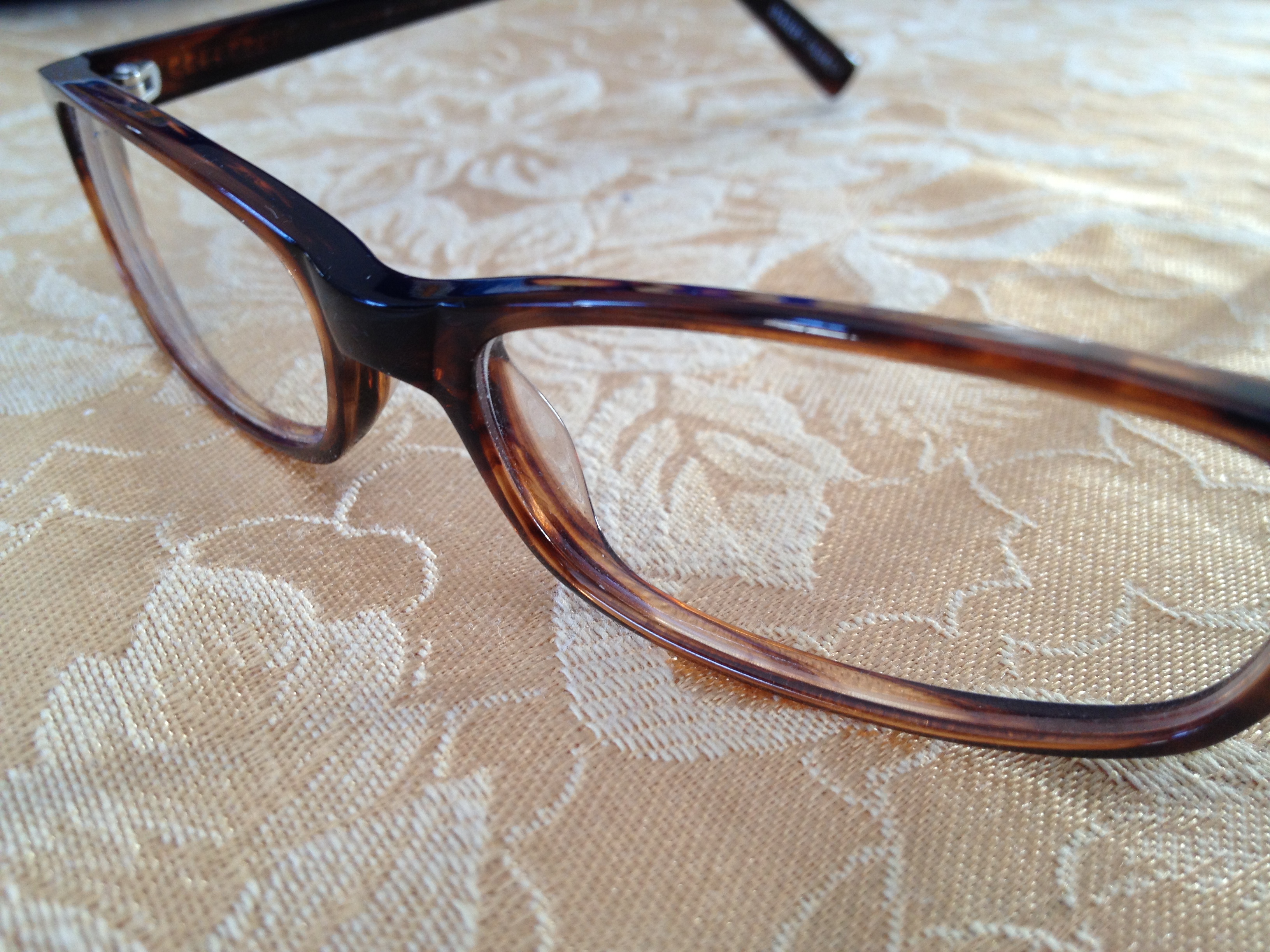
GlassesBoth of these tools have lenses, and are designed to help us see the world more clearly in their respective application. They are not competing with each other, but we may favor one over the other in our lives.

When looking at a situation, do you reach for your glasses or your binoculars?

Glasses help you see clearly.

Binoculars exaggerate and make everything appear closer.Binoculars

Glasses address things right before your eyes.

Binoculars help you see things that are far away, but may need your attention.

Glasses may need new lenses as life changes and our vision fades.

Binoculars may take some practice to learn to focus and interpret events.

Both glasses and binoculars have their respective role, application and usefulness. They become a burden when we get so used to using one, that we forget to change when the situation warrants.

A life lived solely through glasses makes the world seem smaller, as a quiet seclusion develops over time. Everything around you is in focus, but there is everything “out there” that is fearful and unknown. The life close to you is clear, but there may be a larger world around you that too far off in the distance to be seen.

A life lived solely through binoculars makes everything feel more close, more personal, more perilous. Interactions are overly scrutinized. Risks appear larger than life. Even the past events stay close because of the ability to keep them in sight, long after they have passed. This distorted view may cause you to miss the life that happens close, since your focus is much further away.

Where have you used glasses when binoculars were needed? When have your binoculars exaggerated aspects of your life when glasses would have brought the much-needed focus?

Picking the right application for both glasses and binoculars can be the key.

(Images courtesy of my iPhone and Lifesun)

Jumping to Offense

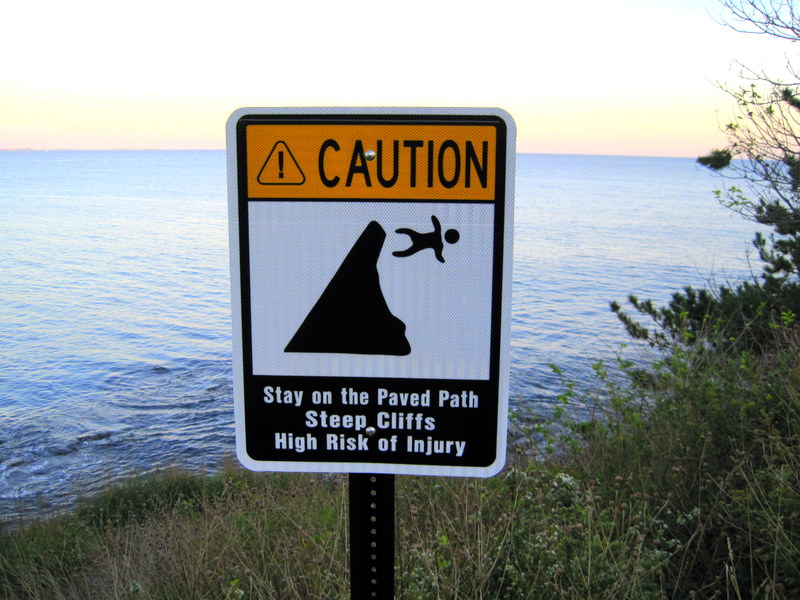
Cliff Sign

(Image Courtesy of http://www.aroundtheworldl.com)

The other day during a conversation with someone close, I noticed something about our interaction. It was a simple conversation, nothing too deep or seemingly important, but a pattern revealed itself.

The pattern was simple: I jump to offense.

Let me explain. This means that my mind appears to be on a quest to find a way to be offended at what someone else is saying. By quest, I mean that my mind considers this its highest priority and will devote both time, energy, and resources to ensure the quest’s success.

Here are a few examples:

“It is getting kind of late for sending out Christmas Cards”

My Jump: So are you saying that I should have sent these out?

“It would be nice to do more interactive things at the next holiday with everyone”

My Jump: So they expect me to plan this then be responsible for meeting everyone’s idea of what is fun?

“We need to make sure we are attentive to the bottom line”

My Jump: So they are saying that I am overspending?

There are risks in jumping to offense, just like the risk of jumping off a cliff. It is dangerous and there is unseen peril just beyond the lip. Luckily I am beginning to notice this pattern as it occurs (or shortly afterwards).

I realize that I need to retrain my mind to see the warning sign on the edge of that cliff before I go off jumping. Picturing that warning sign helps, but also explaining to the person I am talking with if it begins to happen.

Here are a few tips for my fellow jumpers:

  1. Recognize your bent toward Jumping to Offense.
  2. Understand that Jumping to Offense is dangerous, for you and others.
  3. Slow down and listen, don’t respond right away.
  4. Ask clarifying questions, make sure you understand what the other person is saying.
  5. If you do jump, climb back up and reconcile with those around you.
  6. Repeat steps as needed.

Where are you Jumping to Offense? Take a few moments to think about where you could, as my grandmother always used to say, “look before you leap.”

P.S. I am going to print out this photo and put it where I can see it every day.