Anger is My Primary Emotion

Anger.  Yup, it is a part of my world.  Let’s face it, one of the problems with learning about different styles is coming to grips with your own.  All styles have great things and not-so-great things at the same time.

According to Marston and the DISC assessment, there are four styles.
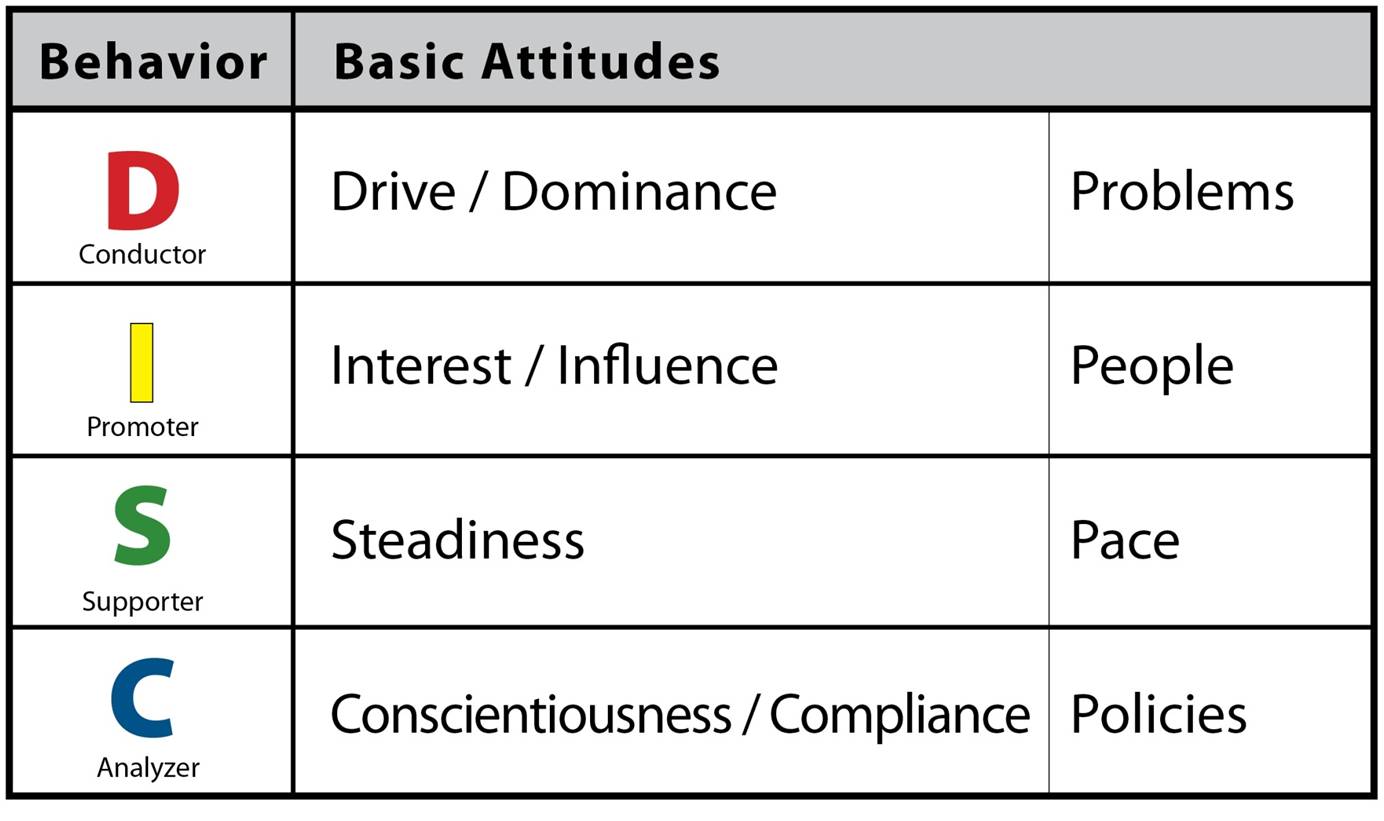
Essentially, it can be summed up with four P’s or how you deal with:

Problems, People, Pace, and Policies

How we score impacts the intensity of each category.  Do you jump in to solve problems or are you more reflective?  Are you the life of the party or do you need a break from people? How about your ability to adapt to change or have consistency from day-to-day?  And then there are the rules, do you follow them, or do you consider it nice that other people need them?

“All people exhibit all four behavioral factors in varying degrees of intensity.”

W. M. Marston

All of this helps us understand who we are, how we lead, how we follow, and how we communicate with others.  It is applicable in the workplace, our relationships, our families, and how we interact with everyone around us.

One of my more intense behaviors is the D or Drive.  It is what helps me push to solve issues, find solutions and get results.  But it has a price to pay: Anger.  The great part of having this internal urgency to get things done is unfortunately combined with the not-so-great part of frustration and impatience.  Learning to balance or modify our behaviors can be the difference between success or failure.  (See post Missed Opportunities, Missed Expectations to watch this play out in the workplace.)

When I sit with people, especially leaders and review their style, I hear them consistency say, I wish I knew this earlier on in my [career, life, marriage, college major, or relationships].”

So think about who you are, and what you bring that is both great, and not-so-great.  Don’t wear your particular style as a badge of honor.  There is no one right style, all have a downside if you are unaware or apply it in the wrong situation.

But if you know yourself, you can change the world.

I try to be pretty up front about who I am, the good and the bad.  If you are interested in assessing your own behaviors, let me know.  It is a pretty fun ride.  When I brought home my own assessment for the first time, I let my wife read it.  She cracked up.

“I think they must have followed you around all day.”

And better yet, our family was at an attraction up north.  Out of the crowd came a person that attended a seminar that I had given a few months prior.  This person walked straight up to my wife (right past me), winked at me and shook her hand and said:

“You must be the most patient person on the planet.”

Yes she is.  Thanks for putting up with me.

Your Worldview: by the Creator of Wonder Woman

William Moulton Marston.  Who is he and why should you care?

In 1928 he published Emotions of Normal People, a book which elaborated the DISC Theory (a behavioral assessment I typically use to help people understand their behaviors). Marston viewed people behaving along two axes, with their attention being either passive or active (in control or not), depending on the individual’s perception of his or her environment as either favorable or unfavorable: a worldview.

So let’s pretend you are at work.  Your boss and/or manager has an unfavorable view of the world, but considers themselves to be in control.  What do you have?  A boss that is always finding something to be improved, something new to try, a new way to solve the problem.  In addition to that, they are not shy of being the hero in all of their stories.

Then there is you.  If you have a favorable view of the world, but lack the power or control there could be tension.  Your boss is giving you mixed and multiple priorities, ideas without follow through, and you are there left holding the bag wondering what tomorrow will bring. Each day you fear that your boss will have 15 new ideas for you during their morning commute to implement before lunch.

You keep thinking “Why fix what isn’t broken?”

Your boss is thinking “Why can’t my employee see we need to embrace change?”

And it is all right there in Marston’s observation.  You are different, and it is NORMAL. Understanding this worldview provides a glimpse into how they are wired.  They see the world and themselves in a certain way.  You are different.  Still normal.

Do you see the world in a favorable light or a negative one?  Do you feel like you have the power and control, or not?  What about those around you? For the next few days, just listen.  People will tell you who they are if you do.  If you are the boss, think about the impact you have.  If you work for someone (and most of us do) think about how your worldview impacts those around you.

It is all about discovering the truth of who we and others are.  Our worldview is a good place to start.

By the way, in case you are ever on Jeopardy or some other game show, Marston also created the Wonder Woman comic book under his pen name Charles Moulton, as well as inventing a precursor to the lie detector test.  Hmmm, didn’t Wonder Woman carry a lasso of truth?

Who are you?

Seriously, who are you?  Have you thought about why you are they way you are?  Why do you do things a certain way? Why is it that you can connect so well with some people, and others can be so difficult?

Spend a few moments to answer this: Who do you think you are?  (Not yelling at you like a drill sergeant “Who do you think you are!)

Take a moment to describe who you are.

Think of one word descriptors that help provide insight into your style and help others appreciate what you bring to the table.

Positive?

Funny?

Driven?

Cautious?

For some, the words are positive and for others the words are negative (see the Silencing the Narrator posts for more details) but either way these words help you better understand your own style.

A word of caution: we tend to judge others in our own image.

If you are driven you look at everyone who is not and draw conclusions about their passion and dedication.  If you are realistic you look at optimistic people you may just wish they understood the complexity of the situation…then they would see the limitations inherent in the problem.

I work with a lot of people and organizations helping them identify and understand their own behavioral style and the impact it has on their leadership and communication style. Knowing yourself is an important first step.  Knowing others is the second.  Coming to grips that different is not wrong, it is just different is the third and somewhat difficult step.

Sometimes the style that differs the most from yours is exactly what you need to balance out your own style.

Over the next few weeks, we will discuss some of these styles.  (Don’t worry, I will put some fun stuff in there along the way.)  Hang on, it should be a fun ride.

Silencing the Narrator (Part 3)

We are in the home stretch…You can do it, you can make it through!

The Narrator appears in various ways.  Various types of negative “self-talk” are easy to identify if you listen.  I have developed a habit of listening for other people’s narrator, and I hear them all the time.  (Yes, it gives me something to do at parties.)  If you listen carefully, you may hear them as well.  Let’s look at a few examples.

Black or White Thinking:  Either you are perfect or you are a total failure.  “They didn’t like the report’s conclusion, why did we even try?”

Pessimistic Thinking:  It is never going to work out right.  “No matter how hard we try, management will never listen, they never do.”

Catastrophic Thinking:  Taking one event and magnifying it to a fictional conclusion. “My boss mentioned that I need to work harder, times are tough, he and other managers were working late…are they meeting to fire me?”

Comparing:  Measuring yourself against others.  “My sales will never match their numbers, they have it all together.”

Discounting:  Not being able to accept positive feedback.

This is one I hear the most, especially in the workplace.  Just this week, I was talking with someone and attempted to provide some feedback because their performance has been great.  I stopped by to see them and started up a conversation.

“Hi, just wanted to stop by and check in.  Your efforts to get out into the customer base in the past few months has really paid off…”

(Before I could finish) “I know that it has not been enough and I am not great at this you know…I will try harder.”

Do you hear that Narrator trying so hard to take away any positive news?  As a manager or leader are you listening to those around you, and listening for the Narrator?  If not, you may pass right over this without even noticing.  Having your team know their value may require a little more effort because of the Narrator.

Recognition is important, and doing it doesn’t really cost you much. Without being in tune with your people your efforts may not be penetrating through their Narrators.

Mind Reading:  Assuming people are thinking the worst about you.

Actually.  A pretty harmless word right?  But watch how this can play out.  During a recent conversation, I realized how much of a trigger this word can be for me.  It was during this dialogue that I realized how much my Narrator keys in on certain words or phrases and tries to insert the mind reading technique.  Here is how it went down.

“Actually Carl, that was pretty insightful.”

(My Narrator): So Carl, did you hear how surprised they were that for once you were “actually” insightful.

Luckily, I have become more aware of my own Narrator and can address it when it appears (not always, but it is getting better).  I joke with this person now when we talk about their use of “actually” and how my Narrator can no longer use it against them.

If you listen you will hear Narrators in the workplace, in your homes, and in your organizations.  Our role as leaders, managers, peers, or friends can be to provide some positive narration and call out the Narrator when we hear it.  Identifying these Narrators is the first step.

Be a Good Narrator.  First for yourself, then for others and watch what happens. Silence that Bad Narrator for a minute and hear this: You can make a difference.  

After my first post, someone questioned me about why they would silence their Narrator because their Narrator was a little cheerleader in their head.  I laughed and was reminded of one of the techniques they taught those Navy Seal candidates was positive self-talk and their passing rate went from 25 percent to 33 percent.  I smile just thinking about a bunch of tough guys sitting around telling themselves “you are good enough” and “you are going to make it.”  Can you hear their little cheerleaders?  Silence the Bad Narrator, encourage the Good One.

The Lost Generation?

I recently had the privilege of hearing Rebecca Ryan speak at a conference.  She started her talk with this video and it gave me hope, and I had to share it.  You can check out her work at her website.

http://www.nextgenerationconsulting.com

Rebecca if you ever read this, Thank You for making such an impact in our lives, and our communities.

Missed Opportunities…Missed Expectations

A few months ago, I was meeting with my team.  This is a team of very dedicated and amazing individuals who somehow are able to keep up with me, and my drive for results.

On this occasion, the meeting was long and there was a lot to cover.  They were tired, partly because of the meeting and the rest was the result of my continual pushing them to be better, achieve more, and produce results.  At the end of the meeting, I said,

“I know I have been driving you hard, and you have risen to the occasion.  I know you are tired, and have spent a lot of time on the road, so…”

What do you think they expected to hear next?

A.  Thank you for the dedication…

B.  Take a day off…

C.  Make sure you are spending some time with your families, your life…

D.  All of the above

Any of these would have worked, but that is not what came out of my mouth.

“So, make sure you don’t drive so fast when you come in the parking lot, it doesn’t look good and we got some complaints.”

First of all, whoever came up with the notion of sharing good news and bad news at the same time was crazy.  When you share a positive remark followed by anything negative, what do people remember?

But more than mixing good news with bad, I missed it.  As I talked to them afterwards, I realized that when they heard that first part, they thought I was sincerely acknowledging their sacrifice, their hard work, and their dedication.  It created an expectation from them, and an opportunity for me, and I couldn’t see it.

What expectations are blindly hovering around you?  Where is the opportunity to do something about it today? 

You can recover from mistakes like this, but it takes time.

Even now, whenever I start to compliment the team, they jokingly say…“do you want us to slow down again?”