Emotional Rickets

I think I have Emotional Rickets.  (Bear with me on this one.)

During a recent conversation, I was explaining how certain situations cause an emotional response that is hard for me to regulate. Anger moves pretty fast, and there are times it catches me off guard.

According to Daniel Goleman, there are five hierarchical levels of emotional intelligence:

1. Self-Awareness

2. Self-Regulation

3. Motivation

4. Empathy

5. Social Skills

I like to picture these five areas as going up steps, one at a time to reach the top. Mastering a prior step helps bring you to the next. Whenever I have an issue with one of these steps, I back up a step to see if there was something in a previous step area that would provide a clue the issue at hand. In this case, I was having an issue with Self-Regulation (step 2).   That left only one step to return to: Self Awareness (step 1).

Rickets is a disorder caused by a lack of vitamin D, calcium, or phosphate. It leads to softening and weakening of the bones. Bones are not only are weaker, but have additional pain and tenderness.

So, Emotional Rickets is when you have a lack of some positive emotional events (and perhaps some negative ones) that leave you in a weakened state.  In additional to weakness, you can add additional pain and tenderness from an emotional perspective.

I repeat, I think I have Emotional Rickets.

This revelation seemed to help, suddenly I could picture the issue.

If my legs were injured, I would not run as hard.

If my arms were injured, I would not lift as often.

If my back was injured, I would not move around as much.

For some reason, I was expecting my brain and emotions to respond to events as if there were no prior injury, no prior events, no limitations. As if it were strong.

lifting_brain

(Image Courtesy of blogs.hawkeyecollege.edu)

But my Emotional Rickets require me to be much more aware of my limits. I may need to work harder than others to achieve the same results. I will be sore, and will not want to go again. I may need more rest and recovery time after each event.

In time, I hope to strengthen this area. I do not kid myself about the amount of work and time it may take to do make even small gains. Progress will require some discipline and work.

Where have you had Emotional Rickets? Where have you been left in a tender and weakened state? Where has this hindered relationships or caused issues? Maybe a little progress in this area for all of us could really change the world. 



Hard Choice Ahead

Hard Choice Ahead

(Images created on roadtrafficsigns.com)

The interview went well. They answered the questions. They were hired. After a few months their performance begins to fade.

You hear from a few people around the office that deadlines are missed. Others are covering the work that is not getting done.

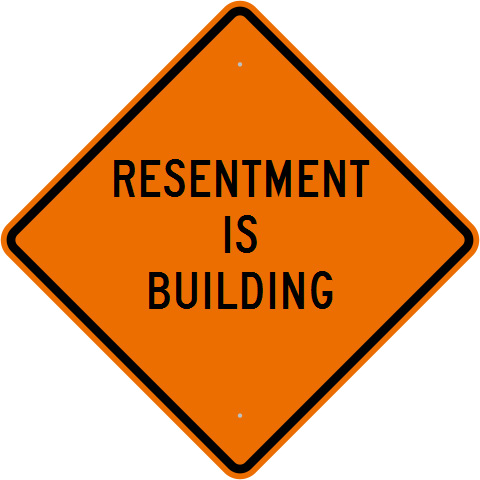
RESENTMENT IS BUILDING

A few of your peers come and talk to you about the issues and what you are doing to correct the problems.

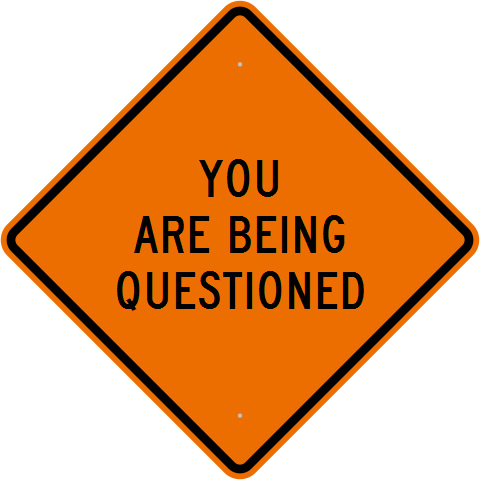
YOU ARE BEING QUESTIONED

Your boss sends you an email asking about your department’s performance.

YOUR TEAM IS UNDER SCRUTINY

There were signs.

Looking back you may be able to see them.

Unfortunately, signs don’t always show up along our journey with bright colors and with enough repetition so they cannot go unnoticed. Failing to see the earlier signs prevented corrective action.

Maybe it was a relationship. Maybe it was a project that has not taken off. The specifics are yours to fill in.

Missing the earlier signs tends to result in one final sign: Hard Choice Ahead.

The choice won’t be easy.

But it needs to be done.

The choice will have consequences.

But it will bring the resolution.

Maybe next time we will become more attuned to watching for those earlier signs.


The No Strings Attached Apple Crisp

apple-crisp

A few months ago I made apple crisp for a team that I serve on at work. The apple crisp was partly to celebrate our accomplishment, partly because I love a good apple crisp, and partly because they totally guilted me into making it. (I made one for another team and this team got jealous, but that is another story.)

We consumed most of that crisp, with many having two or three helpings.

Some apple crisp remained.

In order to be able to clean the baking pan, I called another co-worker and offered the remaining apple crisp.

“Hey, I made this apple crisp, it is really good. Do you want some?”

Long pause…

“I guess so…but what do you need?”

I was a little stunned at the reply. I had to regroup.

“I don’t need anything, you see I made this for this particular team, and we had extra and I thought of you.”

Another long pause…

“Ok, but seriously, do you need something from me?”

Eventually the crisp was delivered. A cautious first bite, followed by a second and a third. As I left their office, the suspicion remained.

A few weeks later, I stopped by that office again (not because I needed anything). It was then that the real story came out.

At a company prior to this, if someone did something for you, it was not simply a gesture of goodwill. There were strings attached. Receiving from others created an obligation for you.

Nothing was free. Everything came with a price.

Maybe what we all need is a little more no strings attached apple crisp.

Try it out. Do something for others without expecting something in return. It may be awkward at first because of the expectation of strings from those around you.

Let us all know how it goes. Next time I may try cookies.

Inspired Vision or Dictated Standard?

IMG_0623

(Image courtesy of my daughter who loves to snap photos while we drive.)

While working with a group of senior leaders they described some compliance issues especially with those further down within the organization. Procedures were not being followed, routine issues were on the rise, along with a rise in negative attitudes.

Many of these leaders have a behavioral bent towards adherence to and creation of rules, so I pushed in a little with some questions.

Were these particular procedures and rules important?

Yes. This is a high risk endeavor with lives on the line.

Okay, then why is there such pushback on these rules, procedures, and policies?

The culture below us seems to create this tension.

How do you communicate these procedures and rules?

Memos and operating procedures.

With a few more questions, a few additional clues were revealed. The memos, and operating procedures were then implemented by middle or front-line supervisors who didn’t always agree with or embrace the policies. 

Instead of seeing the importance of these procedures, the policies were viewed as a dictated standard instead of part of a larger inspired vision of keeping everyone safe.

Out of context, the constant emphasis on procedures can feed a negative culture. Those leaders needed to inspire a larger vision and continually explain why these small changes added to that overall vision.

As with all leaders, they needed to tell their own story and not always rely on others to explain their inspired vision.

Imagine how many times we try to get our employees, our organizations, our families, our kids, or our friends to follow some rule or procedure, yet it doesn’t resonate or create action. Instead we are left with the grumbling culture around us despite the fact that those rules would help keep everyone safe, ease some difficulty, or just make things run more smoothly.

Maybe we can all learn from these leaders.

Inspire a vision and provide the context for changes and rules. Stay on message about how these changes are important to the organization, the family or the relationship.

If not, simply dictating a standard may not be enough.

After Injury

As a follow-up to my the post “I am good as possible” it seemed important to share what can happen when we take that risk, try something new, and stretch ourselves.

My Right Knee

(Image Courtesy of My X-Ray, My Youngest Daughter and a Ski Jump)

Injury. It happens to all of us.

In this case, it happened to my right knee. While skiing/trying to catch up with my youngest daughter, I followed her over a jump. Regret arrived almost as quickly as the decision was made, only to be overshadowed by intense pain.

Obviously, it was not a great decision. That split second resulted in numerous bags of ice, pain relievers, doctors visits, x-rays, and some physical therapy.

But, we all sustain injury. Injury may be physical, emotional, or relational. Injury can happen at home, at work, on the slopes, or just about anywhere.

Injury will happen.

Some injury can be prevented, but not all.

During injury, we have to manage the pain, rest, and rebuild.

The choices we make after injury may be the most important.

We may choose to avoid.

We may choose to fear.

We may choose to stop trying.

We may choose to try again, but perhaps with a little more caution/wisdom.

The decisions we make after injury determine if our world becomes a smaller place, with less risk, less adventure.

Keeping our world big after injury is its own risk.

As my leg healed and the pain left, I kept anticipating that the pain would return. My steps were more cautious, and the memory of the pain was almost as real as when it actually hurt.

The other night was my first time chaperoning without skiing. I was not ready to put on those skis, so I modified my role. I encouraged the kids. I made sure they all knew where they were going, and cheered them on.

I have decided to ski next week. I am making the choice to keep my world big, despite the fear and memory of the pain, and possibility of another injury.

Where has injury impacted you?

What choices can you make after injury?

To continue in my role from the other night…

Don’t give up.

You can do it.

Keep your world big.

Get back up.

Get back on those skis.

For When You Ship

During the holidays it is hard to say “this is my favorite gift.” Undoubtably someone will wonder why their gift didn’t make the list, and then the comparing will begin. In order to thwart this comparison and potential hurt feelings, let’s simply agree that certain gifts stir our souls. Often this stirring is not a reflection of cost or value, but because the giver connected with us in a way that went deep and said “I know you.”

A few months ago, we hosted a get-together at our house for an educational experiment. Seth Godin announced a relational educational initiative where people get together and learn together.

The first class focused us on picking ourselves, overcoming fear, and learning to “ship.” Shipping as Seth describes it is the act of getting our product, idea, proposal, or whatever off the ground and out the door. The class ended with each of us completing the handy “SHIPIT Journal” that helped us work through the obstacles that typically prevent us from moving forward.

While opening gifts this year, I opened a small shelf organizer for magazines. It was black with a little metal tab. The kind of organizer that you may find on library shelves.

IMG_0667

After thanking the giver, I thought to myself…“That is cute, but are my magazines in such disarray that I need some organization?” Also, we had started the second Seth Godin class based on the work of Gretchen Rubin and the Happiness Project and a big part of our discussions were based on cleaning up clutter in our lives, homes, and surroundings. My first impression connected this gift to the second class.

It was then that I found the note. Tucked inside the organizer was the real reason for the gift. There were only four words, but those four words touched my soul. The giver instantly changed a simple gift into a memorable one.

For When You Ship

The ordinary organizer had transformed into something more. This simple black box with a metal handle was now the place where accomplishments would reside. This box was now the monument, the official record, or the proof of shipping, overcoming obstacles, fears, and doubts.

To the Giver: Thank you for transforming something so simple into a lasting memory.

To All of Us: Connect with others when we can in the simplest but meaningful ways.

To the Universe: I shipped!

The Record of Shipping