Three Things I Learned from My Mom

While reflecting the other day, I wondered where we pick up things in life that help shape us as people.  We all experience different events, and those events, interactions, and examples (good or bad) shape the very nature of who we become.  Some of who we are is the product of who our parents were and we take some of it from them, reject some, but it shapes us nonetheless.

There were things I learned from my Mom.  You see, she was a single mom raising three boys.  She worked primarily as a waitress her entire life.  The hours allowed her to be there in the morning, and when we got home from school, but the work was hard.  Three major lesson come to mind that were passed from her to us.  Intentionally or not, those lessons were pretty clear.

Be Tough.  Work Hard.  Celebrate Events.

Be Tough.  This may have been less intentional, but more a product of circumstance. Money was tight, our roof leaked (a lot), and there were times when chopping wood was the deciding factor between being warm or cold.  I am sure there were days when she wondered if she could make it another day, but she kept pushing forward.  She demonstrated that even when life is hard (which it totally is at times), you need to be tough in order to survive.

Work Hard.  Long hours and weekends on her feet “slinging hash” as she liked to call it, was what she did.  It is not glamorous work, but it paid the bills (most of the time).  Weeks, months, and years passed and you could tell that the work took its toll.  Sore feet, sore shoulders, and shoes that looked like they had seen a war.  I recently remembered sitting down as a kid and helping her dab on that white shoe polish that would make those shoes look like new again.

Celebrate Events.  Whether it was a birthday, a holiday, or some life event, we celebrated.  When I look at old photos, I can see the amazing cakes she decorated, the cookouts we had, the birthday parties with all of our friends.  Despite the lack of funds, we had fun.  When report cards came, if you did well, you got a “skip day” that meant a whole day with Mom doing something fun.

These lessons helped shape who I am today.  I have had to be tough to ensure hardship. Working hard helped me in life, in college (I was the first in many generations to attend), and in my career.  Most of all, I love to celebrate events.  Birthdays, anniversaries, or life events are savored like fine wine.

The other major lesson that is buried deep is an appreciation for what I have.  And it sometimes hits me in weird ways.  A roof that doesn’t leak.  Heat when you turn up the thermostat.  The ability to fill the gas tank in the car without having to dive into my change stash.  All of these things we may take for granted, but it is nice to remember and be content.

By the way, I don’t think she reads this blog and she would be embarrassed to be the subject matter.  But just in case she reads this someday…

Thanks for the lessons, Mom.
The Intersection of Stress and Creativity: Writer’s Block

Writer’s Block.  It was bound to happen, right?  Here I was typing away week after week; telling stories, posing questions, and offering some advice.  The journey has been difficult at times, but there was progress.  Until now.  What happened?

I heard from someone tonight that was reading some of the older posts (the one about the laundry facility, one of my personal favorites) and I described that I was stuck and didn’t know what to write next.  They immediately started to pose questions to me.

“Do you have a big project at work?”

“No, but I have been pretty busy, spending a lot of time traveling and have a stressful week and a seminar this weekend.”  (Hey, I am usually the one that asks the questions.)

It all started to become clear.  It was stress.  That subtle drain on our resources, creativity, and ideas.  The trouble with stress is the cumulative increase comes in like a trickle that can go unnoticed until it becomes a wall between us and our goals.

What can we do about it?  Recognizing that it was stress helped…a lot.  Identifying the barriers in our lives is always a good place to start.  What is it for you?  Is it stress? Worry? Fear?  A combination of all three?  If it is, that is one intersection where we should not linger too long.

Processing this out with someone else also helped.  Remember, we are not alone on this journey.  We don’t always have to tough it out by ourselves.  There are others in our circles who can lend a hand, offer an encouraging word, just listen when we need it most, or even simply ask the right questions.

“Are you thinking of anything you’ve wanted to write about but were not sure if it was good enough?  You should write that, since someone probably needs that message or will just enjoy it.”

Funny, that someone turned out to be me.

Fly Your Flag

I don’t know about you, but I spend a lot of time in the car.  Commuting, shuttling kids around, running errands and my job requires me to drive around…a lot.  To put things in perspective, my car is a 2005 and I have 172,000 miles on it.

Making the most of this time has become an art.  Listening to podcasts of my favorite speakers and teachers, thinking about upcoming talks, or projects top the list of ways to use this time.  I have also learned to use this time to connect with others.

There are a few people I call regularly during these drives to get centered, be accountable as a leader, dad, and husband, or just deepen the relationship.

Today was one of those days, with one of those calls.  I will try to paraphrase some of it.

“Sometimes it would be so much easier in life if people had little flags that popped up and told you what kind of mood they were in.”

“Why?” I asked.  (I know, I know, pretty deep question.)

“That way when I am angry people would see the flag and know to leave me alone.  And if they were in a certain mood, I would know how to talk to them…or avoid them altogether.”

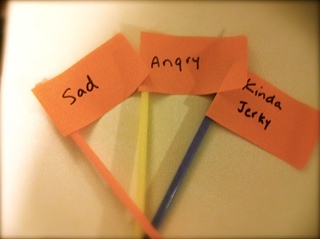
After a few minutes of trying to quickly patent this new device and develop a business plan around the “emotional flag” idea, we laughed and agreed I would show all of you the prototype.  It appears below.

Maybe we were on to something. Knowing someone’s else emotional state while revealing our own, might just be the secret to great communication.

Go ahead.  Fly Your Flag.

Anger is My Primary Emotion

Anger.  Yup, it is a part of my world.  Let’s face it, one of the problems with learning about different styles is coming to grips with your own.  All styles have great things and not-so-great things at the same time.

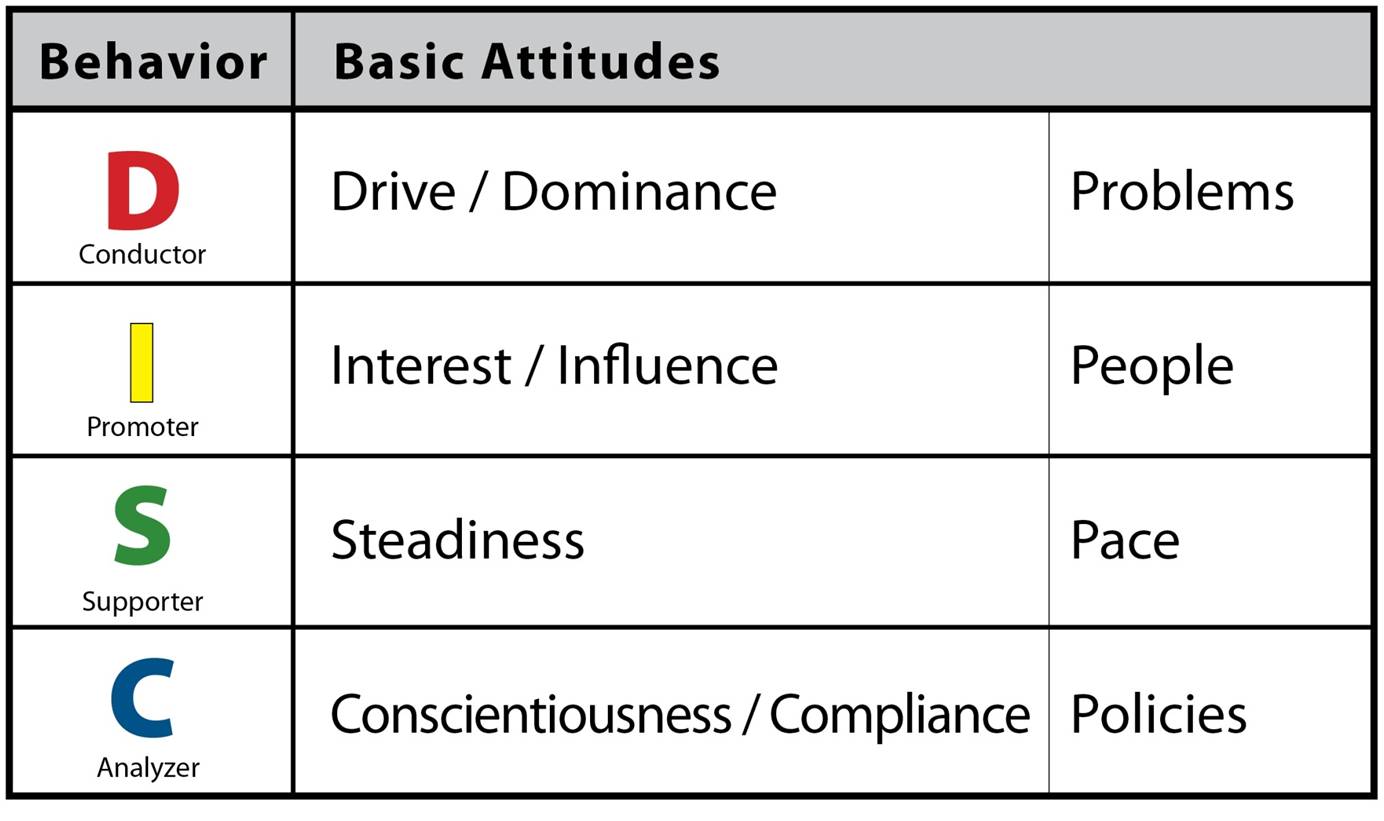
According to Marston and the DISC assessment, there are four styles.

Essentially, it can be summed up with four P’s or how you deal with:

Problems, People, Pace, and Policies

How we score impacts the intensity of each category.  Do you jump in to solve problems or are you more reflective?  Are you the life of the party or do you need a break from people? How about your ability to adapt to change or have consistency from day-to-day?  And then there are the rules, do you follow them, or do you consider it nice that other people need them?

“All people exhibit all four behavioral factors in varying degrees of intensity.”

W. M. Marston

All of this helps us understand who we are, how we lead, how we follow, and how we communicate with others.  It is applicable in the workplace, our relationships, our families, and how we interact with everyone around us.

One of my more intense behaviors is the D or Drive.  It is what helps me push to solve issues, find solutions and get results.  But it has a price to pay: Anger.  The great part of having this internal urgency to get things done is unfortunately combined with the not-so-great part of frustration and impatience.  Learning to balance or modify our behaviors can be the difference between success or failure.  (See post Missed Opportunities, Missed Expectations to watch this play out in the workplace.)

When I sit with people, especially leaders and review their style, I hear them consistency say, I wish I knew this earlier on in my [career, life, marriage, college major, or relationships].”

So think about who you are, and what you bring that is both great, and not-so-great.  Don’t wear your particular style as a badge of honor.  There is no one right style, all have a downside if you are unaware or apply it in the wrong situation.

But if you know yourself, you can change the world.

I try to be pretty up front about who I am, the good and the bad.  If you are interested in assessing your own behaviors, let me know.  It is a pretty fun ride.  When I brought home my own assessment for the first time, I let my wife read it.  She cracked up.

“I think they must have followed you around all day.”

And better yet, our family was at an attraction up north.  Out of the crowd came a person that attended a seminar that I had given a few months prior.  This person walked straight up to my wife (right past me), winked at me and shook her hand and said:

“You must be the most patient person on the planet.”

Yes she is.  Thanks for putting up with me.

Your Worldview: by the Creator of Wonder Woman

William Moulton Marston.  Who is he and why should you care?

In 1928 he published Emotions of Normal People, a book which elaborated the DISC Theory (a behavioral assessment I typically use to help people understand their behaviors). Marston viewed people behaving along two axes, with their attention being either passive or active (in control or not), depending on the individual’s perception of his or her environment as either favorable or unfavorable: a worldview.

So let’s pretend you are at work.  Your boss and/or manager has an unfavorable view of the world, but considers themselves to be in control.  What do you have?  A boss that is always finding something to be improved, something new to try, a new way to solve the problem.  In addition to that, they are not shy of being the hero in all of their stories.

Then there is you.  If you have a favorable view of the world, but lack the power or control there could be tension.  Your boss is giving you mixed and multiple priorities, ideas without follow through, and you are there left holding the bag wondering what tomorrow will bring. Each day you fear that your boss will have 15 new ideas for you during their morning commute to implement before lunch.

You keep thinking “Why fix what isn’t broken?”

Your boss is thinking “Why can’t my employee see we need to embrace change?”

And it is all right there in Marston’s observation.  You are different, and it is NORMAL. Understanding this worldview provides a glimpse into how they are wired.  They see the world and themselves in a certain way.  You are different.  Still normal.

Do you see the world in a favorable light or a negative one?  Do you feel like you have the power and control, or not?  What about those around you? For the next few days, just listen.  People will tell you who they are if you do.  If you are the boss, think about the impact you have.  If you work for someone (and most of us do) think about how your worldview impacts those around you.

It is all about discovering the truth of who we and others are.  Our worldview is a good place to start.

By the way, in case you are ever on Jeopardy or some other game show, Marston also created the Wonder Woman comic book under his pen name Charles Moulton, as well as inventing a precursor to the lie detector test.  Hmmm, didn’t Wonder Woman carry a lasso of truth?

Who are you?

Seriously, who are you?  Have you thought about why you are they way you are?  Why do you do things a certain way? Why is it that you can connect so well with some people, and others can be so difficult?

Spend a few moments to answer this: Who do you think you are?  (Not yelling at you like a drill sergeant “Who do you think you are!)

Take a moment to describe who you are.

Think of one word descriptors that help provide insight into your style and help others appreciate what you bring to the table.

Positive?

Funny?

Driven?

Cautious?

For some, the words are positive and for others the words are negative (see the Silencing the Narrator posts for more details) but either way these words help you better understand your own style.

A word of caution: we tend to judge others in our own image.

If you are driven you look at everyone who is not and draw conclusions about their passion and dedication.  If you are realistic you look at optimistic people you may just wish they understood the complexity of the situation…then they would see the limitations inherent in the problem.

I work with a lot of people and organizations helping them identify and understand their own behavioral style and the impact it has on their leadership and communication style. Knowing yourself is an important first step.  Knowing others is the second.  Coming to grips that different is not wrong, it is just different is the third and somewhat difficult step.

Sometimes the style that differs the most from yours is exactly what you need to balance out your own style.

Over the next few weeks, we will discuss some of these styles.  (Don’t worry, I will put some fun stuff in there along the way.)  Hang on, it should be a fun ride.