
The Shirt, the Challenge, and the Surprise

Coach T-Shirt

The Shirt

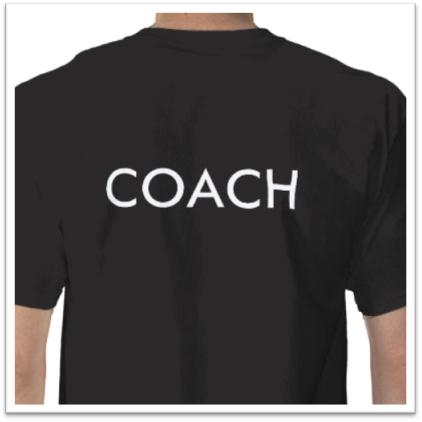
When teaching a class on coaching, I joke with the class about having shirts made up that say “COACH” and threaten to hand them out and make them wear them in their workplace.

 “What if I gave you a shirt like this and made you wear it in your workplace when you get back on Monday? Who here would want to wear it? What would your employees say?”

A few replies to my questions from a recent group of leaders during a class on coaching appear below.

“Not a chance.”

“They would ask me if I started coaching one of my kid’s teams.”

“I would be laughed out of the place.”

I pressed a little further to find the root of the hesitation on being labeled the “COACH” in their workplace. Each was a leader in their organization. Each had a title and at least a few employees. But something was stopping them from coaching.

As the conversation progressed, the obstacles became more clear. There wasn’t enough time to coach (and get their own work done). The culture would be critical of this approach. They were not coached as employees, and the list went on and on until an even more revealing answer came to light.

“Because when a team is failing, they fire the Coach!”

There it was, the real fear behind the hesitation. Being the focus of performance may result in the owners switching leaders if the organization is not performing. With the fear out in the open we could move towards agreeing on why coaching is essential to the team’s success.

Coaching goes beyond holding people accountable for task completion. Coaching is about developing people as individuals, stretching them, and helping them achieve more both individually and collectively. Coaching requires a combination of encouragement and accountability. Coaching is needed for teams.

The Challenge

Beyond a mere threat, I actually had these shirts made up and hand them out at the end of the class. Periodically, I would get an email about how wearing the shirt in the workplace helped the leader focus on coaching their employees, despite the initial awkwardness. I even heard from a leader who must wear a uniform each day at work, but wears the “COACH” shirt underneath once a week as a reminder to coach their employees.

A few months ago, I changed my strategy. In addition to having them take a shirt, I issued a challenge. The first leader to email me a picture of them in their workplace wearing the shirt would win a prize.

The Surprise

The responses have been great. Within a day or two I start to receive photos of these leaders wearing their “COACH” shirt in the workplace. The challenge helped provide some incentive, but the results have been greater than just a prize. Many leaders have been surprised as they experience something more once the awkwardness fades: their employees have embraced the concept and are enjoying the coaching.

But that is not the only surprise.

Last week I taught the Coaching class in the morning, but then there was a break where the group had a few other instructors before concluding the day with me. I headed back in the room and started the session.

It was when I clicked to the second slide of the PowerPoint.

There it was. A photo appeared on the screen. It was a photo of the entire class wearing their “COACH” shirts in the lobby. They had managed to take the photo and put it into the presentation during the break.

“Technically, since we are all on the clock, this counts as working.”

I laughed. I was encouraged by their creativity. I was surprised.

After giving out prizes to all of them, I reminded them that now that they had gotten over their initial hesitation, they could all become better coaching in their workplace.

Over the next few days, other photos appeared in my inbox. Coaches were identifying themselves, and starting to do the work. They were making a difference.

How about you? Do you need a shirt as well?

Make a list of those in your workplace, circles, or life that need some coaching. Once the awkwardness fades, it may be just what they need.

Hard Choice Ahead

Hard Choice Ahead

(Images created on roadtrafficsigns.com)

The interview went well. They answered the questions. They were hired. After a few months their performance begins to fade.

You hear from a few people around the office that deadlines are missed. Others are covering the work that is not getting done.

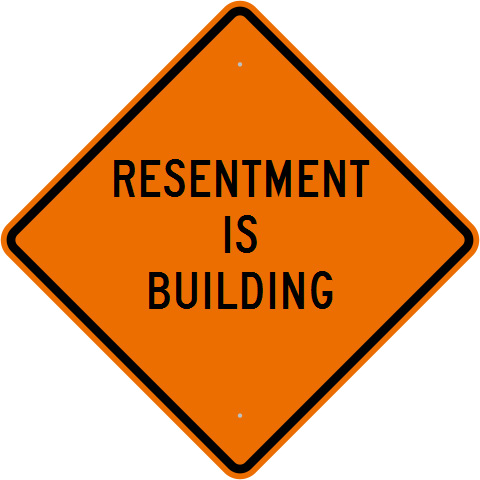
RESENTMENT IS BUILDING

A few of your peers come and talk to you about the issues and what you are doing to correct the problems.

YOU ARE BEING QUESTIONED

Your boss sends you an email asking about your department’s performance.

YOUR TEAM IS UNDER SCRUTINY

There were signs.

Looking back you may be able to see them.

Unfortunately, signs don’t always show up along our journey with bright colors and with enough repetition so they cannot go unnoticed. Failing to see the earlier signs prevented corrective action.

Maybe it was a relationship. Maybe it was a project that has not taken off. The specifics are yours to fill in.

Missing the earlier signs tends to result in one final sign: Hard Choice Ahead.

The choice won’t be easy.

But it needs to be done.

The choice will have consequences.

But it will bring the resolution.

Maybe next time we will become more attuned to watching for those earlier signs.


Inspired Vision or Dictated Standard?

IMG_0623

(Image courtesy of my daughter who loves to snap photos while we drive.)

While working with a group of senior leaders they described some compliance issues especially with those further down within the organization. Procedures were not being followed, routine issues were on the rise, along with a rise in negative attitudes.

Many of these leaders have a behavioral bent towards adherence to and creation of rules, so I pushed in a little with some questions.

Were these particular procedures and rules important?

Yes. This is a high risk endeavor with lives on the line.

Okay, then why is there such pushback on these rules, procedures, and policies?

The culture below us seems to create this tension.

How do you communicate these procedures and rules?

Memos and operating procedures.

With a few more questions, a few additional clues were revealed. The memos, and operating procedures were then implemented by middle or front-line supervisors who didn’t always agree with or embrace the policies. 

Instead of seeing the importance of these procedures, the policies were viewed as a dictated standard instead of part of a larger inspired vision of keeping everyone safe.

Out of context, the constant emphasis on procedures can feed a negative culture. Those leaders needed to inspire a larger vision and continually explain why these small changes added to that overall vision.

As with all leaders, they needed to tell their own story and not always rely on others to explain their inspired vision.

Imagine how many times we try to get our employees, our organizations, our families, our kids, or our friends to follow some rule or procedure, yet it doesn’t resonate or create action. Instead we are left with the grumbling culture around us despite the fact that those rules would help keep everyone safe, ease some difficulty, or just make things run more smoothly.

Maybe we can all learn from these leaders.

Inspire a vision and provide the context for changes and rules. Stay on message about how these changes are important to the organization, the family or the relationship.

If not, simply dictating a standard may not be enough.

Harvesting My Own Crops: A lesson is being grateful

Two days ago, I went to the grocery store. Not just any grocery store, I went to the busy one at 11:30 AM on a Sunday morning.

The store was packed. Aisles were hard to navigate, and the scene was like something out of a pile up on the freeway. Some carts were pulled over on the side trying to find something, while others darted through small breaks to speed to the next lane. Our turn signals didn’t work, neither did the brake lights and you could sense that tension in the air around every corner, and there were a few small collisions.

As I approached the registers, it was quite a sight. Every register was open, and there was a line of at least four carts in every line. Behind the carts was a massive group of additional carts trying to figure out which line to join, and how to navigate from the group to an individual line.

The manager made an announcement.

“We know that today is busy, but please turn your carts to the side because the lines are so long, we need additional space in the front of the store.”

It was at this moment, I began to observe everyone around me. I slowed down and just began to watch. I also noted the time on my cell phone.

Frowns, swears, and grumbling.

Angrily moving carts to the side.

Hands being thrown up in the air.

Then the voices began to chime in.

“I can’t believe that everyone is shopping today, there is no need for this, you would think we are having a snow storm!”

“Why do we have to turn out carts to the side? I don’t need this!”

My cart eventually found its way from the group to a line, and it slowly edged toward the belt. I loaded my groceries and kept looking around. The bagger was working furiously to keep this line moving and asked the person in front of me if they wanted some larger item bagged or just placed in the cart.

“Just put it in a bag, this would go faster if you didn’t ask such questions!”

They looked towards me for some sort of approval of their statement. I didn’t.

When I arrived at the register, the cashiers were changing shifts. They both looked at me through weary eyes and kept apologizing for the wait. The bagger looked tired as well.

I paused, looked at them all and then something came out of my mouth that I think surprised all of them.

“I just want to thank all of you for working so hard to help us get our groceries today.”

I looked at the assortment of items on the belt, and suddenly I understood what an amazing time it is to be alive. I saw bread, various meats, eggs, fresh fruit and vegetables, and some berries.

“I mean it, think of all the time your little team here has saved me. I didn’t have to harvest my own crops, grind my own grains, bake this bread, tend to my garden, raise a bunch of chickens, cows and pigs. I really should be thanking you for saving me so much time, I can go home and simply watch TV all afternoon if I want. So THANK YOU.”

Smiles appeared on those weary faces. The bagger seemed to stand more upright and kept smiling as they placed items in my bags, and asked me about larger items.

The mood changed. The actual situation didn’t change. The lines were still long, but the perspective changed.

Instead of being angry, I chose being grateful.

Instead of complaining, I chose to say thanks.

As I made my way out to the car, I checked the time again. It had been 17 minutes. Just 17 minutes to accomplish what it would have taken my great, great, great, great grandparents weeks of labor to create. Those grandparents would have never imagined fresh berries and fruit in the winter, or bread you simply grab from the shelf, or the leisure time that I am now afforded.

Where can you choose to be grateful? Where can you thank those around you?

Their Own Role In Their Story

ant-lifting-log-300x228

(Image Courtesy of soulseeds.com)

During the final session of a five-part series with leaders, we asked them to create an intentional leadership plan and present it to the rest of the group. Each leader tackled the greatest challenge before them in the next year, and described how they were going to make progress.

This can be an intimidating group. They are the top in their field. They have accomplished a lot. They are all viewed by each other as very successful.

Many outlined how knowing themselves helped lay the foundation for this project. Some had slides and handouts. Others simply stood up and talked. All were open about their own weaknesses.

It was the weaknesses that resonated with me the most. These leaders were pretty hard on themselves. At times, the group would interrupt the presenter, just to encourage them and remind them how incredible they really were, despite those weaknesses.

I was having a conversation with one of them afterwards.

“It’s funny, we see others strengths, and our own weaknesses filtered through some insecurity.”

They replied with something that stuck with me.

“Totally, though I was surprised at some people’s inability to see their own role in their story, including me.”

Their own role in their story. It is so easy to see others as strong, courageous, determined and successful, while discounting yourself.

We see their strengths, but know our weaknesses.

We see their success, but see our failures.

We hear their words, but hear our inner voice.

Where have you discounted your own role in your story? Where have you focused on your weaknesses, while forgetting the strengths?

You have an important role to play in your story and your life.

If you could only see yourself the way we see you. You’d be surprised at how strong and courageous you really look.

Keep Your Story Fresh

“What do you do with all that random information?”

A close friend asked me the other day. I must have been spouting off about some random facts that I had learned, but the details today escape me.

Apparently, my habit of trying to learn everything about anything I can get my hands on can be a little annoying if you are on the receiving end of my latest rant.

Within a week, during a routine drive time conversation with another close friend they experienced a question from a colleague after presenting to a large group.

“How do you know all that random information that you somehow weave into your presentation?”

“I need to keep my story fresh” they replied.

Those words resonated.

I need to keep my story fresh.

If we are going to stay relevant, current and in demand the old stories won’t do.

We have to learn, grow, develop, and stay teachable.

The seemingly random facts.

The new interactions.

The new class.

The new book.

The new experience.

They all join together to keep your story fresh.

To my first friend, I finally have the answer about my random rants and continual need to devour any information that comes my way.

“I am keeping my story fresh.”

To my second friend, thanks for the words we all needed to hear.