
Anger is My Primary Emotion

Anger.  Yup, it is a part of my world.  Let’s face it, one of the problems with learning about different styles is coming to grips with your own.  All styles have great things and not-so-great things at the same time.

According to Marston and the DISC assessment, there are four styles.
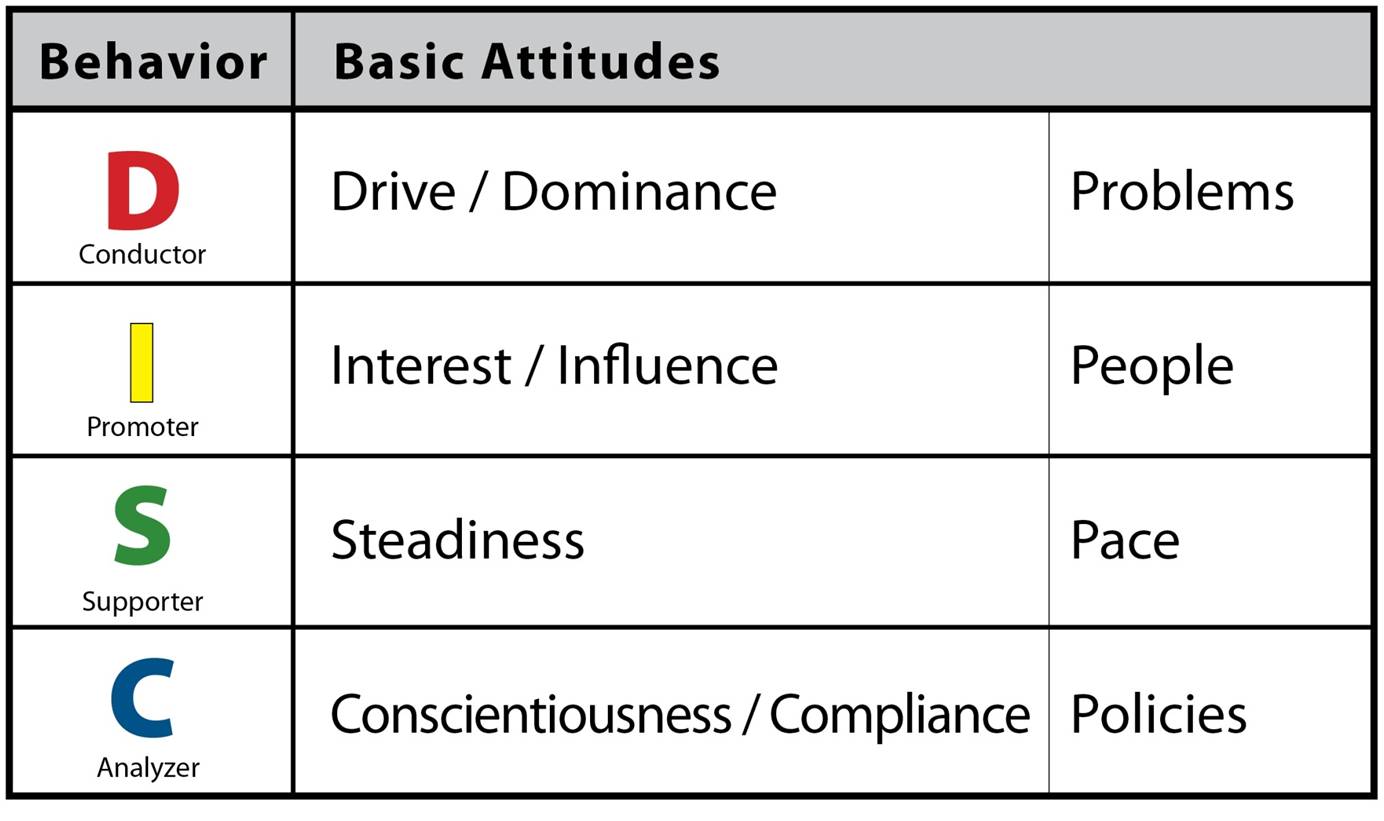
Essentially, it can be summed up with four P’s or how you deal with:

Problems, People, Pace, and Policies

How we score impacts the intensity of each category.  Do you jump in to solve problems or are you more reflective?  Are you the life of the party or do you need a break from people? How about your ability to adapt to change or have consistency from day-to-day?  And then there are the rules, do you follow them, or do you consider it nice that other people need them?

“All people exhibit all four behavioral factors in varying degrees of intensity.”

W. M. Marston

All of this helps us understand who we are, how we lead, how we follow, and how we communicate with others.  It is applicable in the workplace, our relationships, our families, and how we interact with everyone around us.

One of my more intense behaviors is the D or Drive.  It is what helps me push to solve issues, find solutions and get results.  But it has a price to pay: Anger.  The great part of having this internal urgency to get things done is unfortunately combined with the not-so-great part of frustration and impatience.  Learning to balance or modify our behaviors can be the difference between success or failure.  (See post Missed Opportunities, Missed Expectations to watch this play out in the workplace.)

When I sit with people, especially leaders and review their style, I hear them consistency say, I wish I knew this earlier on in my [career, life, marriage, college major, or relationships].”

So think about who you are, and what you bring that is both great, and not-so-great.  Don’t wear your particular style as a badge of honor.  There is no one right style, all have a downside if you are unaware or apply it in the wrong situation.

But if you know yourself, you can change the world.

I try to be pretty up front about who I am, the good and the bad.  If you are interested in assessing your own behaviors, let me know.  It is a pretty fun ride.  When I brought home my own assessment for the first time, I let my wife read it.  She cracked up.

“I think they must have followed you around all day.”

And better yet, our family was at an attraction up north.  Out of the crowd came a person that attended a seminar that I had given a few months prior.  This person walked straight up to my wife (right past me), winked at me and shook her hand and said:

“You must be the most patient person on the planet.”

Yes she is.  Thanks for putting up with me.

Your Worldview: by the Creator of Wonder Woman

William Moulton Marston.  Who is he and why should you care?

In 1928 he published Emotions of Normal People, a book which elaborated the DISC Theory (a behavioral assessment I typically use to help people understand their behaviors). Marston viewed people behaving along two axes, with their attention being either passive or active (in control or not), depending on the individual’s perception of his or her environment as either favorable or unfavorable: a worldview.

So let’s pretend you are at work.  Your boss and/or manager has an unfavorable view of the world, but considers themselves to be in control.  What do you have?  A boss that is always finding something to be improved, something new to try, a new way to solve the problem.  In addition to that, they are not shy of being the hero in all of their stories.

Then there is you.  If you have a favorable view of the world, but lack the power or control there could be tension.  Your boss is giving you mixed and multiple priorities, ideas without follow through, and you are there left holding the bag wondering what tomorrow will bring. Each day you fear that your boss will have 15 new ideas for you during their morning commute to implement before lunch.

You keep thinking “Why fix what isn’t broken?”

Your boss is thinking “Why can’t my employee see we need to embrace change?”

And it is all right there in Marston’s observation.  You are different, and it is NORMAL. Understanding this worldview provides a glimpse into how they are wired.  They see the world and themselves in a certain way.  You are different.  Still normal.

Do you see the world in a favorable light or a negative one?  Do you feel like you have the power and control, or not?  What about those around you? For the next few days, just listen.  People will tell you who they are if you do.  If you are the boss, think about the impact you have.  If you work for someone (and most of us do) think about how your worldview impacts those around you.

It is all about discovering the truth of who we and others are.  Our worldview is a good place to start.

By the way, in case you are ever on Jeopardy or some other game show, Marston also created the Wonder Woman comic book under his pen name Charles Moulton, as well as inventing a precursor to the lie detector test.  Hmmm, didn’t Wonder Woman carry a lasso of truth?

Who are you?

Seriously, who are you?  Have you thought about why you are they way you are?  Why do you do things a certain way? Why is it that you can connect so well with some people, and others can be so difficult?

Spend a few moments to answer this: Who do you think you are?  (Not yelling at you like a drill sergeant “Who do you think you are!)

Take a moment to describe who you are.

Think of one word descriptors that help provide insight into your style and help others appreciate what you bring to the table.

Positive?

Funny?

Driven?

Cautious?

For some, the words are positive and for others the words are negative (see the Silencing the Narrator posts for more details) but either way these words help you better understand your own style.

A word of caution: we tend to judge others in our own image.

If you are driven you look at everyone who is not and draw conclusions about their passion and dedication.  If you are realistic you look at optimistic people you may just wish they understood the complexity of the situation…then they would see the limitations inherent in the problem.

I work with a lot of people and organizations helping them identify and understand their own behavioral style and the impact it has on their leadership and communication style. Knowing yourself is an important first step.  Knowing others is the second.  Coming to grips that different is not wrong, it is just different is the third and somewhat difficult step.

Sometimes the style that differs the most from yours is exactly what you need to balance out your own style.

Over the next few weeks, we will discuss some of these styles.  (Don’t worry, I will put some fun stuff in there along the way.)  Hang on, it should be a fun ride.

Your Sentence

In his book, Drive: The Surprising Truth About What Motivates Us, Dan Pink (one of my favorite authors) challenges us to focus our lives in a simple way.  He tells a story about a woman who challenges President Kennedy that great people are defined by one sentence and she feared his legacy would be more like a muddled paragraph.  Take a look at this short video.

http://www.danpink.com/archives/2010/01/2questionsvideo

Dan challenges us to find our sentence.  The one statement that defines who we are, and acts like a filter for our choices each day.  I took this seriously and thought about my own sentence.  What would I want to define who I am, and what would I want to leave behind? Here is my sentence.

Was known for helping others on their journey.

That’s it.  Pretty simple right?  But think about how a simple sentence will resonate through everything we do.  For this sentence to be true, then how I lead, manage, communicate, parent, or relate to others needs to be consistent.  Did my actions help someone on their journey?  Today?

Dan goes one step further and wants us to ask ourselves one more question.  A way of putting action behind your sentence.

“Was I better today than yesterday?”

So over the next few days…take Dan’s advice.  Find your sentence, then put it into practice daily.  I look forward to hearing about the results.

Specifics

Have you ever noticed how often we correct each other on minor details?  When you hear someone telling a story and they get one small specific detail wrong do you hear others chime in?  Do you chime in?  I notice this at work, at parties, and even between my own kids.

Picture this.  You are at a party and someone is trying to tell this great story, and someone else who knows the details is right next to them…helping.

Person 1:  “So last Wednesday, I was walking down Main Street and you will never guess who I met.”

Person 2:  “I believe it was Tuesday.”

Person 1:  “Oh yeah, right, so Tuesday, I was walking down Main Street.”

Person 2:  “I thought you said it was North Street?”

Neither correction matters to the listener.  We are still there anxiously waiting to hear about who they met on the street, and the specific day or specific street is much less relevant.

Whenever I see this happen, I watch the storyteller.  Their story, yes their story, is being taken over by someone else.  Their frustration rises, and eventually they are forced to say “why don’t you just tell it then.”

A few years ago, my wife and I were at a concert.  It was a pretty intimate venue so we felt like we were really part of something amazing.  The band began talking about their new song.  This song had not been heard before, and deals with the tragic loss of someone close.

When death like a gypsy, comes to steal what I love” is one of the lines.

One of the band member began to share a story.

“So this song deals with the loss of someone close.  And how hard it is when tragedy comes in and takes from you.  I recently met someone who lost their friend in the nightclub fire in New Hampshire.  Someone close to them.”

From the crowd (more than one person):  “Rhode Island…not New Hampshire.”

“Right…Specifics.”

There was silence.  Silence that resulted from our collective shame in trying to correct the details of a story that was meant to help us understand loss.  I even caught myself during the story thinking “I think he means Rhode Island.”  

Stories matter.  They help us to understand each other and the world around us.  Let people tell their stories.  When you find yourself about to correct the details…stop and let it go.  Remember it is only “specifics.”

A Few Moments for Yourself

I was meeting with someone the other day to help them understand who they are behaviorally.  A lot of what I do is helping people with their journey in life and work and how their particular behavioral style works for them (the good news) and how it doesn’t (the bad news).   

Coffee shops and bookstores with coffee shops are a great venue to deliver such news.  For no other reason, both options provide a great opportunity to people-watch while waiting for the other person to arrive.  The other fun thing about these public places is how often those around us appear to be so engaged with our conversations about how and why we live, work and communicate that they cannot help but eavesdrop.

During meetings with people I ask a lot of questions.

“How has your style become a barrier at work?”

“When was the time your style really worked for you?”

“How do others perceive you?”

During this particular meeting as we sipped lattes in that bookstore, another question came to mind.  Well, a lot of questions always do during meeting like this, but one kept bubbling up inside my head and I couldn’t shake it.  As I listened and heard more and more about how busy life for this person can be, I had to ask it.

“When was the last time you had a few moments for yourself?”

“What do you mean?”

“When have you ever stopped scheduling things for everyone else, and just went to a bookstore like this and just walked around?”

“Never.”

How often do you have a few moments for yourself?  If you are like most of the people I talk to…not very often.  Life is full of our work and managing our lives.  At the end of the day, you can lose yourself and the things you would like to do.  Maybe I think about this more because I am now half way through this life.  Between a pretty demanding job, a family, and a lawn that always seems to need mowing, time can just simply slip away.

It is ironic that someone will schedule time with me at one of these places, even if they won’t schedule time for themselves…at the same places.  It is tragic how many times everything else dominates our schedules leaving no time for us.

As our bookstore meeting was winding down, I couldn’t help myself.  I had to return to the matter at hand.

“So, we are already in a bookstore.  I am leaving.  You could take the next hour or so for yourself and just wander around.”

“Really?”

“Yes.”

And they did.  I got an email a few days later describing how wonderful it was.  Life can be busy, especially when your job and situation requires you to constantly serve and coordinate everyone else.  What does your schedule look like?  Does your name appear on it?

Take a few moments for yourself.  Put YOU on your schedule.  

You are worth it.