The Other Hand

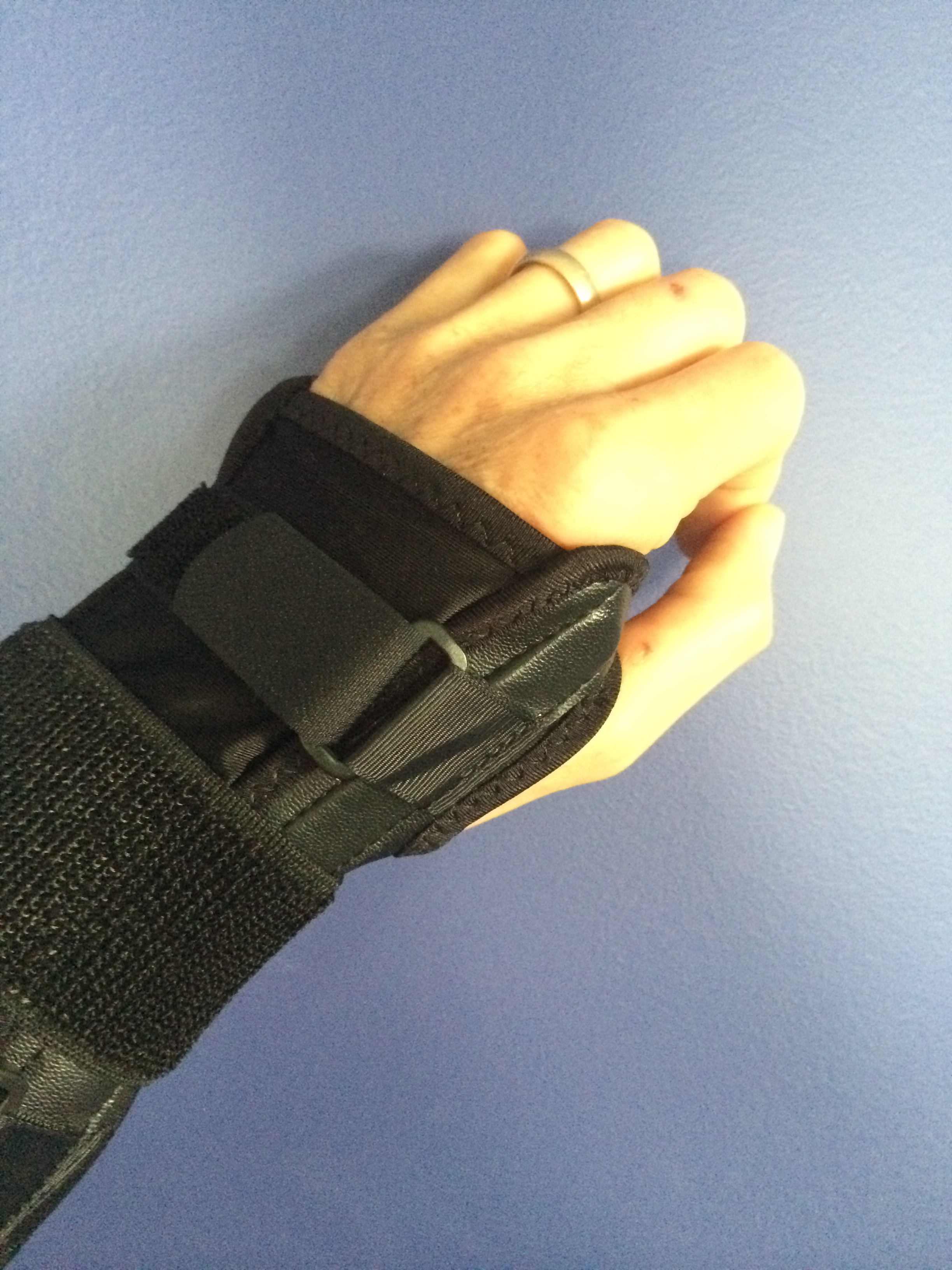
The wrist

(image courtesy of yesterday)

Yesterday I thought I broke my wrist.

All the signs were there:

The fall.

The loud crack/pop sound.

The pain.

The sweating and dizziness.

The embarrassment.

Today, I just have a sprain.

For the next few days I will be wearing a wrist brace. The brace keeps the wrist from moving and/or causing interesting pain.

As I went about my daily routine tasks this morning, I couldn’t help but notice the role my left hand plays in life. I am right-handed. So therefore, the right hand must be the more important hand, right? If you ask me, I would say with pride, “right-handed” as if it was some badge of honor.

But there is the other hand. The left hand.

Little did I know that while right hand was taking all the credit, left hand was doing a bulk of the hard work. Carrying more weight, steering the car, holding the [plate, coffee carafe, cereal bowl, milk carton and everything else], pulling out chairs, typing on the that side of the keyboard, holding my phone, and the list goes on.

I began to wonder if this hand view carries over to our world view.

There are a lot of right hands out there, beaming with pride at their role and what they can accomplish.

But there are also left hands. Who support, carry and even direct the outcomes, but with a little less flair, and perhaps in the second seat.

Maybe this injury will help recalibrate the hierarchy of hands that seems to exist, and I will begin to see them as more equal partners on the same team.

Lists are Good

Lists are GoodI have a love/hate relationship with lists.

Lists keep track of what needs to be done.

Lists can feel overwhelming when there are so many things to be done.

A friend recently had a contractor over their house. The house needed numerous small repairs. As they prepared to walk from room to room and discuss the projects, my friend handed the contractor a list.

“I hope you don’t mind, but I made a list of all of the various projects.”

“Lists are good. I cannot tell you how many times I come to someone’s house and they rattle off all these things that were not part of our original discussion and expect me to remember them all.”

There was a sigh of relief from my friend. The last contractor didn’t have the same perspective on lists. There would be discussions, but not all projects were remembered or completed. There seemed to be agreement on what needed to be done, but various details would be missed that required projects to be either redone, or re-visited.

When it comes to lists, I think our egos can come into play.

“Don’t worry about it.” (As we tap our heads.) “I got it, I will remember, I don’t need to write it down.”

We don’t always have it.

We don’t always remember.

We do need to write it down.

Lists help in other ways. Lists provide accountability to ensure that we accomplish the task. Lists also provide the often needed sense of accomplishment. Each crossed-off item can bring pride for a job well done.

I will try to bring a little more love, and a little less hate to my lists.

I will also try to remember: Lists are Good.

The Hill Rule

The Hill Rule

Our youngest daughter recently began running with me. We found some new shoes and planned a run.

“How far do you want to go on your first run?”

“How far do you normally go when you go off running?”

“Well my typical everyday route is a 5k.”

“How far is that?”

“3.1 miles.”

“Okay we should do that.”

We ran. We talked. We laughed.

We had to slow down a few times. She is used to sprinting on the soccer field.

As I watched her, her stride, gate, and frame something became clear: it is only a matter of time before she can out run me. With a combination of pride and a little envy, I realized my job is to coach her well, enjoy this time with her, and help her excel in something that she seems designed to do.

Each step confirmed that she is a runner.

But there is a hill.

In addition to providing encouragement and some tips on breathing, I explained that there is The Hill Rule in running. For those of you not familiar with this particular rule, let me explain.

The Hill Rule: when running up a hill, you are not allowed to stop. If you need to stop there are only two options.

1. Stop before you get to the hill, catch your breath, then proceed up the hill.

2. Stop at the top of the hill, after you run up the hill.

The reason for The Hill Rule is simple. A large part of running is a mental game. Stopping in the middle of a hill imprints a pattern that you cannot run hills, and you will tend to stop when faced with the next larger hill. The Hill Rule breaks this pattern, and does acknowledge that hills are hard, but there are options to overcome them.

The more I thought about The Hill Rule, the more I could see how it applies to any obstacle we face. When we give up or stop in the middle, we develop a pattern that can continue the next time that obstacle arises. Frankly, a large part of life is a mental game. 

Try applying The Hill Rule to your next obstacle. Either stop and rest before you tackle it, or rest when it is over. No stopping in the middle.

We ran up that hill without stopping. We rested at the end, and celebrated the run.

We are looking forward to the next run, and there will be hills.


Reclaiming (y)our Life

Listening to people can be revealing. If you listen (really listen), people will tell you a lot about themselves. Listen to the story they are telling. Listen to the one that they may not know they are telling.

While connecting at a conference, a story came to light.

“Carl, glad to hear that all the girls are doing well, still hard to believe your kids are that old, because you are so much younger.”

During the same conversation, we began to talk about running. I extended an invite to run with our group later that day.

“I am running more, but I am so old compared to you guys. I could never keep up.”

And later that day.

“Since I am so much older, I don’t have the same energy I used to.”

The real story was pretty clear.

As the group run was finishing, this person was finishing their run (ironically we all finished at the same time) and we were all standing in the lobby. I had a choice. Should I let their story continue or was there an opportunity to engage in this storyline?

“You know I couldn’t help but notice how much of your dialogue is about your age, how old you are, especially compared to others.”

“Is it that obvious?”

We reviewed our earlier conversations and that pattern that was previously hidden from them became clear.

“I didn’t realize how many times I said it.”

“Why do you think you are so defined by your age?”

“I think that so much of my life was defined by the roles that I have played: spouse, parent, and professional, that now I feel that I am trying to reclaim my life.”

“What do you mean reclaiming your life?”

“There are few decades of my life that went by so fast, and I was so focused on others, that I lost myself.”

We continued to talk. I could relate to this feeling of losing yourself when the demands of life, work, family, and career are competing to define us. We also talked about the role that these words are playing in the current reality. How the focus on age, and being older in some ways is not helping. Those words are trying to create a new limiting definition.

We agreed on two things:

1. We would be more aware of any self-limiting dialogue.

2. We would continue this journey of reclaiming our life and check in once in a while on the progress.

As we were about to part ways, I couldn’t help but ask one more question.

“How old are you anyway?”

It turns out that their perception of some vast age gap between us, was only four years.

Here are a few pieces of advice.

1. Listen. Listen to those around you, and your own words. How are you shaping your future reality by the word you use? What stories are you and others really telling?

2. Reclaim. Identify areas where you need to reclaim your life. What are those things that you had hoped to do, but your roles got in the way?

Keep me/us posted on your progress either in the comments section or via email on the contact me page.

(P.S. Just last night I read this story which may help all of us realize what is still possible, despite our age. And I thought running into our 80’s was possible…)

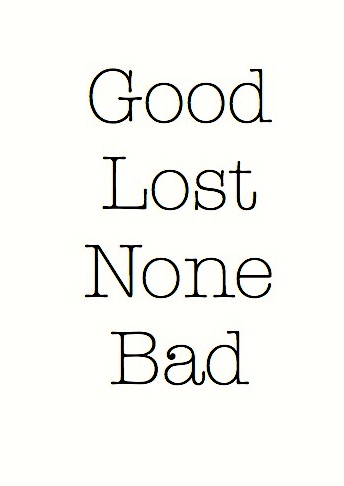
Good Lost None Bad

Good, Lost, None, and Bad

For some reason, I have been thinking about the hierarchy of certain things. Thinking about how to classify particular relationships, friends, jobs, bosses, employees, customers, and connections in a way that brings perspective.

Good describes things that are positive and contribute to you and your wellbeing.

Lost describes things that were once Good, but have left or been removed from your life.

None describes things that have never been part of your life.

Bad describes things that are negative and erode your life.

Why do we need this hierarchy?

Frankly, Good is easy. If all of our things fell into this category the rest of the list would not be needed. We would be and have good parents, friends, relationships, employees, bosses, and customers. By classifying the Good, at least we have something to strive towards.

The Lost, None, and Bad is where things can become less clear.

Lost can be hard. We had it: a marriage, a parent, a relationship, a friend, a job, a boss, or a customer. It was Good, now it has been Lost. The temptation is to classify this as Bad. A Lost parent, boss, friend, or employee is much better than a Bad one. We were able to experience the Good. We feel grief because it was Lost. Despite being Lost, we have the memories and experiences of what was once Good.

None is tricky. None may masquerade as Bad. Not having that parent, relationship, friend, job, or customer actually feels Bad. But None is not the same as Bad. None has plenty of its share of emptiness and loneliness, but that is a far cry from the negative destruction that Bad can bring.

Bad at first glance is easy. Bad encompasses all of the negative and harmful things. However, Bad is not satisfied with being at the bottom of this hierarchy. Bad wants you to believe that there are only two classifications: Good and Bad. Bad wants a more simple definition: If this thing is not Good (all the time and consistently and forever), it is Bad.

A Lost [parent, job, relationship, spouse, employee, customer, or boss] is better than None.  None is not actively destructive like a Bad [parent, job, relationship, spouse, employee, customer, or boss].

Does having a few ways to classify these things be helpful? How could separating out the Lost and the None from the Bad provide some additional peace or freedom?

Not all events that you currently face, or that shaped and define you are Bad.

Bad likes to take all the credit.

As we strive for more Good in life, don’t let Bad fool you into thinking that Bad is all that remains. Sometimes Lost, and even None, are not so Bad when they are in perspective and in their respective hierarchy.

Running into our 80’s

I am a runner.

Sometimes my narrator tries to convince me that I am someone who used to run, or someone who just runs now and then.

Sometimes when I tell other people I run, they try to convince me that running will ruin my knees.

Sometimes I wonder if I will injure myself again.

Sometimes I think about giving up, and slowing down.

Sometimes fear creeps in.

But,

Maybe it is each and every choice to run that makes me a runner.

Maybe my voice can override those other voices.

Maybe it is lack of activity that also ruins knees.

Maybe I could listen to the orthopedic doctor who said I would be running into my 80’s with the right plan.

Maybe my miles will decrease, but my activity will remain.

Maybe learning to dance with fear is better in the long run.

Where have you been convinced that you should give up, slow down, and stop “running”?

Where has the fear or the voices told you that it is too late?

Perhaps we could all be running into our 80’s.

Perhaps you could be [insert your activity, goal, or dream here] into your 80’s.