45, 1/2, and 104

Drucker-bookshelf-500x183

(Image Courtesy of poetsandquantsforexecs.com)

45.

This year marked a pretty significant milestone for me. Forty-Five years I have been roaming around on this planet. I couldn’t help but remember an interview I watched with Will Smith about turning 45.

“I’m 45 right now. Right? And with the state of modern medicine—90, we’re all probably gonna hit 90,” he said. “90’s like a real thing now…So, I was thinking ‘This is halftime.’ Right? So, when you come out for the third quarter, in any sporting event the third quarter’s an important quarter. That’s not the time when you start relaxing and you start chilling. You gotta go get it in the third quarter.” Will Smith

1/2.

Halftime. That means that there is still half of this game left to play. And when you think about the first decade or two in our lives, most of us didn’t really accomplish that much.

That gives us four and a half more decades to accomplish things, finish projects, ship, and make a difference.

I got to hear Jim Collins speak a few years back. He was asked to say a few words at Peter Drucker’s memorial service after he passed away. On one of the tables, all of Mr. Drucker’s books were laid end to end. Jim asked a simple question.

“Show me where in this timeline of books, Peter was 65.”

The answer was simple: 1/3rd through all of his books.

Can you imagine accomplishing 2/3rds of your work after age 65?

104. 

As I finished a long-run with my team yesterday, my running app recorded 104 miles in November. It seemed important that this month, this milestone, and this accomplishment came in the month I turned 45 at the 1/2.

What numbers have made you record and reflect?

I have been thinking a lot about how to finish well in life. Maybe that is what part of the aging process. In the process of reclaiming our lives, and running into our 80’s, it seemed important to record and reflect about these numbers, and get working on the second half.

Imagine what your second half can bring.
Why Do We Race?

image001

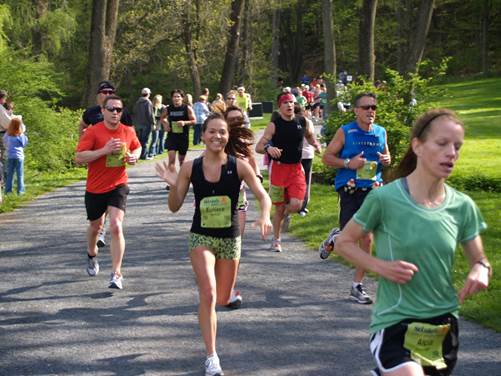
Why do we race?

We race because it keeps us in the game. (we are not giving up)

We race because we do. (we don’t just try or talk about running)

We race because races make us train. (when it would be easier to stay home, skip, or avoid)

We race because it brings us together. (we are on a team, and together we all get better)

We race because we want to challenge ourselves. (better times and pace combined with pre-race nerves)

We race because it makes us push. (a few seconds each mile, that extra run, that extra push)

We race because we are competitive. (PRs, keeping up, passing that one runner)

We race because we want to finish well. (in life as well as running)

We race because that is what runners do. (and yes, we are runners)

Obstacles and Turkeys

eastern_flock1_300


(Image Courtesy of nwtf.org)

Morning run.

Quick pace.

Few remaining training runs. Next race looming.

Crest the hill. Narrow path. Chain-link fence gauntlet.

Strange unnoticed prints.

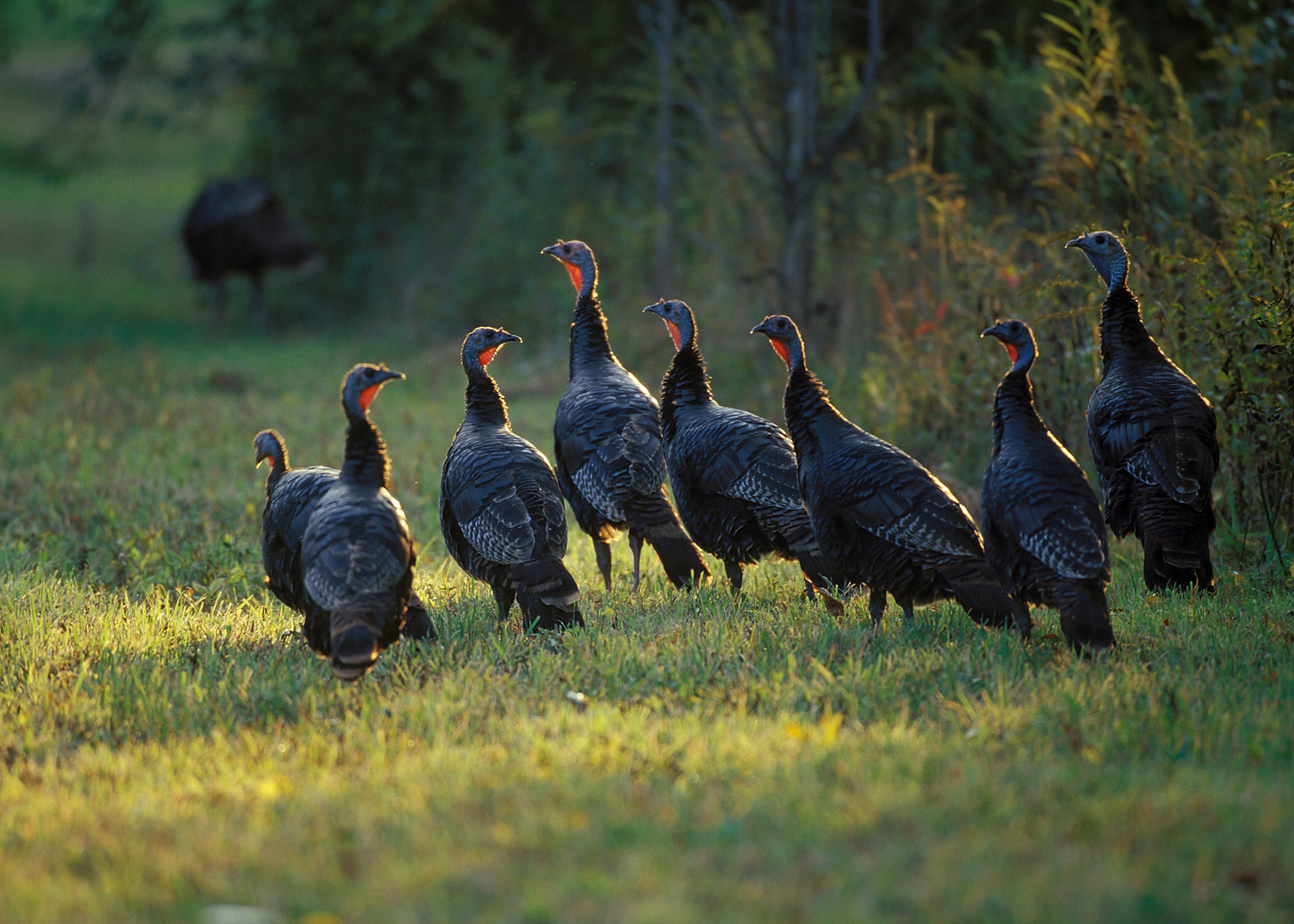
Obstacle. Turkeys. Wild ones.

Dead center of the path. Confined by fences.

Freeze. Assess.

Turn around? Move forward?

Fight or flight?

Fear. Vulnerable. Exposed.

Faster than me. 25 MPH. Being pecked.

Decision.

Courage.

Loud voice.

Louder voice.

Cautious steps.

Pace resumes.

Rattled.

Observant. Aware. Alert.

Goal achieved.

Lessons learned. Head up. More aware.

Looking for signs.

Next obstacle?

Better prepared.


Running as a Team

It was an afternoon where the temperature hovered close to freezing when our small group of four decided to run together for the first time. We work together. We talk about running together.

Why not run together?

Running can be pretty solitary.

Running can be you, a pair of shoes, and the road ahead.

Thomas Hobbes described life in a way that a lot of people would describe running: solitary, poor, nasty, brutish, and short.

When you run alone, no one sees you fail.

When you run alone, no one sees your flaws.

When you run alone, no one sees you stop on the hill.

Despite the insecurity, the fears, a larger question develops.

Why run together?

When you run together, you share in each others successes.

When you run together, your flaws (that only you notice anyway) seem smaller as the laughter and encouragement arrives.

When you run together, hills seem smaller when you are side by side.

Our team has grown to six, and will grow again next month. Each member of the running team is different.

We run various paces and distances depending on the day, but everyone is running a little faster and a little longer than when we first started.

Life and running doesn’t always have to be as Hobbes described. Maybe he just needed to be part of a team.

The Hill Rule

The Hill Rule

Our youngest daughter recently began running with me. We found some new shoes and planned a run.

“How far do you want to go on your first run?”

“How far do you normally go when you go off running?”

“Well my typical everyday route is a 5k.”

“How far is that?”

“3.1 miles.”

“Okay we should do that.”

We ran. We talked. We laughed.

We had to slow down a few times. She is used to sprinting on the soccer field.

As I watched her, her stride, gate, and frame something became clear: it is only a matter of time before she can out run me. With a combination of pride and a little envy, I realized my job is to coach her well, enjoy this time with her, and help her excel in something that she seems designed to do.

Each step confirmed that she is a runner.

But there is a hill.

In addition to providing encouragement and some tips on breathing, I explained that there is The Hill Rule in running. For those of you not familiar with this particular rule, let me explain.

The Hill Rule: when running up a hill, you are not allowed to stop. If you need to stop there are only two options.

1. Stop before you get to the hill, catch your breath, then proceed up the hill.

2. Stop at the top of the hill, after you run up the hill.

The reason for The Hill Rule is simple. A large part of running is a mental game. Stopping in the middle of a hill imprints a pattern that you cannot run hills, and you will tend to stop when faced with the next larger hill. The Hill Rule breaks this pattern, and does acknowledge that hills are hard, but there are options to overcome them.

The more I thought about The Hill Rule, the more I could see how it applies to any obstacle we face. When we give up or stop in the middle, we develop a pattern that can continue the next time that obstacle arises. Frankly, a large part of life is a mental game. 

Try applying The Hill Rule to your next obstacle. Either stop and rest before you tackle it, or rest when it is over. No stopping in the middle.

We ran up that hill without stopping. We rested at the end, and celebrated the run.

We are looking forward to the next run, and there will be hills.


Running into our 80’s

I am a runner.

Sometimes my narrator tries to convince me that I am someone who used to run, or someone who just runs now and then.

Sometimes when I tell other people I run, they try to convince me that running will ruin my knees.

Sometimes I wonder if I will injure myself again.

Sometimes I think about giving up, and slowing down.

Sometimes fear creeps in.

But,

Maybe it is each and every choice to run that makes me a runner.

Maybe my voice can override those other voices.

Maybe it is lack of activity that also ruins knees.

Maybe I could listen to the orthopedic doctor who said I would be running into my 80’s with the right plan.

Maybe my miles will decrease, but my activity will remain.

Maybe learning to dance with fear is better in the long run.

Where have you been convinced that you should give up, slow down, and stop “running”?

Where has the fear or the voices told you that it is too late?

Perhaps we could all be running into our 80’s.

Perhaps you could be [insert your activity, goal, or dream here] into your 80’s.