The Intersection of Stress and Creativity: Writer’s Block

Writer’s Block.  It was bound to happen, right?  Here I was typing away week after week; telling stories, posing questions, and offering some advice.  The journey has been difficult at times, but there was progress.  Until now.  What happened?

I heard from someone tonight that was reading some of the older posts (the one about the laundry facility, one of my personal favorites) and I described that I was stuck and didn’t know what to write next.  They immediately started to pose questions to me.

“Do you have a big project at work?”

“No, but I have been pretty busy, spending a lot of time traveling and have a stressful week and a seminar this weekend.”  (Hey, I am usually the one that asks the questions.)

It all started to become clear.  It was stress.  That subtle drain on our resources, creativity, and ideas.  The trouble with stress is the cumulative increase comes in like a trickle that can go unnoticed until it becomes a wall between us and our goals.

What can we do about it?  Recognizing that it was stress helped…a lot.  Identifying the barriers in our lives is always a good place to start.  What is it for you?  Is it stress? Worry? Fear?  A combination of all three?  If it is, that is one intersection where we should not linger too long.

Processing this out with someone else also helped.  Remember, we are not alone on this journey.  We don’t always have to tough it out by ourselves.  There are others in our circles who can lend a hand, offer an encouraging word, just listen when we need it most, or even simply ask the right questions.

“Are you thinking of anything you’ve wanted to write about but were not sure if it was good enough?  You should write that, since someone probably needs that message or will just enjoy it.”

Funny, that someone turned out to be me.

Power Distance and Plane Crashes

I am a fan of Malcolm Gladwell.  I like his writing, his stories and his perspective.

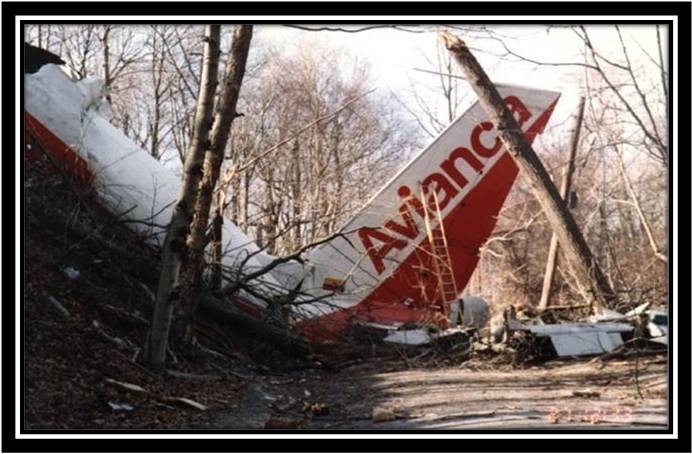
In Chapter 7 of Outliers (The Ethic Theory of Plane Crashes) he discussed Power Distance, or the space that is created when authority, hierarchy and culture disrupts our ability to interact with or communicate with each other.  Beyond creating nervousness about flying anytime soon, this chapter challenges leaders to consider how closely tied communication is to your ability to lead. (See Leading and Communicating)  And how as a leader you may be completely unaware of the distance between you and those you lead.

I won’t spoil the chapter, but some of the reasons planes crash are surprising.  It was not the big stuff, the reasons were more a combination of minor mechanical issues, lots of errors, and most importantly a failure of teamwork and communication.  The Captain (the leader) is making decisions and the First Officer or others (the followers) cannot seem to break through the power distance and yell “stop” before it is too late.

The most alarming part of the chapter is an experiment where both Captains and First Officers are provided a scenario.  Each group is instructed to ensure that their planes do not pass through a stormy airspace.  Each group was provided communication options ranging from strong Command options (essentially turn the plane) to much weaker options such as Hinting (the weather up there looks mean).

The results startled me.  Captains picked the strongest communication option and the First Officers picked the weakest option.  This reminded me of my time in the Navy and how that command structure played out.  While in the presence of the Captain instructions were barked towards me.

“Weber, I want the ComSysLantOpt report with a focus on BoatShipAftBowStern!”  (or whatever it was) was barked then I was dismissed.

Yes Sir!  Consider it done! 

I turned to the person next to me and asked if they had any idea what that meant.  Nope, but “good luck.”  In the presence of that leader, “consider it done” was the only acceptable reply.  The Power Distance was huge.

The more organizations I work with, the more this Power Distance issue comes to light if the leaders are not tuned in to the distance their positions create.  Once identified, there are great ways to combat this in the workplace.  The airline industry had to teach junior crew members to speak up in a clear and assertive manner.

Listen to those around you.  Especially anyone who reports to you, or where your position creates some authority over someone else.  Listen for the “hints” that they use because a direct conversation is too risky for them.

While listening recently I found a surprising “hint” near me.  Two of our daughters are in college.  College kids spend money, and need money all the time.  And I replayed a few conversations and/or texts.

“Wow, these books this semester were really expensive.”

“I am not sure if I saved enough money during the summer.”

My first response to these was “Great” thanks for letting me know.  But that was not their real intention was it?  They needed money and didn’t want to come out and directly ask.  There is a Power Distance in my position as a parent, and I learned was how intimidating (Captain like) I can be, even with my own kids.

My challenge for you is this: Spend the next week listening to yourself and others. Identify who hints around you, where you hint, and why.  Once identified, find one area where you can actively and deliberately communicate to shorten the Power Distance.

Maybe this simple step will prevent our workplaces, relationships, or “planes” from crashing.

I got a text the other day.

Dad, can you put $10 on my flex card so I can print out my report?

Yes.

Now that is progress.

Work

Work.  Sometimes it can feel as if life is passing you as each day blends into the next.  I was talking about this a lot with a friend when two events happened.

1.  We got to participate in a creative event where people are encouraged to use their creativity.

2.  An invitation came to do a talk on work life balance.

The enclosed video was the result.  I hope you enjoy it.

Credits:  

Photos (all the good ones):  Iain Young

Song:  Work, by Jars of Clay

Fly Your Flag

I don’t know about you, but I spend a lot of time in the car.  Commuting, shuttling kids around, running errands and my job requires me to drive around…a lot.  To put things in perspective, my car is a 2005 and I have 172,000 miles on it.

Making the most of this time has become an art.  Listening to podcasts of my favorite speakers and teachers, thinking about upcoming talks, or projects top the list of ways to use this time.  I have also learned to use this time to connect with others.

There are a few people I call regularly during these drives to get centered, be accountable as a leader, dad, and husband, or just deepen the relationship.

Today was one of those days, with one of those calls.  I will try to paraphrase some of it.

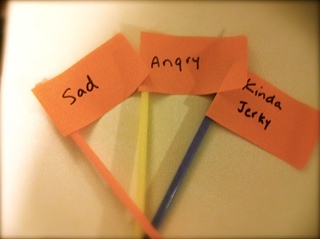
“Sometimes it would be so much easier in life if people had little flags that popped up and told you what kind of mood they were in.”

“Why?” I asked.  (I know, I know, pretty deep question.)

“That way when I am angry people would see the flag and know to leave me alone.  And if they were in a certain mood, I would know how to talk to them…or avoid them altogether.”

After a few minutes of trying to quickly patent this new device and develop a business plan around the “emotional flag” idea, we laughed and agreed I would show all of you the prototype.  It appears below.

Maybe we were on to something. Knowing someone’s else emotional state while revealing our own, might just be the secret to great communication.

Go ahead.  Fly Your Flag.

Intentional Fun: Lessons I Learned While Raking Leaves

Courtesy of Robin S. Lake

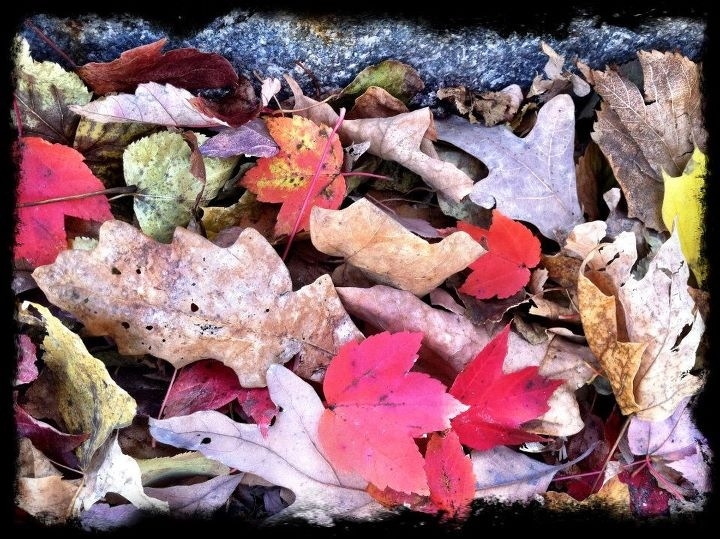
If you are in New England you experience the yearly ritual of leaves changing signaling that Fall has arrived, and Winter is just around the corner.  The world around us comes alive with red, yellow, and orange painted across the landscape.  The beauty of the season is only surpassed by one thing: the fact you have to rake them all up after they fall.

Beauty aside, once those leaves decide to die and fall to the ground the work begins.  Once majestic in their beauty, the leaves transform into a thick brown mat that covers the earth. What was once breathtaking now just makes you breathe heavily while dragging their carcasses into the woods.

Over the years of raking up leaves, I have learned a few lessons that I wanted to share with you.

1.  Intentional Fun:  With all projects, work, or tasks we have a choice to make.  We can complain and slog through while doing the necessary job, or we can try something else: make the work fun.  

2.  Work is better and easier with others.  After spending hours raking and cleaning up each fall in solitude, it finally dawned on me.  This work would be easier if I could get others to help me.

3.  You bond with others over a shared task.  Working side-by-side with other people creates a relationship that has deeper roots, and creates a common memory of your efforts.

Putting this into practice is not hard.  Today is our third annual “Leaf Day” celebration.  A newly adopted and attended event where we (both family and friends) get together to rake, rake, and rake all of those leaves together.  It is not just a day of work, although the work can be hard.  We promote the event.  We talk about how much fun we will have, and augment the day with an amazing menu of hearty food, drinks and desserts to add to the day’s festivities.

Think about the next project or task you need to accomplish and how you can apply these same lessons.  Make the work intentionally fun, invite others, and build relationships together.  You may be surprised that the result is much greater than the work.

Now let’s get out there and rake some leaves!

Rocks, Remembering and Reflecting

Piles of rocks or stones (Cairns) are found all over the world.  They have marked graves, guided travelers and become shrines for worship.

Lately it seems like they are the favorite way to mark trails when you hike in the winter so you do not lose your way.

Stones seem to have a similar importance for me, my family and a few close friends.  We find ourselves making cairns when we go to the beach.  We also have a habit of collecting stones that mark events in our lives.  That walk, that hike, that special occasion typically ends with someone getting a new stone.  Yes we are the kind of people who give stones as gifts.  

During this season of being thankful, I find myself reflecting on events, people, and memories that have positively shaped my life.  It is easy to reflect when times are good, or when the season encourages us.  It becomes much harder when the storms enter our lives.

On my desk at work is a small wooden box.  The box contains a pile of stones.  There is a stone for each of my children.  There is stone for my wife, our marriage, and that great walk on the beach.  There are stones for other important occasions as well.  This cairn is a daily reminder to guide my path especially during hard times.  Remembering the positive can be hard, but having a tangible reminder each day helps me to stay on the path.

In the midst of a storm, it is all too easy to focus on the chaos, what might go wrong, or how this storm is too big for us to handle.  When the storm comes (and they always do) just picking up those stones seems to connect me to what is important…what really matters.

As you reflect on what you are thankful for, I encourage you to find a stone or some other tangible way to remember those events.  And may it become a way to mark your path.