Starting a Movement

Have you ever wanted to start a movement?  How about being part of something new, crazy or different?  Ever wonder how to start?

Derek Sivers gives this great talk on TED.com on how to start a movement and I wanted to share this with you.  If you are new to TED.com you should check it out.  I typically go there about once a week to be inspired, learn, and to laugh.  If this is the first time hearing about TED.com, go check it out…you never know what is up there, but it is always worth it.

So get out there and try something crazy.  Dare to start something new.  Get your first follower and your idea may take off and become something great.

P.S.  If you really want to be freaked out, watch the one about the intelligence of crows. Scary.  I have never looked at crows the same way again.

What is Going Well?

I attended a conference recently.  No speaking role, just attending.  I had an opportunity to connect with others and talk to them.  And if you haven’t guessed by now, I love to ask questions.

I started out the day with the typical, “how are things?” and received the typical replies.

“Times are hard, people are stressed, and we may have to downsize.”

Throughout the day, everyone’s and I mean everyone’s answer was just about the same.  Everyone was doing more with less, trying to manage people who are stressed and working hard, and facing the hardship of decreasing revenues.  I began to see that I was asking the wrong question.  

So at lunch, I sat with some folks and began to ask a different question.

“What is going well?”

[A period of stunned awkward silence.]

“That is a good question…”and then the answers started to flow.

My conversations turned a corner and became something else.  Something great.  I learned about great new teams that formed where they never did before.  I learned about creative ideas that were developing, being heard, and were implemented.  I heard story after story about people banding together and doing great things.

To think I would have missed all of this by asking the wrong question.  It is amazing what a difference asking the right question can make.  

Today I ask you.  What is going well?  I am looking forward to hearing your answer.

I Hate That Guy

A few months back, I got to work with a fairly new leadership team.  All of the leaders had been in their positions less than two years, some only a few months.  The session focused on their behaviors (how they do the job) as well as their values/motivators (why they do the job).  The goal was to make sure that by understanding their own behaviors, they could work together as a team, and learn to manage well.

As the session kicked off, it was clear that individuals on this team had one thing in common: very extreme behavioral styles.  What I mean is that behaviors are typically measured on a 0 to 100 scale.  Extreme behaviors are when the scores are either in the 90 to 100 range, or 0 to 10 range.  To make this even more interesting, these leaders would have scores of 98 in one category, and 3 in another so the distance between behaviors was like a chasm.

More extreme styles make it hard to modify your behavior.  Modifying your behavior takes the energy and the conscious choice to behave differently.

How do you think you feel after a day of modifying your behavior? Mentally and physically exhausted.

If you get home and you are spent, think about what the day required.  Did you have to focus on the details of that report that was due?  Did you have to make those calls, go to those meetings, or make a presentation?  Gauging your energy helps you identify when you needed to modify your behaviors.

Reflecting on your style and what you may need to modify is a great way to improve your ability to do it.  If not, the exhaustion of one day will reduce your capacity to modify your behaviors the next.  Losing your ability to modify your behaviors can be disastrous for your career or relationships.

One of the leaders was significantly modifying their behavior (we can measure both natural styles and modified styles).  The change between the two styles was amazing. This leader was taking their foot off the gas for results (problems) and deliberately connecting with others (people).  I had to press in and ask about this change.

“Your change in style is pretty amazing, can you tell me how you feel after work?”

“Tired.”

“How are you able to do this, and why are you doing it?”

“When I look at my natural style, I Hate That Guy.  I make the choice to be a better leader than the leaders who formed me.”

“Can you continue to do it?”

“Yes, my people deserve better.”

I said it before, don’t wear your particular style as a badge of honor.  There are things that you do that impact others…in a negative way.  Pick one thing this week and work on modifying it.  In time, your natural style begins to shift towards that style, and it is less work to do it.  You will be tired at first.  It will be hard at first, but our people deserve better.

Anger is My Primary Emotion

Anger.  Yup, it is a part of my world.  Let’s face it, one of the problems with learning about different styles is coming to grips with your own.  All styles have great things and not-so-great things at the same time.

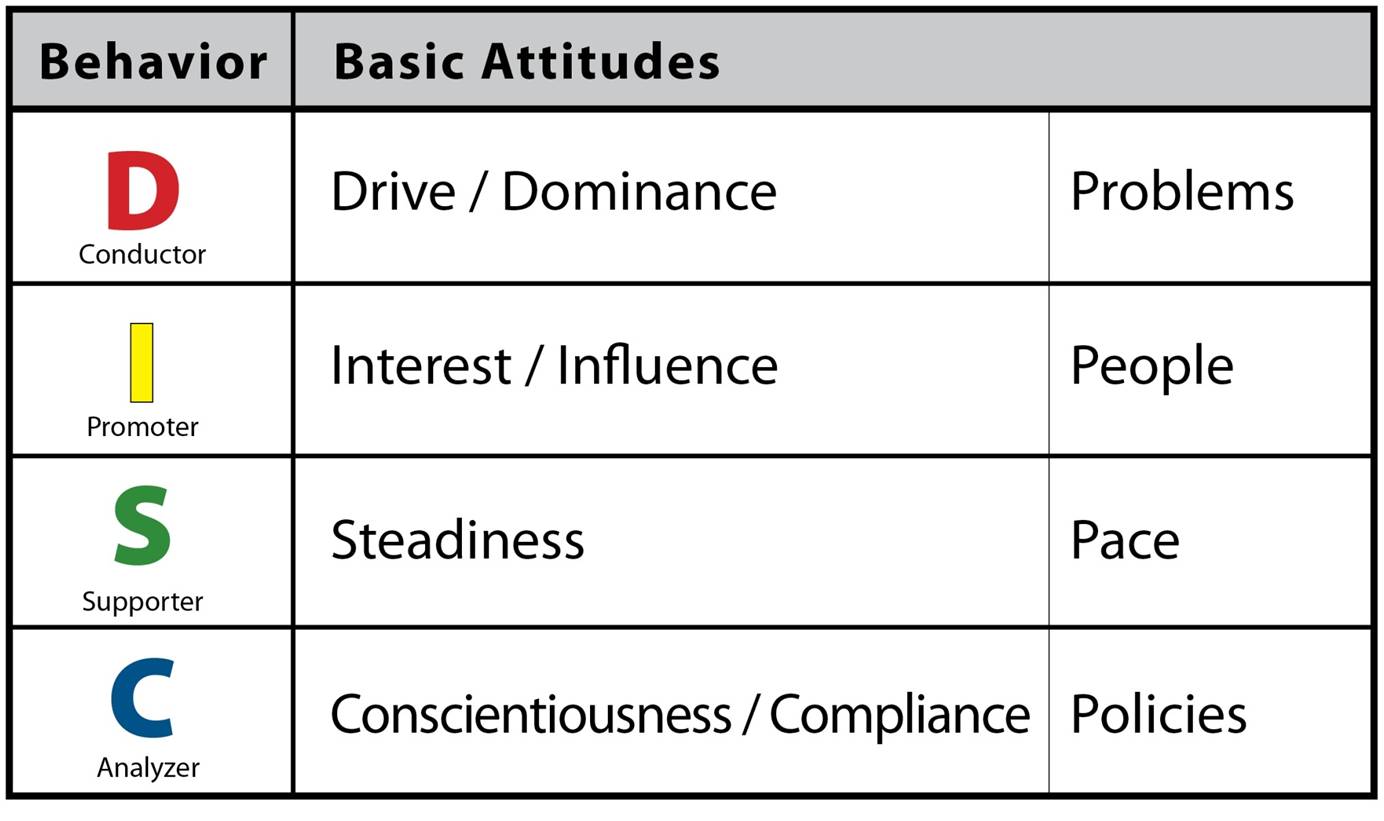
According to Marston and the DISC assessment, there are four styles.
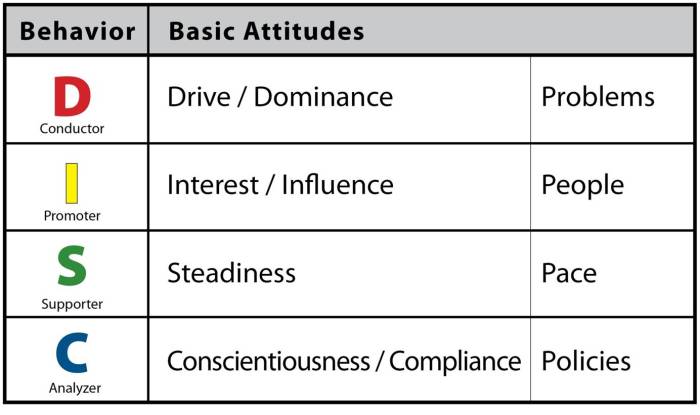
Essentially, it can be summed up with four P’s or how you deal with:

Problems, People, Pace, and Policies

How we score impacts the intensity of each category.  Do you jump in to solve problems or are you more reflective?  Are you the life of the party or do you need a break from people? How about your ability to adapt to change or have consistency from day-to-day?  And then there are the rules, do you follow them, or do you consider it nice that other people need them?

“All people exhibit all four behavioral factors in varying degrees of intensity.”

W. M. Marston

All of this helps us understand who we are, how we lead, how we follow, and how we communicate with others.  It is applicable in the workplace, our relationships, our families, and how we interact with everyone around us.

One of my more intense behaviors is the D or Drive.  It is what helps me push to solve issues, find solutions and get results.  But it has a price to pay: Anger.  The great part of having this internal urgency to get things done is unfortunately combined with the not-so-great part of frustration and impatience.  Learning to balance or modify our behaviors can be the difference between success or failure.  (See post Missed Opportunities, Missed Expectations to watch this play out in the workplace.)

When I sit with people, especially leaders and review their style, I hear them consistency say, I wish I knew this earlier on in my [career, life, marriage, college major, or relationships].”

So think about who you are, and what you bring that is both great, and not-so-great.  Don’t wear your particular style as a badge of honor.  There is no one right style, all have a downside if you are unaware or apply it in the wrong situation.

But if you know yourself, you can change the world.

I try to be pretty up front about who I am, the good and the bad.  If you are interested in assessing your own behaviors, let me know.  It is a pretty fun ride.  When I brought home my own assessment for the first time, I let my wife read it.  She cracked up.

“I think they must have followed you around all day.”

And better yet, our family was at an attraction up north.  Out of the crowd came a person that attended a seminar that I had given a few months prior.  This person walked straight up to my wife (right past me), winked at me and shook her hand and said:

“You must be the most patient person on the planet.”

Yes she is.  Thanks for putting up with me.

Your Worldview: by the Creator of Wonder Woman

William Moulton Marston.  Who is he and why should you care?

In 1928 he published Emotions of Normal People, a book which elaborated the DISC Theory (a behavioral assessment I typically use to help people understand their behaviors). Marston viewed people behaving along two axes, with their attention being either passive or active (in control or not), depending on the individual’s perception of his or her environment as either favorable or unfavorable: a worldview.

So let’s pretend you are at work.  Your boss and/or manager has an unfavorable view of the world, but considers themselves to be in control.  What do you have?  A boss that is always finding something to be improved, something new to try, a new way to solve the problem.  In addition to that, they are not shy of being the hero in all of their stories.

Then there is you.  If you have a favorable view of the world, but lack the power or control there could be tension.  Your boss is giving you mixed and multiple priorities, ideas without follow through, and you are there left holding the bag wondering what tomorrow will bring. Each day you fear that your boss will have 15 new ideas for you during their morning commute to implement before lunch.

You keep thinking “Why fix what isn’t broken?”

Your boss is thinking “Why can’t my employee see we need to embrace change?”

And it is all right there in Marston’s observation.  You are different, and it is NORMAL. Understanding this worldview provides a glimpse into how they are wired.  They see the world and themselves in a certain way.  You are different.  Still normal.

Do you see the world in a favorable light or a negative one?  Do you feel like you have the power and control, or not?  What about those around you? For the next few days, just listen.  People will tell you who they are if you do.  If you are the boss, think about the impact you have.  If you work for someone (and most of us do) think about how your worldview impacts those around you.

It is all about discovering the truth of who we and others are.  Our worldview is a good place to start.

By the way, in case you are ever on Jeopardy or some other game show, Marston also created the Wonder Woman comic book under his pen name Charles Moulton, as well as inventing a precursor to the lie detector test.  Hmmm, didn’t Wonder Woman carry a lasso of truth?

Who are you?

Seriously, who are you?  Have you thought about why you are they way you are?  Why do you do things a certain way? Why is it that you can connect so well with some people, and others can be so difficult?

Spend a few moments to answer this: Who do you think you are?  (Not yelling at you like a drill sergeant “Who do you think you are!)

Take a moment to describe who you are.

Think of one word descriptors that help provide insight into your style and help others appreciate what you bring to the table.

Positive?

Funny?

Driven?

Cautious?

For some, the words are positive and for others the words are negative (see the Silencing the Narrator posts for more details) but either way these words help you better understand your own style.

A word of caution: we tend to judge others in our own image.

If you are driven you look at everyone who is not and draw conclusions about their passion and dedication.  If you are realistic you look at optimistic people you may just wish they understood the complexity of the situation…then they would see the limitations inherent in the problem.

I work with a lot of people and organizations helping them identify and understand their own behavioral style and the impact it has on their leadership and communication style. Knowing yourself is an important first step.  Knowing others is the second.  Coming to grips that different is not wrong, it is just different is the third and somewhat difficult step.

Sometimes the style that differs the most from yours is exactly what you need to balance out your own style.

Over the next few weeks, we will discuss some of these styles.  (Don’t worry, I will put some fun stuff in there along the way.)  Hang on, it should be a fun ride.