The Benefits of Yearly Goal Setting

The results of the Poll are in.  Thank you for participating.  It appears that most (almost 80%) are not formally sitting down each year to set clear, concise, and attainable goals.  For the 20% who sit down, reflect and set goals, this may seem more like a review.  Of the majority, about 15% set some sort of goals, and almost 60% have an idea of what to accomplish and press towards it.  This leaves the 7% who are just winging it out there.

Until recently, you could have put me into two of these camps.  I jumped between winging it and having a general direction or idea.  Was this effective?  I guess so, I somehow managed to accomplish things and provide a roof over our heads.  But there were always ideas, dreams or projects that seemed to just hover out there in space and never actually become reality.

Two things happened.  

1.  I was sitting next to a very successful person for a few days in training.  During one of many discussions, they asked me what my goals were for the next year, and what was my plan to accomplish those goals.

I struggled and stammered to find a response.  A combination of embarrassment and frustration filled that space.  I think they could tell I needed some help, and provided the much-needed relief.

“It is okay you know.  Maybe a simple worksheet would help.  Let me send it to you.”

2.  A friend called me out.

“I have heard you talk about that same goal year after year, and yet you have not made any progress.  When are you going to actually do it?”

These two events made me realize my lack of setting actual goals, left those big ideas or dreams just floating out there from year to year.  Periodically, I would try to make progress and tackle some part but it would seem overwhelming and I would stop.

During this same period of time, numerous requests came my way to help senior teams and organizations set goals.  As I stood before them, facilitating their long-term vision and strategy my own lack of a plan began to make me feel like an impostor.  For no other reason, I wanted to make sure if they asked me about my own goal setting I had an answer.  I took the advice and the worksheet and began to set some goals.

The process of setting the goals was more helpful than I ever imagined.  Setting goals required me to think about and choose between various conflicting visions and dreams.  Once created, the list provided me with the focus and accountability I needed to make actual progress.

As the new year approaches, maybe a simple worksheet will help you as well.  It can be overwhelming, but take the first step.  Maybe the best place to start is with Your Sentence. I hope that process provides the vision you need to set that first goal.

Managing Your Energy & Goals Worksheet

Normally, I would tell you to get out there and tell someone about your goals, but Derek Sivers at TED.com made me think twice about offering this advice.  Perhaps after setting your goals, you should keep them to yourself.  Or maybe start with one person ONLY if they will push you on the hard work necessary to actually accomplish that goal.

Now get out there and set some goals, 2012 is going to be great!

Be More Helpful Than a Handout

One of the best parts of presenting and teaching is reading the evaluations.  If you listen to what is said, the insight and suggestions from the participants can help refine both the content and the style.  It is not always positive, but learning from feedback can help you become great.

The other day, I read the best comment ever.

“Carl is more helpful than handouts.” 

Maybe that should always be our goal.  If we are not “more helpful” why are we even there?  Wouldn’t the handouts be enough?

Here are a few tips:

1.  Be Authentic: Be yourself.  You are not perfect and that is okay.  Admit the areas that you are still wrestling with.  If you are talking about leadership, describe a time you made a mistake, what you learned, and how you recovered.

2.  Use Stories:  Facts, data, and bullets on slides are one thing, but linking the information together through a story engages the listener to apply the information in a real world situation.  Stories move us, inspire us, and motivate us.

3.  Be More Helpful Than a Handout:  Don’t read your PowerPoint or other materials.  Know your stuff, engage your audience, and leave them better informed, better able to address the issues at hand, and perhaps even a little inspired.

Good luck out there, you can do it.

Power Distance and Plane Crashes

I am a fan of Malcolm Gladwell.  I like his writing, his stories and his perspective.

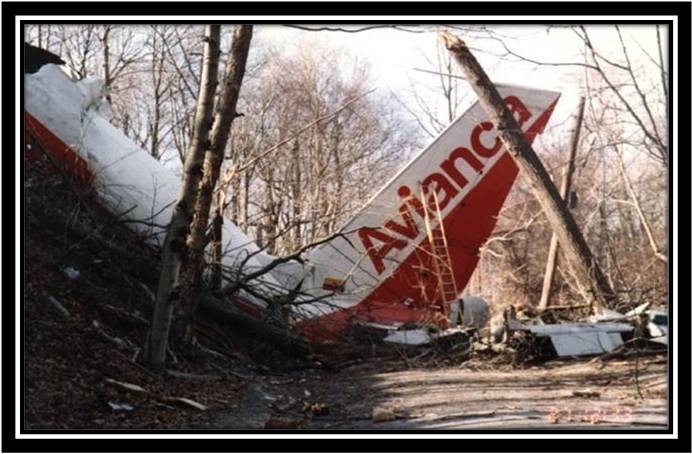
In Chapter 7 of Outliers (The Ethic Theory of Plane Crashes) he discussed Power Distance, or the space that is created when authority, hierarchy and culture disrupts our ability to interact with or communicate with each other.  Beyond creating nervousness about flying anytime soon, this chapter challenges leaders to consider how closely tied communication is to your ability to lead. (See Leading and Communicating)  And how as a leader you may be completely unaware of the distance between you and those you lead.

I won’t spoil the chapter, but some of the reasons planes crash are surprising.  It was not the big stuff, the reasons were more a combination of minor mechanical issues, lots of errors, and most importantly a failure of teamwork and communication.  The Captain (the leader) is making decisions and the First Officer or others (the followers) cannot seem to break through the power distance and yell “stop” before it is too late.

The most alarming part of the chapter is an experiment where both Captains and First Officers are provided a scenario.  Each group is instructed to ensure that their planes do not pass through a stormy airspace.  Each group was provided communication options ranging from strong Command options (essentially turn the plane) to much weaker options such as Hinting (the weather up there looks mean).

The results startled me.  Captains picked the strongest communication option and the First Officers picked the weakest option.  This reminded me of my time in the Navy and how that command structure played out.  While in the presence of the Captain instructions were barked towards me.

“Weber, I want the ComSysLantOpt report with a focus on BoatShipAftBowStern!”  (or whatever it was) was barked then I was dismissed.

Yes Sir!  Consider it done! 

I turned to the person next to me and asked if they had any idea what that meant.  Nope, but “good luck.”  In the presence of that leader, “consider it done” was the only acceptable reply.  The Power Distance was huge.

The more organizations I work with, the more this Power Distance issue comes to light if the leaders are not tuned in to the distance their positions create.  Once identified, there are great ways to combat this in the workplace.  The airline industry had to teach junior crew members to speak up in a clear and assertive manner.

Listen to those around you.  Especially anyone who reports to you, or where your position creates some authority over someone else.  Listen for the “hints” that they use because a direct conversation is too risky for them.

While listening recently I found a surprising “hint” near me.  Two of our daughters are in college.  College kids spend money, and need money all the time.  And I replayed a few conversations and/or texts.

“Wow, these books this semester were really expensive.”

“I am not sure if I saved enough money during the summer.”

My first response to these was “Great” thanks for letting me know.  But that was not their real intention was it?  They needed money and didn’t want to come out and directly ask.  There is a Power Distance in my position as a parent, and I learned was how intimidating (Captain like) I can be, even with my own kids.

My challenge for you is this: Spend the next week listening to yourself and others. Identify who hints around you, where you hint, and why.  Once identified, find one area where you can actively and deliberately communicate to shorten the Power Distance.

Maybe this simple step will prevent our workplaces, relationships, or “planes” from crashing.

I got a text the other day.

Dad, can you put $10 on my flex card so I can print out my report?

Yes.

Now that is progress.

Be Thankful for Your Actual Life

What a concept.  As you may have guessed, our power is back on.  Four days can feel like an eternity, an especially difficult one.  Difficult times can put your life in perspective, and help you appreciate small things.  Power, lights, warm water, and heat recently come to mind.

During our brief time without power, I tried to stay positive.  After a few days, and one shower with 56 degree water I was becoming a little snarkey.  I found myself being stressed, upset and angry a little more often.  Lack of sleep and low temperatures are not a great combination.

Right in the middle of this power outage, my friend who just got back from Tanzania sent me an email.  The email was a summary of the days spent helping others.  As I read about their work on a children’s home,  I learned that the home was in rough shape and in need of work, but much better than living on the streets.  I looked outside at both my shed and tree house, the realization of my ungrateful ways fell upon me.

After the first few days, I started to notice how much I was complaining, even whining.  As I drove around, something hit me.

There are people on this planet who would walk hundreds of miles to have shelter in my shed, because my lawnmower lives in a better home than many cold, hungry, and distraught people.

My complaining stopped.  Perspective is a wonderful thing.  Going without power for a few days helped remind me of what we have all around us and fail to notice.

I decided to be thankful instead.  I didn’t expect this, but my mood improved.    I heard someone say once that there is a secret to happiness in this life:

Stop Complaining!

I am thankful for a friend who let us borrow a generator.  I am thankful for the neighbor who came over late that night and connected it to the furnace so we could be warm.  I am thankful for the candlelight Lego building, thankful for the quiet of no TV or electronics, and thankful for connecting with others.

Let’s try an experiment together over the next few weeks.  Be thankful for your actual life.  I look forward to hearing how it goes.

Obviously I Had Lobster as a Child

I was thinking back recently about how the words we use and the statements we make help define who we are, especially with others.  You form an opinion about others by the words that escape from their world into yours.  You are even forming one about me right now!

The trouble is, at least for me, is that the distance between my brain and my mouth is incredibly short.  Words travel that distance at such a quick pace, that most of the time they escape from my lips without the benefit of a much-needed filter.

Thinking about this made me remember a time when we were in Virginia having dinner with a group of friends.  The discussion shifted towards everyone’s place of origin and what foods we grew up eating.

“Obviously, I had lobster as a child”  blurted out one friend.

The room erupted.  This friend always gave off the impression of affluence anyway, and this statement sealed the deal.  It took us a good five minutes to stop the incessant giggling and this friend was trying desperately to clarify the statement.  This is what they meant to say.

“I grew up in New England.  Frankly, it is hard to throw a rock in the summer and not hit a lobster.  Traditionally most families in New England treat themselves to lobster, at least once a year, so since I am from New England, one could conclude logically that I had lobster as a child.”

Take a moment to think about your impression of others.  If you catch someone on a bad day, or when they are in a rush, you still form your opinion about them. Is it that opinion accurate?  Is that who they really are?  Be careful.  What they say, what you hear, and what they mean may be worlds apart.  Maybe you should see how obvious it is that they had lobster as a child.